Information
Landmark: Rhumsiki VillageCity: Maroua
Country: Cameroon
Continent: Africa
Rhumsiki Village, Maroua, Cameroon, Africa
The Kapsiki Rock Formations rise dramatically in Cameroon’s Far North Region, shaping one of the country’s most striking and immediately recognizable landscapes. Located around Rhumsiki, near the border with Nigeria, these formations are part of the Mandara Mountains and define both the physical and cultural identity of the Kapsiki people who live among them.
Geological Character and Landscape
The formations consist of towering volcanic and granitic outcrops, sculpted over millions of years by erosion, wind, and seasonal rain. Jagged peaks, narrow spires, and rounded boulders emerge abruptly from the ground, creating a terrain that feels both ancient and sculptural. Some rocks stand isolated like sentinels, while others cluster tightly, forming natural corridors and enclosed spaces. The contrast between bare stone and sparse vegetation sharpens the visual impact, especially in early morning or late afternoon light.
Setting and Atmosphere
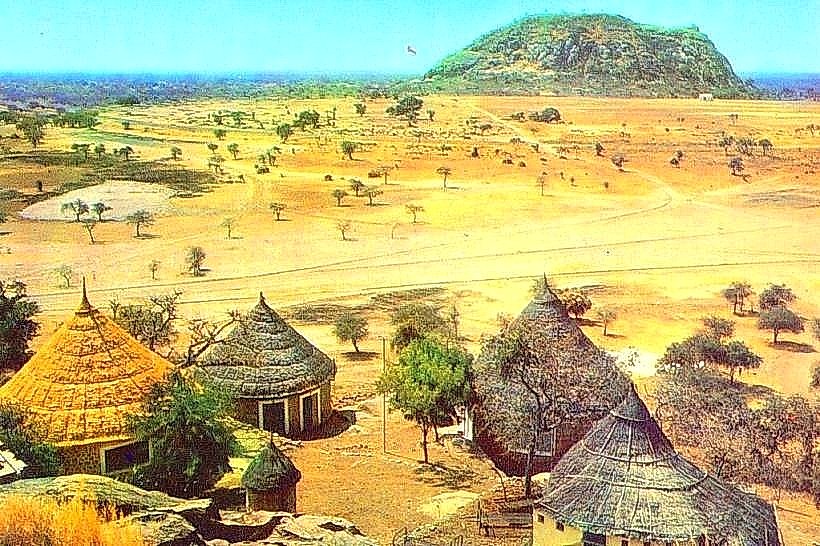
The surrounding landscape is semi-arid, with dry grass, scattered shrubs, and cultivated plots tucked wherever soil collects between rocks. The air is often clear, and sound carries easily across the open space. From certain angles, the formations appear almost unreal, their silhouettes changing shape as the sun moves. The area feels exposed yet grounded, shaped by heat, wind, and long seasonal cycles.
Cultural Significance
For the Kapsiki people, the rock formations are not just scenery but part of daily life and belief. Many rocks are associated with ancestral stories, spiritual practices, and traditional rituals. Some formations are regarded as sacred, while others serve as landmarks, meeting points, or natural shelters. The relationship between people and stone is intimate, passed down through oral tradition rather than written record.
Settlement and Adaptation
Villages around Rhumsiki are built in close dialogue with the rocks. Homes are often constructed using local stone and earth, blending visually into the landscape. Paths wind naturally around boulders rather than cutting through them. Farming here requires patience and ingenuity, with terraced fields and small plots carved into the spaces where soil allows crops to grow.
Visitor Experience
Walking among the Kapsiki Rock Formations is less about following a route and more about wandering through shapes and shadows. There are no formal viewpoints in the conventional sense, but countless natural perches and passages. The scale can feel overwhelming at first, then quietly intimate as details emerge: weathered textures, small caves, or the echo of footsteps between stone walls. Local guides often share stories that add depth rather than explanation, allowing the landscape to remain partially mysterious.
Overall Impression
The Kapsiki Rock Formations are powerful without being theatrical. Their beauty lies in raw form and human connection rather than polish. They represent a landscape where geology and culture are inseparable, where stone shapes not only the land but the way people live, build, and remember. Standing among them, one feels a sense of endurance, as if both rock and community have learned to hold their ground against time and elements alike.