Information
Landmark: Royal Palace of BohiconCity: Bohicon
Country: Benin
Continent: Africa
Royal Palace of Bohicon, Bohicon, Benin, Africa
The Royal Palace of Bohicon is a historical structure located in the city of Bohicon, Benin. It serves as a repository of local history and traditional governance.
Visual Characteristics
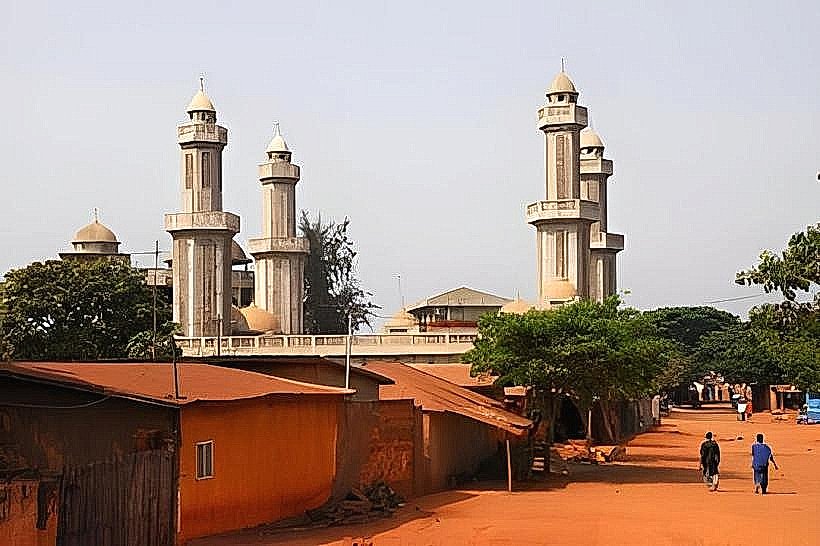
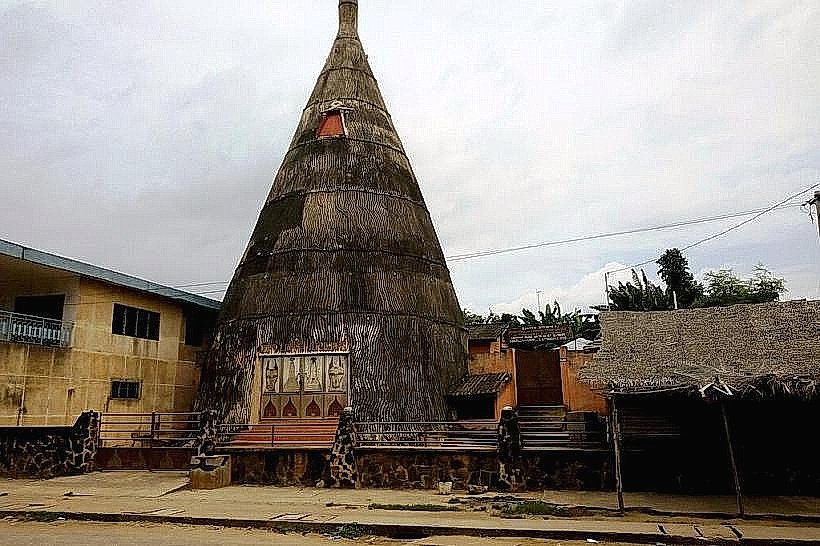
The palace is constructed primarily from laterite stone and cement, painted in muted earth tones. It features a single-story main building with a central courtyard. The architectural style incorporates elements of colonial design with local adaptations, including a corrugated metal roof and wooden window frames. The main entrance is marked by a simple archway.
Location & Access Logistics
The palace is situated approximately 1.5 kilometers south of Bohicon's city center, accessible via the Route Nationale 1 (RN1). Turn south onto Avenue du Palais. Parking is available on-site for approximately 10 vehicles. Public transport options include local taxis and motorcycle taxis that frequent the RN1.
Historical & Ecological Origin
Construction of the Royal Palace of Bohicon began in 1947 and was completed in 1950. It was commissioned by King Gbèto, the reigning monarch at the time, to consolidate administrative functions and serve as a residence. The site itself was chosen for its central position within the traditional kingdom's territory.
Key Highlights & Activities
Visitors can observe the traditional throne room, which contains artifacts and regalia. Guided tours are available, detailing the history of the royal lineage and the palace's role in regional administration. Photography of the interior is permitted without flash.
Infrastructure & Amenities
Restrooms are available for visitors. Limited shade is provided by the building's overhangs and a few mature trees in the courtyard. Cell phone signal (2G/3G) is generally available. No food vendors are located directly on the palace grounds; options are available in the nearby city center.
Best Time to Visit
The best time of day for photography is between 10:00 AM and 2:00 PM, when direct sunlight illuminates the courtyard. The dry season, from November to March, offers the most favorable weather conditions for visiting.
Facts & Legends
A local legend states that a specific stone within the courtyard was brought from a sacred forest by the founding king and possesses protective properties for the royal family.
Nearby Landmarks
- Centre Artisanal de Bohicon (0.8km North)
- Marché Dantokpa (Bohicon branch) (1.2km North)
- Église Catholique Saint Michel (1.0km Northwest)