Information
Landmark: Ruins of St. Paul’sCity: Macau
Country: China
Continent: Asia
Ruins of St. Paul’s, Macau, China, Asia
Overview
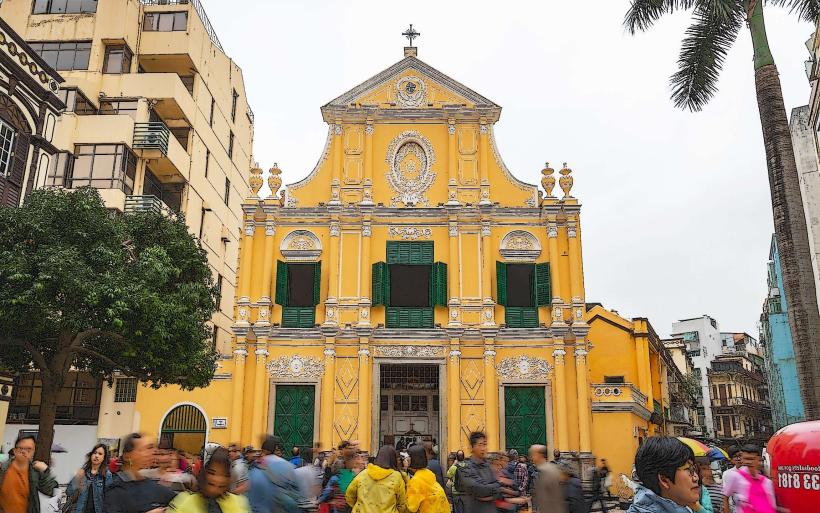
Funny enough, In Macau, the Ruins of St, at the same time paul’s (聖保羅教堂遺址) stand as a striking landmark, their weathered stone façade telling the story of the city’s colonial past and its blend of cultures.The site stands as a striking reminder of Macau’s Catholic roots, echoing its deep ties to European culture during the colonial era-like the faint chime of a church bell carried on the wind, while let’s take a closer scan at the Ruins of St. Paul’s-its history, striking stone façade, and the meaning it still holds today, in addition one.In 1602, Jesuit missionaries built the first St, then paul’s Church, its stone walls rising in the quiet morning air of the early 17th century, in some ways The project was massive, built to plant a firm Christian foothold in the region, like a stone church rising against the pale morning sky, after that the church belonged to St. Paul’s College, a renowned Jesuit school in Macau where young men studied theology and philosophy, their voices echoing through sunlit stone halls, as a result built in the Portuguese Baroque style-a rich mix of European architectural traditions-the church was meant to be one of the grandest in Asia, with sweeping arches that seemed to draw the eye upward toward the heavens.They built it from granite quarried just a few miles away, and its sheer size and gleaming detail made it legendary, and the church grounds held a college, a quiet library with tall wooden shelves, and a seminary.For much of the 17th century, St, furthermore paul’s Church bustled with life, serving the Jesuit community in Asia as both a location of worship and a center for learning and culture, where the scent of ink and parchment often hung in the air.The church drew in local Chinese families, Portuguese neighbors, and other expatriates, inviting them to worship and explore Christianity together under its high wooden beams, meanwhile in 1835, a fierce blaze swept through St. Paul’s Church, tearing away its roof and gutting the wooden pews inside, meanwhile the fire, whose cause remains a mystery, spared nothing but the church’s weathered façade and a fragment of the stone walls around it.That moment set the site on its path to decay, the crumbling stone and empty archways eventually turning into one of Macau’s most iconic landmarks, equally important cultural impact: After the fire, people walked away, leaving the region to crumble in silence for years, under certain circumstances Still standing, the church’s façade-its stone etched with intricate carvings and grand, sweeping details-endured the years and came to embody Macau’s religious and cultural heritage, while the walls, columns, and carved details of the facade have stood firm through centuries of weather and the scorch of flames.Two, likewise the only part of St. Paul’s Church still standing is its façade, a Baroque masterpiece with carved stone angels watching over the square, therefore rising 23 meters high and stretching 10 meters across, the façade blends European grace with Asian elegance, like carved stone meeting painted silk.Carvings and Sculptures: The façade brims with intricate stonework-Christian symbols etched deep beside solemn figures of saints, then at the top, a large image of the Virgin Mary catches the eye, with Jesus Christ beside her, St, roughly Ignatius of Loyola-the Jesuit founder-nearby, and other saints gathered around, furthermore you’ll also find symbols like the Madonna, the Holy Spirit, and the Sacred Heart, glowing in gold and deep red.Elements of Fusion: The design draws heavily on European Baroque style-think ornate curves and gilded edges-yet you can still spot clear touches of Chinese artistry, on top of that for example, lotus flowers-often seen in Chinese art-appear in the carvings, their delicate petals hinting at Macau’s blend of Eastern and Western traditions.Intricate Decoration: Delicate carvings and sculptures cover the façade, showing vivid biblical scenes with St, meanwhile paul, St. As it happens, Peter, and a host of angels and saints etched into the stone, meanwhile the intricate carvings and fine details show just how much skill went into creating the church’s design.The church’s broad stone steps climb toward the façade, each one cool underfoot, and from the top you can take in the sweep of the land around you, likewise stone steps climb the hill, and visitors follow them to a platform where the church once stood.The platform beneath the façade draws crowds who snap photos and take in the view of winding alleys, centuries-antique buildings, and markets humming with voices and the scent of street food, consequently three.Tucked behind the Ruins of St, equally important paul’s, the Museum of Sacred Art brings to life the church’s past, the Jesuits’ years in Macau, and the wider Christian story across Asia, with relics that still smell faintly of timeworn wood and incense.The museum sits in what was once a Jesuit seminary, its quiet halls lined with religious paintings and sculptures-saints with solemn eyes, scenes capturing pivotal moments in Christian history, as well as tombs and weathered stone inscriptions, unearthed during digs at the site, whisper the long, layered story of the church’s past.Relics from the church include pieces of the heritage altar and bits of carved trim, all that survived the fire’s heat, in turn at the museum, visitors can grasp why the site matters and how it helped shape Macau’s religious life, from incense-filled temples to quiet chapels tucked along narrow streets, under certain circumstances Number four, moreover the Ruins of St. Paul’s, their stone façade weathered by centuries of wind and rain, stand as one of Macau’s most enduring reminders of its Portuguese colonial past, and the church played a central role in the Jesuit missions across Asia, its weathered stone walls still echoing the broader story of Christianity’s spread through the region.In 2005, UNESCO added the ruins and other nearby landmarks in Macau to its World Heritage list as part of the city’s Historic Centre, where worn stone steps still lead toward the past, along with the site holds rich cultural and historical value, revealing how the city once stood at the busy crossroads where Eastern spice traders met Western merchants, maybe Tourism and Local Identity: The Ruins of St, therefore paul’s stand at the heart of Macau’s sense of self, drawing crowds who snap photos beneath its weathered stone façade year after year.Locals and visitors alike gather here, pausing to reflect on Macau’s layered, intricate history, as the faint scent of incense drifts through the air, in addition five.The Ruins of St, then paul’s sit in Macau’s historic center, just a short stroll from Senado Square, with the Mount Fortress rising nearby and St. You know, Dominic’s Church tucked along the cobblestone streets, besides visiting Hours: You can wander through the Ruins of St. Paul’s any day of the week, from the first light glinting off the stone till closing time, moreover you’re free to wander the grounds outside, and the museum tucked behind the ruins opens during the day on a set schedule.Accessibility: The ruins sit along cobbled streets and weave through narrow alleys, so you’ll need to explore them on foot, hearing the faint crunch of stone under each step, to boot buses rumble past the corner, and taxis are easy to flag down, making the site simple to reach by public transit.The best time to go is early in the morning or late in the afternoon, when the light turns warm and soft for photos and the setting is still quiet before the crowds roll in, subsequently number six stood alone, tiny and neat, like it had just been penciled at the corner of a page.From what I can see, In conclusion, the Ruins of St, at the same time paul’s stand as one of Macau’s most treasured historic landmarks, their weathered stone façade catching the afternoon light.
Author: Tourist Landmarks
Date: 2025-09-16