Information
Landmark: Saint Andrews CathedralCity: Inverness
Country: United Kingdom
Continent: Europe
Saint Andrews Cathedral, Inverness, United Kingdom, Europe
Overview
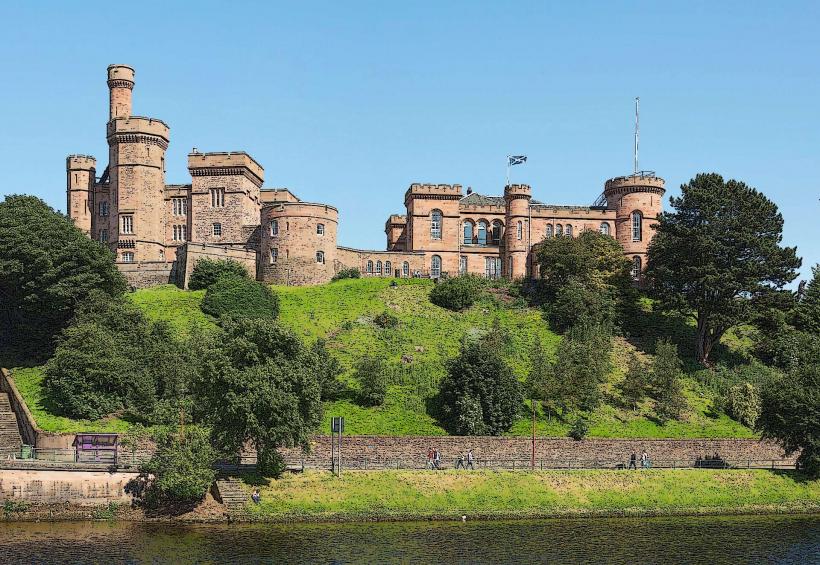
St, what’s more andrew’s Cathedral, a landmark of the Church of Scotland, stands beside the River Ness in the heart of Inverness, its stone towers catching the light off the water, partially St, moreover andrew’s Cathedral, with its striking Gothic Revival spires, stands as both a cherished region of worship and one of Inverness’s most iconic landmarks, in a sense This quiet area invites worship and reflection, and its stone walls hold centuries of history, giving locals and visitors alike a calm space to wander and take in its beauty, consequently between 1866 and 1874, St. Andrew’s Cathedral rose stone by stone, thanks largely to the dedication of Scotland’s Episcopal Church, equally important architect William Hay designed it in the Gothic Revival style, the kind you might picture in the mid-1800s with pointed arches and tall, narrow windows.I think, As Inverness expanded, the city built the cathedral to meet the growing need for a larger locale of worship, its stone walls rising to meet the steeple’s lofty cross, equally important perched on the banks of the River Ness, the cathedral offers sweeping views of the water and nearby sights, like the red sandstone towers of Inverness Castle.The cathedral crowns the city’s skyline, its twin spires cutting into the sky and catching the light from streets far below, not only that st. Andrew’s Cathedral honors its namesake, St, consequently andrew, the patron saint of Scotland, whose cross flies white against a deep blue sky.Choosing St, and andrew honors the cathedral’s deep ties to Scotland’s Christian heritage, and the church itself belongs to the Scottish Episcopal Church, rooted in the Anglican tradition.The cathedral rose in the Gothic Revival style, marked by soaring pointed arches, delicate ribbed vaults, and flying buttresses that seemed to stretch toward the sky, as a result though built in the 19th century, the design echoes a medieval cathedral, with tall pointed arches and heavy stone walls, occasionally Stonework: Built from local sandstone, the building glows a warm, golden tone that melts into the rugged greens and grays of the Highland landscape, then the stonework brims with intricate detail, its carvings curling and twisting around the cathedral’s main entrance and framing the windows like lace cut from stone.Towers and Spires: The cathedral’s twin spires soar above the city, their stone tips catching the first pink light of dawn, along with the spires shape the Inverness skyline, rising in clear view from across the River Ness, where their sharp points catch the light even from the far banks and nearby hills.Inside St, consequently andrew’s Cathedral, sunlight spills through tall stained-glass windows, glinting off polished wooden pews beneath the soaring vaulted ceiling, wrapping the space in quiet reverence.Inside, the cathedral’s tall stained-glass windows glow with deep blues and reds, each panel telling stories of Christ’s life, moments from scripture, and the lives of saints, in turn these windows rank among Scotland’s finest 19th‑century stained glass, their colors glowing even on a gray day, roughly The pulpit and altar are carved from rich wood, with the high altar standing out for its intricate, almost lace‑like detail, likewise the chancel stretches wide, giving the whole cathedral an air of grandeur, and at its heart stands a magnificent pipe organ whose rich notes often fill the space during services and concerts.The organ, whose deep notes linger in the vaulted air, has enriched the cathedral’s acoustics since its earliest days, and St, besides andrew’s still welcomes the local congregation each week as their area of worship, perhaps The church holds regular gatherings-Holy Communion, morning prayers, and special services that mark each season of the liturgical year, from candlelit Advent nights to Easter morning hymns, in conjunction with in Inverness, St. Andrew’s Cathedral-home to the Episcopal Diocese of Moray, Ross, and Caithness-stands at the heart of the city’s faith, its stone towers looking out over the River Ness and the wider Highlands it serves, after that the cathedral stands at the heart of the town’s spirit and culture, its bells carrying over the rooftops like an historic, familiar song.Alongside its regular worship, the cathedral welcomes the community for weddings, baptisms, funerals, and other gatherings-sometimes with bells ringing clear through the square, therefore they hold special services for Christmas, Easter, and other Christian festivals, and you’ll also hear the bells ring for local celebrations and special occasions.St, moreover andrew’s Cathedral draws countless visitors to Inverness, its tall spires and riverside setting making it one of the city’s must-spot landmarks.With its graceful arches, quiet air, and a spot right beside the river, it’s a region travelers love to linger, therefore in the quiet grounds of the cathedral, you can pause, breathe in the scent of vintage stone, and reflect on the rich history and heritage of Inverness.Somehow, Though it’s younger than many of Scotland’s vintage stone churches, St, in addition andrew’s Cathedral still stands as a key part of Inverness’ story, its spire visible from the river’s edge.It reflects the city’s Victorian-era growth and shows how faith still shapes the region, much like the steady toll of a church bell at dusk, along with music and concerts fill the cathedral’s halls, making it a lively part of Inverness’s cultural scene.The venue hosts regular concerts and recitals, especially classical music, where you might hear a violin’s sparkling notes echo through the hall, to boot the organ concerts are a real draw, bringing in visitors from all over the world to experience the soaring music and crystal-clear acoustics in the hall’s stunning, sunlit space.St, likewise andrew’s Cathedral usually welcomes visitors during the day, though it’s smart to check ahead in case a wedding or special service changes the schedule.You don’t have to pay to step inside the cathedral, but a donation-like dropping a few coins into the wooden box by the door-helps keep it running and supports its services, consequently guided tours are often available for anyone curious about the cathedral’s history, its soaring stone arches, and the faith that shaped it, fairly These tours dive into the church’s history and give you a chance to admire the jewel-toned stained glass, hear the organ’s rich notes, and explore the cool, dim crypt, and the cathedral sits in the heart of the city, a short saunter from the River Ness and the stone walls of Inverness Castle.You can stroll there from other main sights, so it’s easy to slip into a day exploring Inverness-just a five‑minute amble past the river, what’s more st. Truthfully, Andrew’s Cathedral stands in the heart of Inverness, its quiet stone walls offering a space for reflection, its soaring spire and stained glass telling a long, remarkable history, along with whether you come to pray, marvel at the soaring stone arches, or soak up the rhythm of local life, the cathedral wraps you in a quiet, uplifting calm.Perched by the river, St, what’s more andrew’s Cathedral-with its Gothic spires and stained glass glowing like jewels in the sun-remains one of Inverness’ most beloved landmarks and a must-perceive for anyone roaming the Scottish Highlands.
Author: Tourist Landmarks
Date: 2025-08-26