Information
Landmark: Saint John the New MonasteryCity: Suceava
Country: Romania
Continent: Europe
Saint John the New Monastery, Suceava, Romania, Europe
Saint John the New Monastery (Mănăstirea Sfântul Ioan cel Nou) is a UNESCO World Heritage site and a major spiritual center of the Bukovina region.
Visual Characteristics
The monastery is centered around the Church of Saint George, a prime example of Moldavian architecture.
Exterior: Features remnants of 16th-century frescoes on the southern facade, though less preserved than other Bukovina churches. The walls are reinforced with massive stone buttresses.
Roof: A high, steep shingle roof typical of the region, designed to protect the exterior paintings from precipitation.
Belfry: A standalone defensive tower that serves as the main entrance to the monastic complex.
Location & Access Logistics
Address: Strada Ion Vodă Viteazul 2, Suceava.
Public Transport: Located in the city center; accessible via local bus lines stopping at "Autogară" or "Centru."
Access: Open daily from 06:00 to 20:00 (extended on weekends).
Parking: Limited street parking is available along the monastery walls and in nearby public lots.
Historical & Ecological Origin
Construction began in 1514 under Bogdan III the Blind and was completed in 1522 by Ștefăniță Vodă. It was built to serve as the metropolitan cathedral of Moldavia and to house the relics of Saint John the New, a 14th-century martyr. The monastery is situated in a landscaped urban courtyard that preserves a quiet, meditative atmosphere despite its central location.
Key Highlights & Activities
The Relics of St. John the New: Contained in a silver casket inside the church; they are the primary destination for pilgrims.
Interior Frescoes: Exceptional 16th-century Byzantine-style paintings covering the nave and narthex.
The Abbot's Residence: A 19th-century administrative building within the complex.
Annual Pilgrimage: On June 24 (the feast day of St. John), the monastery hosts thousands of pilgrims from across Romania.
Infrastructure & Amenities
The complex includes a shop for religious items and historical publications. 5G cellular coverage is excellent. Information is provided in Romanian, with multilingual brochures available for international visitors.
Best Time to Visit
The church is best visited in the morning during liturgy for a full spiritual experience, or in the late afternoon when the exterior light is optimal for architectural photography.
Facts & Legends
A historical fact is that the monastery served as the seat of the Moldavian Metropolitanate for over 300 years. Legend holds that the relics of Saint John were miraculous protectors of Suceava, once preventing the fortress from being sacked by turning an approaching army away through a sudden, localized storm.
Nearby Landmarks
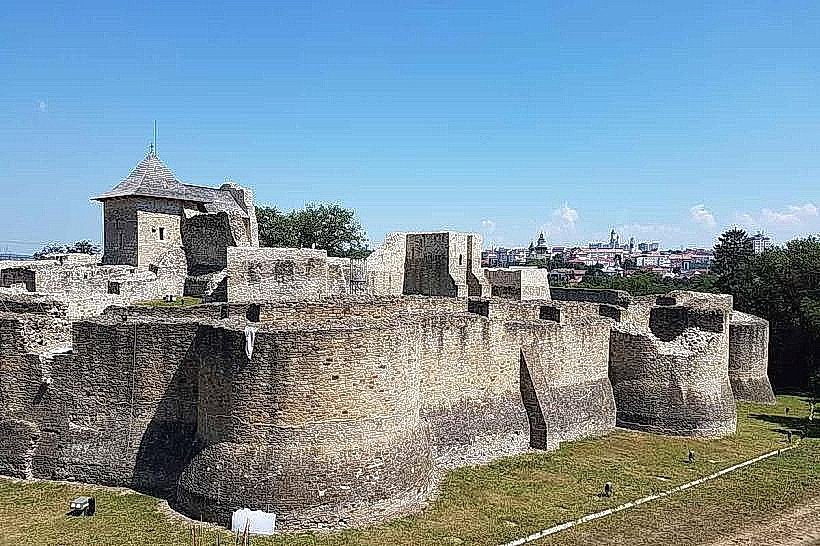
Seat Fortress of Suceava: 1.2 km East.
Mirăuți Church: 0.6 km Northeast.
Bukovina Museum (History Museum): 0.5 km West.
Hanul Domnesc: 0.4 km West.