Information
Landmark: Salmon RiverCity: Salmon
Country: USA Idaho
Continent: North America
Salmon River, Salmon, USA Idaho, North America
The Salmon River is a significant waterway located in Salmon, Idaho, USA. It is a principal tributary of the Snake River.
Visual Characteristics
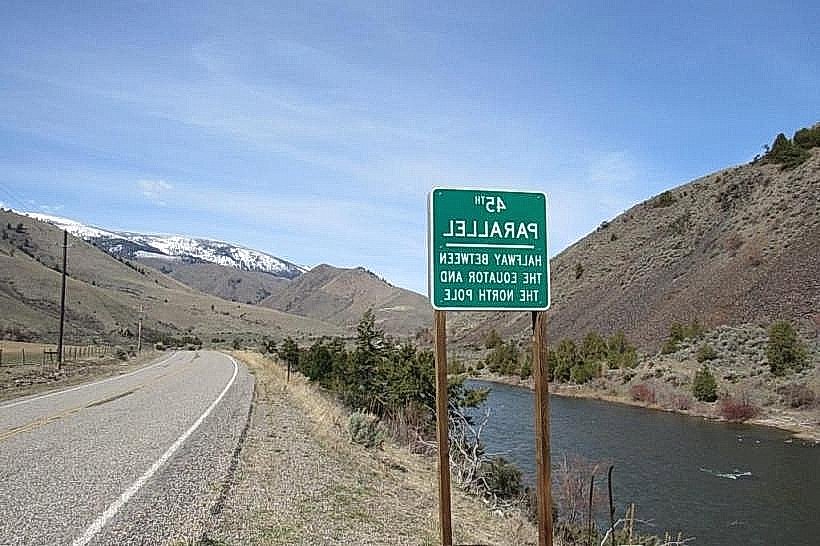
The river's width varies, averaging approximately 100 meters in the Salmon area. Water color ranges from clear to a silty brown depending on recent precipitation and upstream activity. The riverbed consists of gravel and cobble. Surrounding vegetation is predominantly coniferous forest, with deciduous trees along the immediate riverbanks.
Location & Access Logistics
The Salmon River flows through the city of Salmon, Idaho. Access points are numerous along U.S. Route 93, which parallels the river for many miles. The city of Salmon is situated at the confluence of the Salmon River and the Lemhi River. Parking is available at designated pull-offs and boat launch sites along U.S. Route 93. Public transport within the city is limited; access to the river is primarily via personal vehicle.
Historical & Ecological Origin
The Salmon River is a natural fluvial system, carved over millennia by erosion. Its ecological significance lies in its role as a critical habitat for anadromous fish, particularly Chinook salmon, which migrate from the Pacific Ocean to spawn in its headwaters. The river's drainage basin covers a substantial portion of central Idaho.
Key Highlights & Activities
Activities include whitewater rafting and kayaking, particularly on sections downstream from Salmon. Fly fishing for trout and salmon is a common pursuit. Bank fishing is accessible from various points along U.S. Route 93. Boat launches are available for watercraft entry.
Infrastructure & Amenities
Restrooms are available at some developed access points and boat launches. Shade is provided by riparian vegetation. Cell phone signal strength varies significantly along the river corridor; it is generally stronger within the city of Salmon. Food vendors and services are concentrated in the city of Salmon.
Best Time to Visit
For fishing, the spring and fall months are optimal, coinciding with salmon runs and trout spawning. Summer offers the best conditions for rafting and kayaking, with lower water levels and warmer temperatures. Mid-day provides the most direct sunlight on the water.
Facts & Legends
The Salmon River is the longest undammed river in the contiguous United States. Its watershed is home to a diverse array of wildlife, including elk, deer, and various bird species.
Nearby Landmarks
- Lemhi Pass National Historic Landmark: 16km East
- Sacajawea Center: 1.5km South
- Salmon-Challis National Forest: Borders the city to the North and West
- Pahsimeroi Valley: 10km Southeast