Information
Landmark: Salybia BeachCity: East Coast
Country: Dominica
Continent: North America
Salybia Beach, East Coast, Dominica, North America
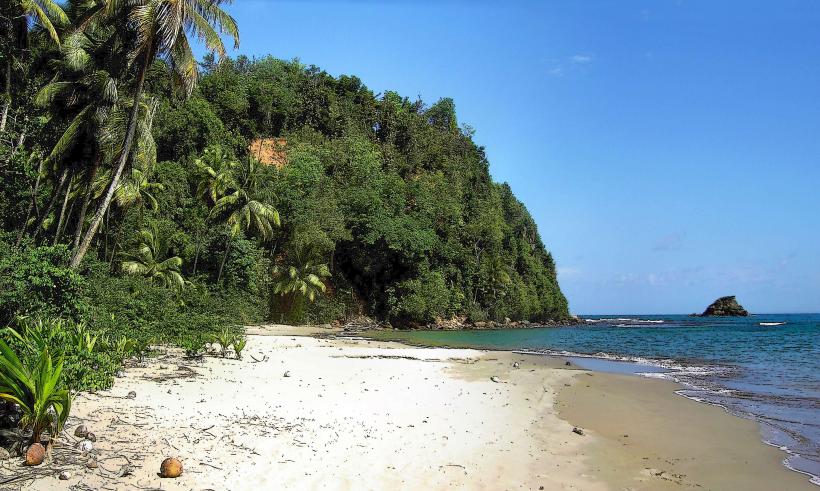
Salybia Beach is a coastal area located on the eastern side of Dominica. It is characterized by its dark volcanic sand and the Atlantic Ocean's consistent wave action.
Visual Characteristics
The beach consists of dark, coarse volcanic sand. The shoreline is approximately 1.5 kilometers long. The water color is typically a deep blue, influenced by the Atlantic Ocean. Vegetation density along the immediate coastline is moderate, with palm trees and low-lying shrubs.
Location & Access Logistics
Salybia Beach is situated on the northeast coast of Dominica, approximately 35 kilometers from the capital city, Roseau. Access is via the primary East Coast Road (Highway 3). From the main road, a well-maintained, paved access road leads directly to the beach parking area. Parking is available on-site, with capacity for approximately 20 vehicles. Public transport options are limited; local minibuses serving the Kalinago Territory may pass near the access road, requiring a short walk.
Historical & Ecological Origin
The beach is a product of volcanic activity, with the dark sand being eroded volcanic rock. It is part of the island's natural coastline, shaped by oceanic currents and erosion over millennia. The area is ecologically significant as a nesting ground for sea turtles during specific seasons.
Key Highlights & Activities
Swimming is possible, though caution is advised due to strong currents and wave action. Beachcombing for shells and volcanic glass is a common activity. Observing the natural coastal erosion patterns is also a point of interest. The beach is not typically managed for organized recreational activities.
Infrastructure & Amenities
Basic amenities are minimal. There are no permanent restroom facilities or designated shade structures. Cell phone signal (4G/5G) is generally weak to non-existent at the beach itself. No food vendors operate directly on the beach; provisions should be brought from nearby villages or the city.
Best Time to Visit
For photography, early morning or late afternoon offers softer light. The best months for weather are generally from December to May, avoiding the peak of the rainy season. Due to consistent wave action, tide levels have minimal impact on beach access or usability.
Facts & Legends
Local folklore suggests that the strong currents of Salybia Beach were once used by ancient mariners to navigate around the island. A specific tip for visitors is to wear sturdy footwear, as the volcanic sand can be hot underfoot during midday and contains small, sharp fragments.
Nearby Landmarks
- Kalinago Barana Autê (0.8km West)
- Pagua Bay (6km South)
- Morne Diablotins National Park (15km Southwest)
- Emerald Pool (18km Southwest)
- Trafalgar Falls (22km Southwest)