Information
Landmark: St. Casimir ChurchCity: Klaipeda
Country: Lithuania
Continent: Europe
St. Casimir Church, Klaipeda, Lithuania, Europe
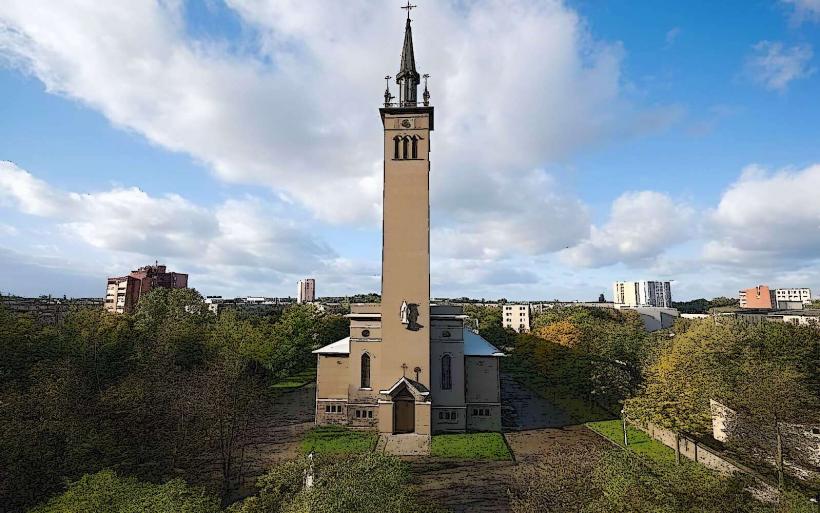
St. Casimir Church is a Roman Catholic place of worship situated in the city of Klaipeda, Lithuania. It serves as a central point for the local Catholic community and stands as a notable architectural presence in the city's urban fabric.
Visual Characteristics
The church features a distinctive modernist architectural style, characterized by its angular forms and prominent bell tower. Construction primarily utilizes concrete, presenting a facade of light grey and white tones. The roofline incorporates geometric elements, contributing to its contemporary appearance. The structure rises significantly above its immediate surroundings, making it a recognizable landmark.
Location & Access Logistics
The church is located at P. Lideikio g. 16, approximately 2.5 kilometers northeast of Klaipeda's city center and Old Town. Access by car is via P. Lideikio gatvė, with limited street parking available in the vicinity. Public transportation includes several bus lines; bus stops are located within a 200-meter radius, connecting to the city's main bus terminal and other districts.
Historical & Ecological Origin
St. Casimir Church is a man-made structure, consecrated in 1992. Its construction began in the late Soviet era and was completed shortly after Lithuania regained independence, symbolizing a revival of religious freedom. The architect responsible for its design was Romualdas Kripas. Its original purpose was to serve as a Roman Catholic parish church for the growing community in Klaipeda.
Key Highlights & Activities
Visitors can attend daily and Sunday religious services according to the published schedule. The church's unique modernist architecture provides an opportunity for observation and photography. The interior offers a space for quiet contemplation and prayer. Specific events, such as concerts or special masses, are announced locally.
Infrastructure & Amenities
Restroom facilities are available within the church premises during operating hours. Shade is primarily provided by the building itself, with limited natural shade in the immediate exterior. Cell phone signal (4G/5G) is consistently strong throughout the area. While no dedicated food vendors are directly on-site, several cafes and shops are located within a 500-meter radius.
Best Time to Visit
For optimal exterior photography, the morning hours or late afternoon provide softer, more directional light, highlighting the architectural details. The months of May through September offer the most favorable weather conditions for visiting Klaipeda, with milder temperatures and less precipitation. There are no specific tide requirements for visiting this inland landmark.
Facts & Legends
A notable historical fact is that the church's construction spanned a period of significant political transition in Lithuania, from Soviet rule to independence, making it a tangible symbol of religious and national resurgence. A practical tip for visitors is to verify the mass schedule in advance, especially for services in languages other than Lithuanian, if applicable.
Nearby Landmarks
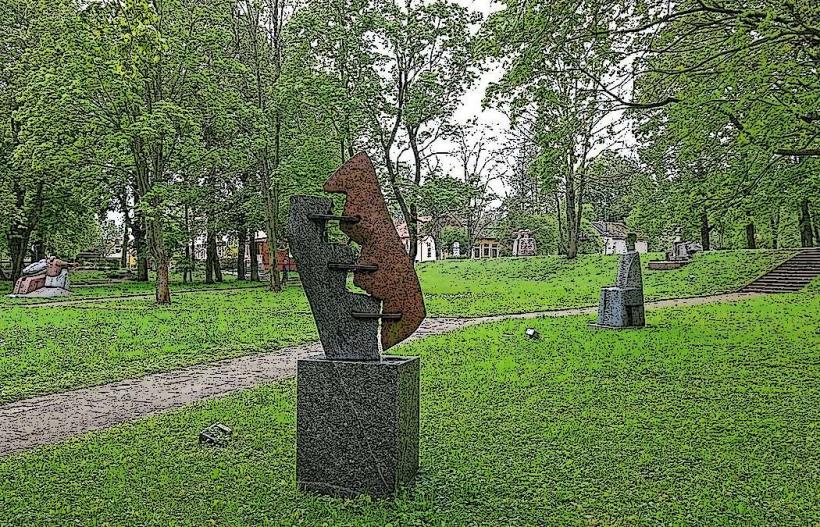
- Klaipeda Sculpture Park: 2.0km South
- Klaipeda Old Town: 2.5km South-West
- Klaipeda Castle Museum: 2.8km South-West
- Meridianas ship: 2.5km South-West