Information
Landmark: St. Florian's GateCity: Krakow
Country: Poland
Continent: Europe
St. Florian's Gate, Krakow, Poland, Europe
St. Florian's Gate (Polish: Brama Floriańska) is located in Kraków, not Warsaw. While Warsaw possesses a St. Florian’s Cathedral in the Praga district, the historic Gothic gate tower that serves as the entrance to the Old Town is situated at the northern end of Floriańska Street in Kraków.
Visual Characteristics
The gate is a 34.5-meter-tall rectangular Gothic tower constructed from "wild stone" (limestone) and brick. It is topped with a distinctive Baroque metal "helmet" or roof, added in 1660. The southern face (facing the city) features an 18th-century bas-relief of St. Florian, while the northern face is adorned with a stone eagle based on a design by the painter Jan Matejko. Internally, the gate houses a small neoclassical altar with a copy of the icon of Our Lady of Piasek.
Location & Access Logistics
Address: Pijarska Street, 31-015 Kraków, Poland.
Access: It marks the start of the Royal Road (Droga Królewska). It is a 5-minute walk from the Kraków Main Market Square and a 10-minute walk from the Kraków Main Railway Station (Kraków Główny).
Public Transit: The nearest tram and bus stop is Stary Kleparz, located 300 meters to the north.
Entry: The gate is part of the "City Defense Walls" museum branch. A single ticket typically covers entry to the gate, the adjoining defensive walls, and the nearby Barbican.
Historical & Ecological Origin
Built around 1307, St. Florian's Gate was the most important of the eight original medieval gates protecting Kraków. It was the only gate spared during the 19th-century "modernization" of the city, which saw most of the fortifications demolished to create the Planty Park. It was historically maintained and defended by the Furriers' Guild. The gate served as the primary ceremonial entry point for kings, foreign envoys, and coronation processions heading toward Wawel Castle.
Key Highlights & Activities
Fortification Tour: Visitors can walk along the preserved section of the city walls connected to the gate, which includes three other towers: the Joiners', Haberdashers', and Carpenters' towers.
Open-Air Gallery: The walls adjoining the gate are famously used by local amateur artists to display and sell paintings, creating a permanent outdoor gallery.
Buskers: The archway of the gate is a popular spot for street musicians due to its unique acoustics.
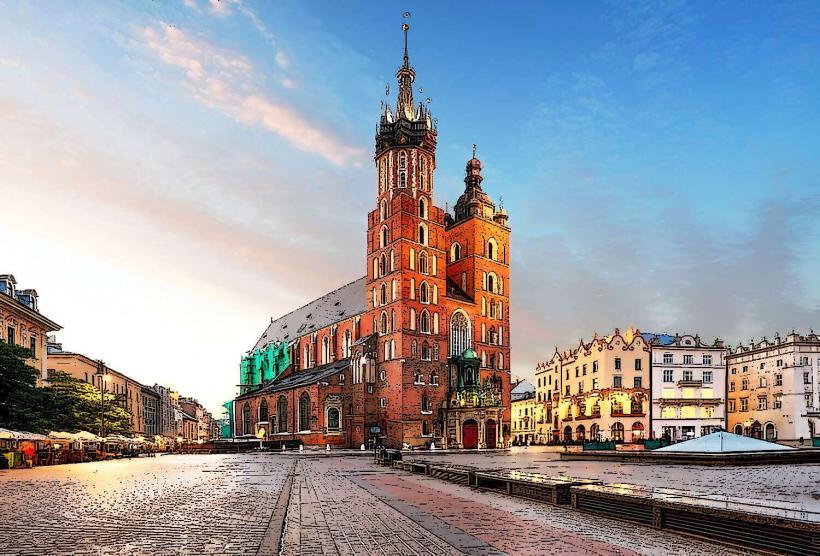
Photography: The view from the Planty Park looking through the gate toward St. Mary's Basilica is one of the most documented vistas in Poland.
Infrastructure & Amenities
The gate functions primarily as a historical monument and walkway. Basic amenities like public restrooms and cafes are not located inside the tower but are abundant on the adjacent Floriańska and Pijarska streets. The ground-level passage is wheelchair accessible, but the upper defensive walls and the interior chapel require climbing narrow stone stairs.
Best Time to Visit
The gate is accessible 24/7 as a thoroughfare, but the museum section (allowing access to the upper walls) is generally open from April to October, 10:00 AM to 6:00 PM. Early morning provides the best lighting for the northern face (eagle), while the late afternoon sun illuminates the bas-relief of St. Florian on the southern side.
Facts & Legends
A historical oddity: from 1901 to 1953, a narrow-gauge tram line ran directly through the narrow arch of St. Florian’s Gate. The tram was so tall that the conductor had to manually lower the pantograph (the arm connecting to the electric wire) every time the vehicle passed under the stone vaulting.
Nearby Landmarks
The Barbican: 0.1km North (connected via a historic neck)
St. Mary's Basilica: 0.4km South
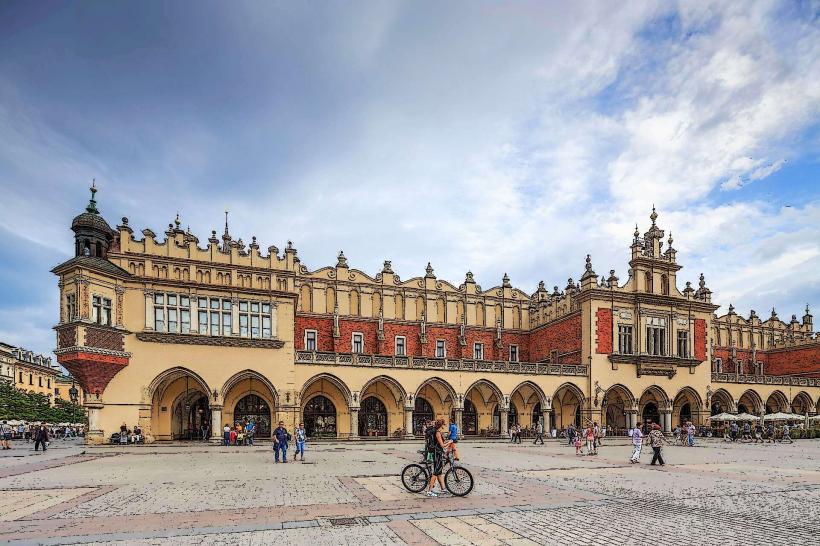
Main Market Square (Rynek Główny): 0.5km South
Czartoryski Museum: 0.1km West
St. Florian's Church: 0.3km North