Information
Landmark: Swedish Museum of Natural HistoryCity: Stockholm
Country: Sweden
Continent: Europe
Swedish Museum of Natural History, Stockholm, Sweden, Europe
The Swedish Museum of Natural History is a national museum dedicated to natural science and biodiversity. It is located in the Frescati area of Stockholm, Sweden.
Visual Characteristics
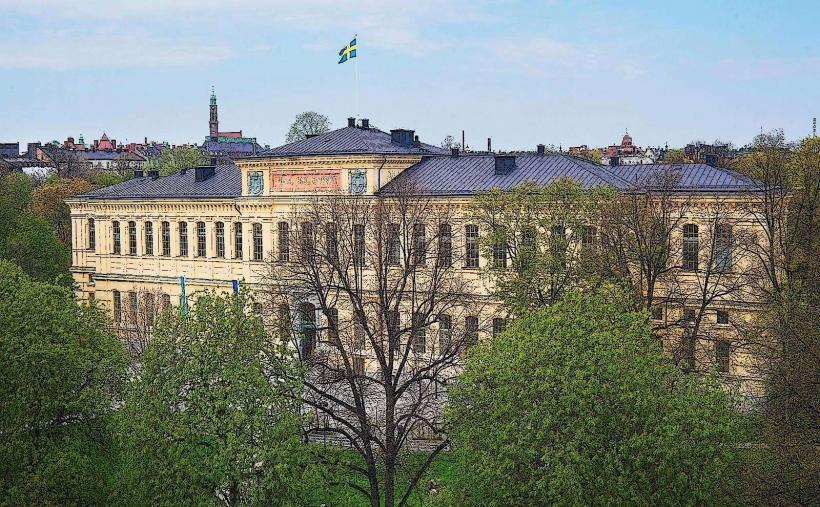
The museum complex consists of several buildings constructed primarily from brick and stone, featuring a Neo-Renaissance architectural style. The main building is characterized by its grand facade, large arched windows, and a central dome. The exterior color palette is dominated by red brick and grey stone accents.
Location & Access Logistics
The museum is situated at Frescativägen 40, approximately 4.5 km north of Stockholm city center. Access by car is via Roslagsvägen (E18). On-site parking is available for a fee. Public transport options include bus lines 50 and 540, which stop directly outside the museum. The nearest metro station is Universitetet (red line), a 10-minute walk away.
Historical & Ecological Origin
The museum was established in 1819 by the Royal Swedish Academy of Sciences. The current main building was designed by architect Axel Anderberg and constructed between 1907 and 1916. Its original purpose was to house and display the Academy's extensive natural history collections and facilitate scientific research.
Key Highlights & Activities
Exhibits include dinosaur skeletons, taxidermied animals from around the world, and geological displays. The Cosmonova IMAX dome cinema offers film screenings on natural science topics. Interactive exhibits are available in the 'Fossil & Evolution' and 'Human Journey' sections. Educational workshops are regularly conducted for various age groups.
Infrastructure & Amenities
Restrooms are available on multiple floors. The museum offers indoor climate control, providing shade and shelter. Cell phone signal (4G/5G) is generally strong throughout the premises. A restaurant and a café are located within the museum, offering meals and refreshments. A gift shop is also present.
Best Time to Visit
The museum is typically less crowded during weekday mornings. For photography, natural light is optimal during midday hours. The best months to visit for comfortable weather in Stockholm are May through September. No specific tide requirements apply.
Facts & Legends
A notable historical oddity is the museum's collection of specimens from Captain James Cook's second voyage, acquired by the Academy of Sciences in the late 18th century. A specific tip for visitors is to check the Cosmonova schedule in advance, as showtimes vary and tickets are separate.
Nearby Landmarks
- Bergianska trädgården (Bergianska Garden): 0.5 km East
- Stockholm University: 0.3 km South
- Experimentalfältet: 1.5 km West
- Stora Skuggan: 1.0 km North