Information
Landmark: Temple of HephaestusCity: Athens
Country: Greece
Continent: Europe
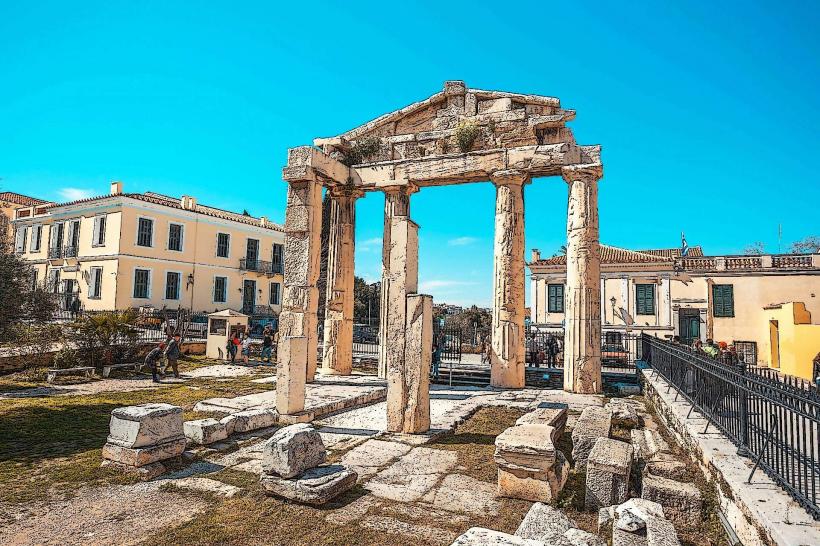
Temple of Hephaestus, Athens, Greece, Europe
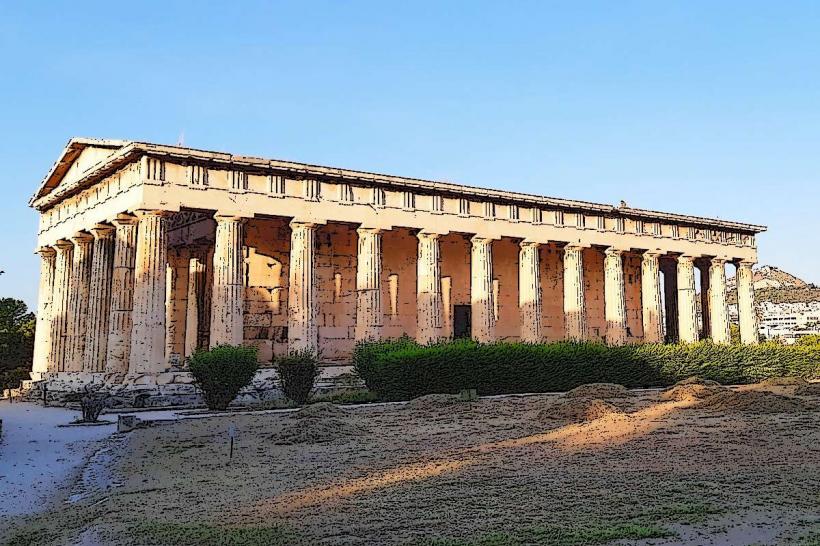
The Temple of Hephaestus is a well-preserved Doric peripteral temple located on the Agoraios Kolonos hill at the western edge of the Ancient Agora of Athens. It remains the most intact ancient Greek temple in the world, largely due to its continuous use from antiquity through the 19th century.
Visual Characteristics
The temple is built of Pentelic marble, following a hexastyle plan with six columns on the ends and 13 along the sides. It measures 13.7 meters in width and 31.7 meters in length. The structure features a pronaos (inner porch), a cella (main chamber), and an opisthodomos (rear porch). Its Doric columns are fluted and lack bases, supporting an entablature that retains much of its original frieze and metopes depicting the labors of Heracles and Theseus.
Location & Access Logistics
The site is situated within the Ancient Agora of Athens archaeological park. The primary entrance is on Adrianou Street, approximately 0.4km from the Thiseio Metro Station (Line 1) and 0.5km from the Monastiraki Metro Station (Lines 1 and 3). Visitors must purchase an Agora site ticket to gain access. No parking is available on-site; the nearest vehicle access is through the peripheral streets of Thiseio.
Historical & Ecological Origin
Construction began in 449 BC under the administration of Pericles, likely designed by the same architect who built the Temple of Poseidon at Sounion. It was dedicated to Hephaestus, the god of metalworking, and Athena Ergane, patron of pottery and crafts. In the 7th century AD, the temple was converted into the Christian Church of Saint George, which necessitated the sealing of the original entrance and the addition of a vaulted roof.
Key Highlights & Activities
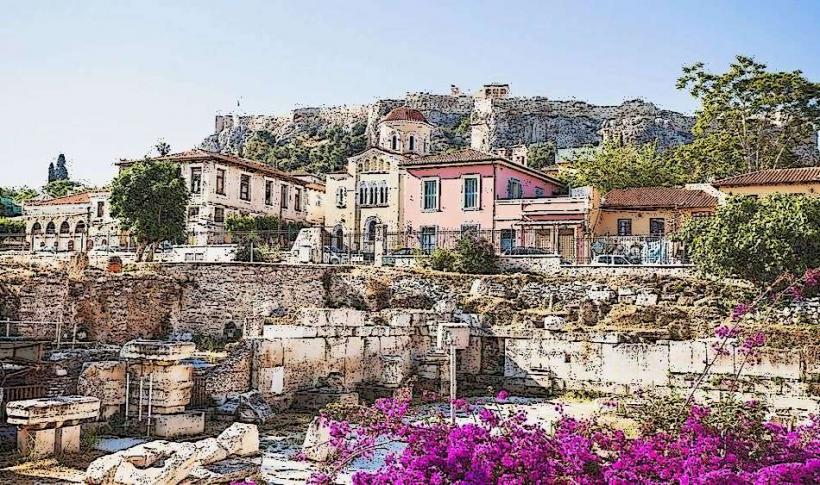
Visitors can walk the perimeter of the temple to examine the sculptural metopes on the eastern side. The elevated position on the Agoraios Kolonos provides a panoramic view of the Ancient Agora and the Acropolis. Specific interest is often directed at the coffered marble ceiling of the pteron (the space between the columns and the cella wall), which remains largely in place.
Infrastructure & Amenities
Restrooms and water fountains are located near the Stoa of Attalos, approximately 0.2km east of the temple within the park. The hill provides some shade via pine and cypress trees, but the temple platform itself is exposed. 5G cellular signal is consistent across the site. Information boards in English and Greek are positioned at the base of the hill.
Best Time to Visit
The temple is best photographed in the early morning to capture the sunlight hitting the eastern facade. Late afternoon is also suitable for viewing the temple against the setting sun. The site is least crowded immediately after opening at 08:00. The best months for visiting are April through June, when the surrounding vegetation is at its peak density.
Facts & Legends
The temple was long misidentified as the "Theseion" because its metopes depict the exploits of the hero Theseus, leading many to believe it was his burial site. A verified historical oddity is that the temple served as a burial ground for Protestants in the 19th century, with several gravestones still located within the site's vicinity or integrated into the archaeological records.
Nearby Landmarks
Stoa of Attalos: 0.2km East
Church of the Holy Apostles: 0.3km Southeast
Ancient Agora Museum: 0.2km East
Areopagus Hill: 0.4km South
Kerameikos Cemetery: 0.5km Northwest