Information
Landmark: Teton DamCity: Rexburg
Country: USA Idaho
Continent: North America
Teton Dam, Rexburg, USA Idaho, North America
The Teton Dam was an agricultural dam constructed on the Teton River in Idaho, USA. It was located approximately 40 miles (64 km) west of Rexburg.
Visual Characteristics
The dam was a 305-foot (93 m) tall, 3,050-foot (930 m) long earth and rock-fill structure. Its upstream face was covered with a concrete facing, and the downstream face was protected by a layer of rock riprap. The reservoir it created, known as Teton Reservoir, was designed to store water for irrigation.
Location & Access Logistics
The dam site was situated in the Teton River Canyon, approximately 10 miles (16 km) upstream from the town of Wilford. Access to the site was via a paved county road that branched off U.S. Route 20 near Rexburg. This road led directly to the dam structure. No public transportation routes served the immediate dam site.
Historical & Ecological Origin
Construction of the Teton Dam began in 1971 and was completed in 1976. It was designed and built by the U.S. Bureau of Reclamation. The primary purpose was to provide irrigation water for approximately 60,000 acres (24,000 hectares) of farmland in the Upper Snake River Valley. Ecologically, the dam altered the natural flow of the Teton River, impacting downstream aquatic habitats.
Key Highlights & Activities
The primary function of the dam was water storage for irrigation. Following its failure, the site became a location for geological and engineering study. No recreational activities were permitted at the dam itself.
Infrastructure & Amenities
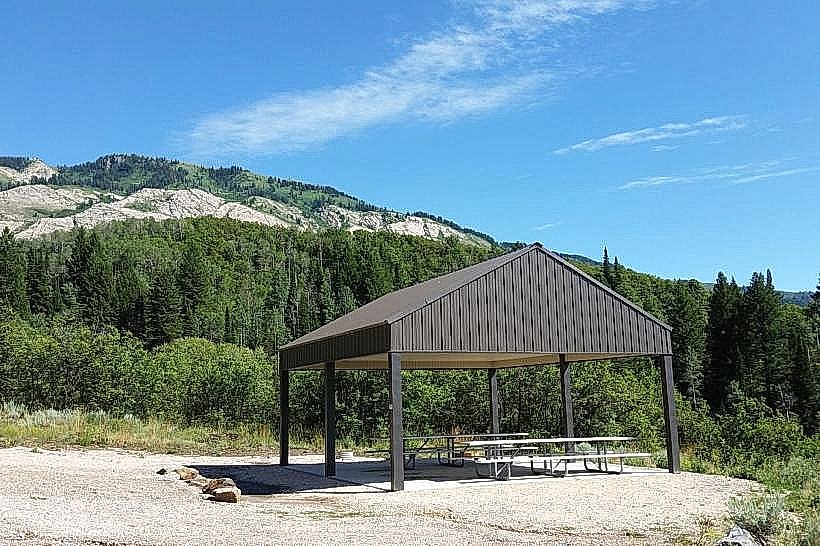
Limited infrastructure was present at the dam site. Basic access roads were constructed. No public restrooms, shade structures, food vendors, or reliable cell phone signal were available at the dam location.
Best Time to Visit
The dam site is accessible year-round, weather permitting. Access roads may be affected by snow during winter months. The surrounding area offers opportunities for viewing the river canyon, which is best appreciated during daylight hours.
Facts & Legends
The Teton Dam catastrophically failed on June 5, 1976, less than six months after its completion. The failure resulted in a massive flood that caused significant damage and loss of life downstream. Investigations into the cause of the failure focused on issues with the dam's core and grout curtain.
Nearby Landmarks
- Rexburg City Center (16km Northeast)
- Big Lost River (12km West)
- Caribou-Targhee National Forest (30km East)
- Yellowstone National Park (100km East)