Information
Landmark: Tian Tan Buddha (Big Buddha)City: Hong Kong
Country: China
Continent: Asia
Tian Tan Buddha (Big Buddha), Hong Kong, China, Asia
The Tian Tan Buddha, also known as the Big Buddha, is one of the most famous and impressive landmarks in Hong Kong, located on Lantau Island. It is an iconic symbol of Buddhism and one of the largest outdoor seated bronze statues of Buddha in the world. The Tian Tan Buddha attracts both religious pilgrims and tourists who come to admire its grandeur, peaceful ambiance, and the stunning views surrounding the area.
1. Overview
- Location: The Tian Tan Buddha is located at the Po Lin Monastery on Lantau Island, one of Hong Kong's largest islands. It is situated at an altitude of about 512 meters (1,680 feet) above sea level.
- Height: The statue itself stands at an impressive height of 34 meters (112 feet), making it one of the largest bronze Buddha statues in the world.
- Construction: The Buddha statue was completed in 1993 and became an important symbol of Buddhism in Hong Kong, symbolizing the harmonious relationship between man and nature, and between people and religion.
2. Significance
- Symbol of Buddhism: The Tian Tan Buddha is a representation of Sakyamuni Buddha, the founder of Buddhism. It serves as a spiritual symbol for Buddhists and represents peace, enlightenment, and wisdom.
- Tian Tan: The name "Tian Tan" refers to the Temple of Heaven in Beijing, China, as the Buddha’s design was inspired by this ancient temple, which symbolizes the connection between heaven and earth.
- The statue is also a reflection of the role of Hong Kong as an important center for the practice of Buddhism.
3. Design and Features
- Seated Buddha: The Tian Tan Buddha is depicted in a seated position with the right hand raised in the gesture of "abhaya mudra", symbolizing protection, peace, and the dispelling of fear. The left hand rests on the Buddha’s lap in a gesture of meditation and serenity.
- Bronze Statue: The Buddha is made of bronze and weighs approximately 250 metric tons. It is supported by a three-tiered platform with intricate carvings.
- Pedestal: The base of the Buddha is a three-story lotus-shaped pedestal that houses small chambers and rooms for meditation and worship. The lotus symbolizes purity and enlightenment in Buddhist tradition.
4. How to Reach Tian Tan Buddha
Ngong Ping 360 Cable Car: One of the most popular and scenic ways to reach the Tian Tan Buddha is by taking the Ngong Ping 360 Cable Car. This 5.7 km (3.5 miles) long cable car ride offers stunning views of Lantau Island, the airport, and the surrounding mountains. The cable car journey ends at the Ngong Ping Village, from where it’s a short walk to the Buddha statue.
By Bus: If you prefer not to take the cable car, you can reach the Tian Tan Buddha by public bus. There are buses from Tung Chung and Mui Wo that will take you to the Po Lin Monastery and the Buddha.
By Hiking: For the more adventurous, there are hiking trails that lead to the Buddha, such as the Lantau Trail, which offers an immersive experience in nature as you ascend the mountain.
5. The Climb to the Buddha
- To reach the Buddha’s base, visitors must climb a set of 268 steps, symbolizing the journey to enlightenment. The climb can be a bit challenging, but it is a rewarding experience, offering views of the surrounding landscapes, including the Po Lin Monastery, the Ngong Ping Plateau, and the South China Sea.
6. Po Lin Monastery
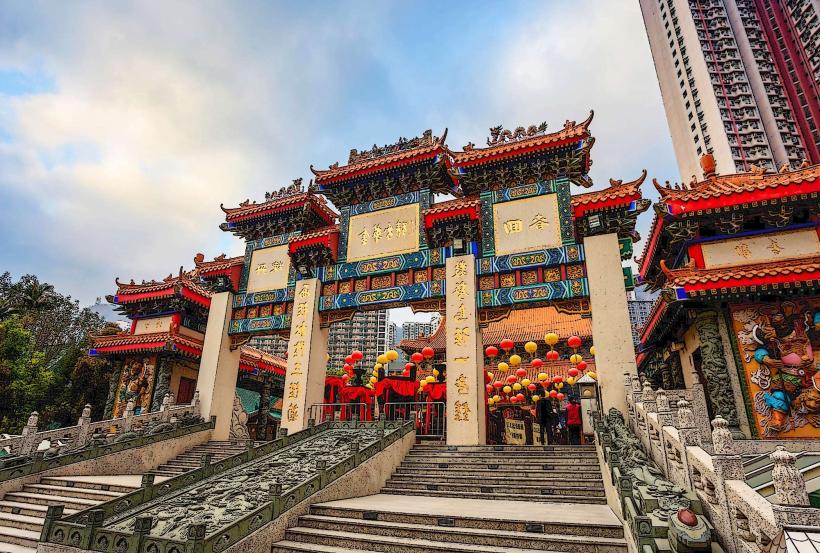
- Po Lin Monastery, founded in 1906, is one of Hong Kong’s most important Buddhist monasteries and is located near the Tian Tan Buddha. It is an essential part of the cultural and spiritual experience when visiting the Buddha.
- The monastery features a range of Buddhist statues, temples, and shrines. Visitors can also find a Buddhist vegetarian restaurant that offers traditional meals for those looking to experience Buddhist cuisine.
7. Other Attractions in the Ngong Ping Area
- Ngong Ping Village: Just a short walk from the Tian Tan Buddha, Ngong Ping Village is a cultural theme park that blends traditional Chinese architecture with modern facilities. It has shops, restaurants, and cultural exhibitions that offer visitors a chance to experience local crafts, traditions, and food.
- Wisdom Path: Located near the Buddha statue, the Wisdom Path is a beautiful outdoor walk featuring wooden pillars inscribed with the Heart Sutra, one of the most famous Buddhist scriptures. The path offers a peaceful atmosphere and scenic views of the surrounding mountains and nature.
- Ngong Ping 360: Besides the cable car, the Ngong Ping 360 area also offers other activities and shops for visitors to enjoy, making it an entire experience centered around the cultural and natural beauty of Lantau Island.
8. Best Time to Visit
Early Morning: Visiting early in the morning is a good idea if you want to avoid the crowds and enjoy the peace and quiet of the Buddha and the surrounding area. The morning also provides cooler temperatures for the climb.
Weekdays: Weekdays tend to be less crowded than weekends, as Lantau Island is a popular weekend getaway for both locals and tourists.
Weather: The best time to visit is during the fall (October to December) and spring (March to May), when the weather is mild and pleasant. Avoid visiting in the summer months as it can get very hot and humid.
9. Admission and Costs
- Admission to Tian Tan Buddha is free.
- Ngong Ping 360 Cable Car: The cost for a round-trip ticket on the Ngong Ping 360 Cable Car is about HKD 210 for standard class, with more expensive options for Crystal Cabin (glass floor) rides.
- Po Lin Monastery: There is no admission fee to enter Po Lin Monastery, but donations are welcome to support its activities and maintenance.
10. Spiritual Significance
- The Tian Tan Buddha is a major pilgrimage site for Buddhists, especially for those who follow Mahāyāna Buddhism. It symbolizes the principles of compassion, peace, and wisdom.
- Visitors often come to the Buddha to reflect, meditate, and seek blessings. The nearby Po Lin Monastery is an active religious site, with monks and worshippers engaging in prayer and meditation.
11. Cultural and Educational Experience
- The Tian Tan Buddha offers a unique cultural experience for visitors of all backgrounds. Besides being a significant Buddhist monument, it also provides an opportunity to learn about Buddhist philosophy, Chinese traditions, and the importance of harmony in the relationship between humans and nature.
- The Buddha and the surrounding area are a perfect combination of religious symbolism, nature, and Hong Kong's heritage, making it an enriching experience for tourists.
12. Conclusion
The Tian Tan Buddha (Big Buddha) is an extraordinary attraction that offers a blend of spiritual significance, natural beauty, and cultural richness. Whether you're visiting for religious reasons, to admire its sheer size and beauty, or simply to enjoy the breathtaking views of Lantau Island, the Big Buddha is a must-see destination in Hong Kong. The combination of the peaceful environment, cultural landmarks like Po Lin Monastery, and the stunning views of the surrounding area make it an unforgettable experience.