Information
Landmark: Ticonic FallsCity: Waterville
Country: USA Maine
Continent: North America
Ticonic Falls, Waterville, USA Maine, North America
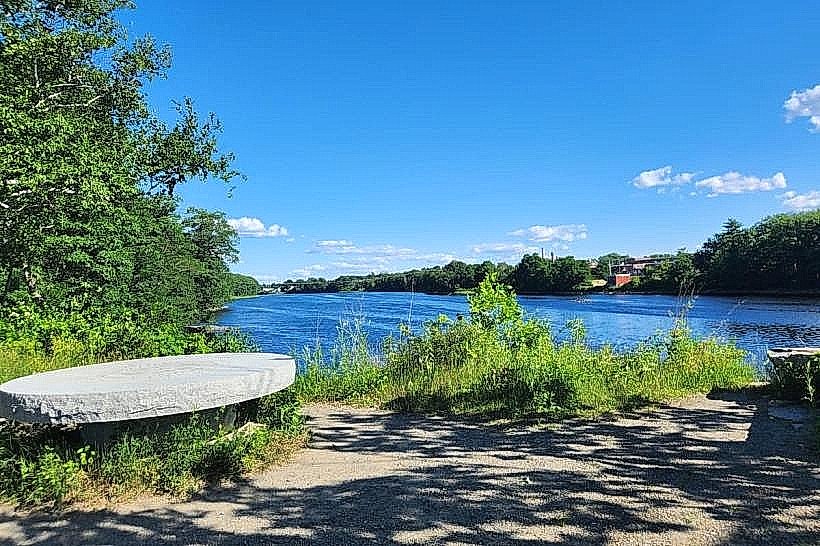
Ticonic Falls is a series of rapids and cascades located on the Kennebec River within the city limits of Waterville, Maine.
These falls represent a significant natural feature within an urban environment, characterized by the river's flow over bedrock formations.
Visual Characteristics
The falls consist of multiple distinct drops and turbulent water sections over a granite bedrock substrate. The river width varies, with the main flow concentrated in channels between exposed rock. Water color is typically brown to grey, influenced by sediment load. Surrounding vegetation includes deciduous trees and shrubs along the riverbanks.
Location & Access Logistics
Ticonic Falls is situated approximately 1.5 kilometers (0.9 miles) south of Waterville's downtown core. Access is primarily from the east bank via Water Street, which runs parallel to the river. Limited street parking is available along Water Street and adjacent side streets. Public transport options are limited; the nearest bus stops for the Waterville Transit System are located in the downtown area, requiring a walk of approximately 20-30 minutes to reach the falls.
Historical & Ecological Origin
The falls are a natural geological formation, shaped by the erosive power of the Kennebec River over millennia. Historically, Ticonic Falls served as a power source for early industrial development in Waterville, with mills established on its banks in the 19th century. The ecological classification is a riverine system with rapids, supporting aquatic life adapted to flowing water conditions.
Key Highlights & Activities
Observation of the river's flow and the cascades is the primary activity. Limited bank fishing is possible in calmer sections downstream. Walking along the riverbank provides views of the falls. No formal trails are maintained directly at the falls.
Infrastructure & Amenities
Restrooms are not available directly at the falls. Shade is provided by mature trees along the riverbanks. Cell phone signal (4G/5G) is generally available. No food vendors are located on-site; dining options are available in downtown Waterville.
Best Time to Visit
For photography, early morning or late afternoon light offers angled illumination on the water. The best months for viewing are typically spring (April-May) when snowmelt increases river flow, and autumn (September-October) for foliage contrast. High water levels in spring can obscure some of the bedrock features.
Facts & Legends
A historical oddity is the presence of remnants of an old mill dam structure, partially visible during periods of lower water flow, indicating the site's past industrial significance. Local folklore sometimes refers to the sound of the falls as "whispers of the river."
Nearby Landmarks
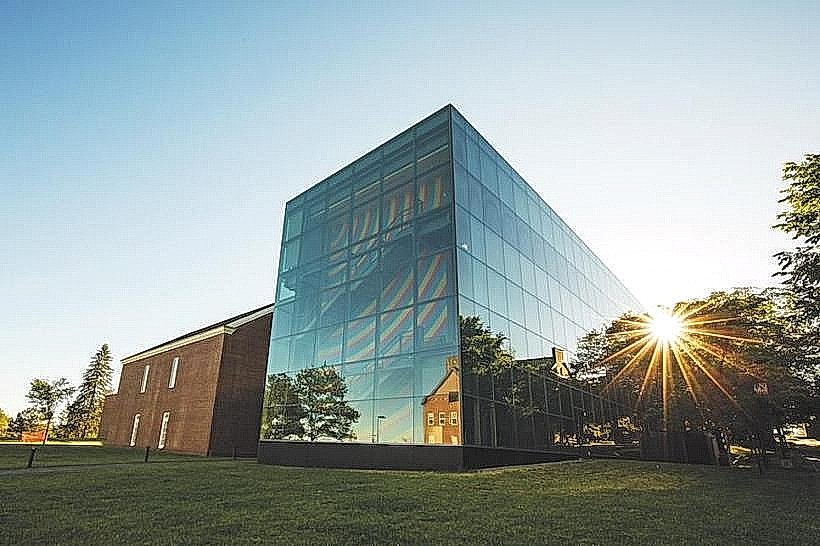
- Colby College Museum of Art (1.2km Northwest)
- Waterville Opera House (1.8km North)
- Kennebec River Rail Trail (Access point 2.5km North)
- Fort Halifax Park (4.0km Southeast)