Information
Landmark: Tiger Leaping GorgeCity: Lijiang
Country: China
Continent: Asia
Tiger Leaping Gorge, Lijiang, China, Asia
Tiger Leaping Gorge is a deep canyon on the Jinsha River, a tributary of the Yangtze River, located in Yunnan Province, China.
It is one of the deepest river canyons in the world, characterized by steep cliffs and a fast-flowing river.
Visual Characteristics
The gorge walls are composed of sedimentary rock, primarily limestone and shale, rising vertically from the riverbed. The river itself is a turbulent, jade-green color, particularly during the monsoon season. Vegetation is dense on the lower slopes, transitioning to sparser alpine flora at higher elevations. Rock formations include sheer cliffs, scree slopes, and exposed bedrock.
Location & Access Logistics
Tiger Leaping Gorge is situated approximately 60 kilometers north of Lijiang city. Access is primarily via the G214 National Road. From Lijiang, take a bus or hire a taxi towards Shangri-La, disembarking at the gorge entrance. Public buses from Lijiang Bus Station to Qiaotou Town (the eastern entrance) run daily. Parking is available at Qiaotou Town and at various guesthouses along the gorge. For those hiking the gorge, the western trail can be accessed via ferry from the village of Shinzhai across the river, or by road from Shangri-La.
Historical & Ecological Origin
The gorge was formed by the erosive power of the Jinsha River over millions of years, carving through the uplifted terrain of the Hengduan Mountains. Ecologically, it is part of a biodiversity hotspot, supporting a range of flora and fauna adapted to steep mountain environments. The name "Tiger Leaping Gorge" originates from a legend of a tiger leaping across the narrowest point of the gorge to escape a hunter.
Key Highlights & Activities
Hiking the Upper Trail (also known as the High Trail) offers panoramic views of the gorge. The Middle Trail provides access to the riverbank and the famous "Tiger Leaping Stone." The Lower Trail follows the river more closely. Rafting is possible for experienced individuals with appropriate equipment. Photography opportunities are abundant, especially of the river and surrounding peaks.
Infrastructure & Amenities
Basic guesthouses and teahouses are located along the hiking trails, offering accommodation and food. Restrooms are available at these establishments. Cell phone signal is intermittent, particularly on the hiking trails. Shade is provided by trees on the lower sections of the trails and by the gorge walls themselves. Food vendors are limited to the guesthouses.
Best Time to Visit
The best months for visiting are April to May and September to October, offering pleasant temperatures and clear skies. During these periods, the river is less turbulent than in the summer monsoon. For photography, early morning and late afternoon light provides optimal illumination of the gorge walls. High tide is not a significant factor for access or activities within the gorge itself.
Facts & Legends
A specific point of interest is the "Tiger Leaping Stone," a large boulder situated in the middle of the river, said to be where a tiger made its legendary leap. Local lore suggests that the sound of the rushing water can sometimes be heard as a roar, attributed to the spirits of the mountains.
Nearby Landmarks
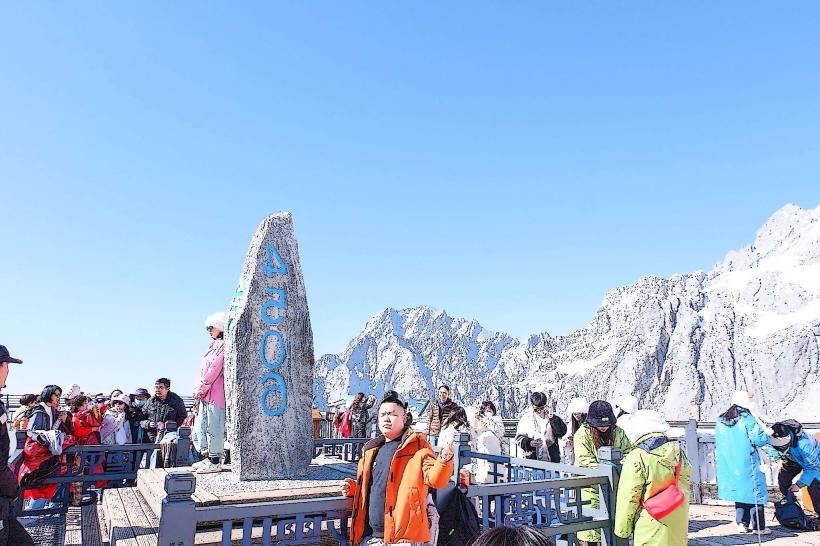
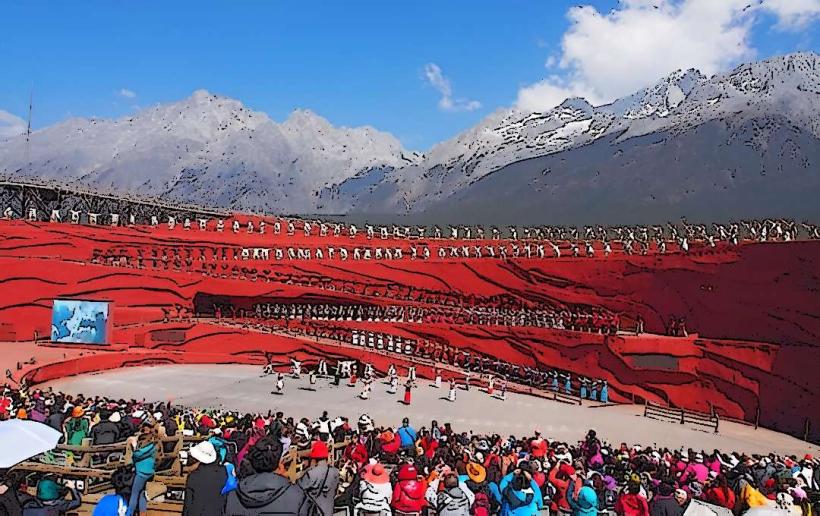
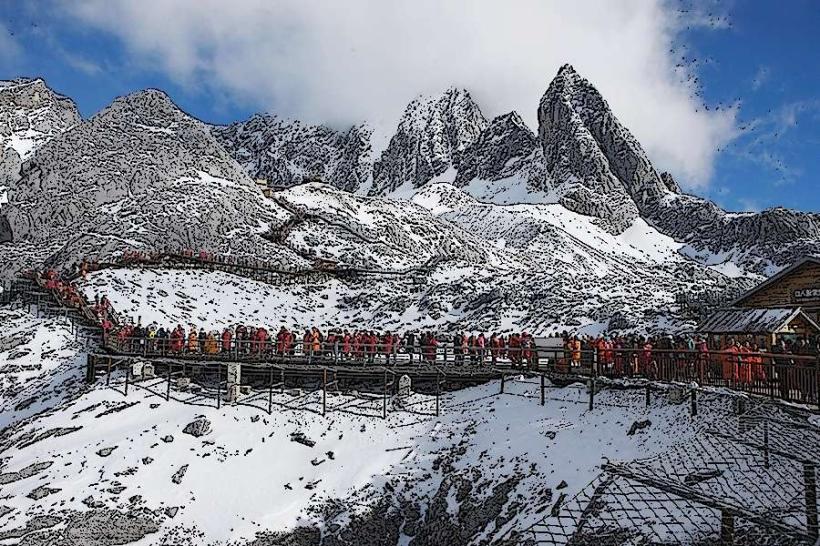
- Jade Dragon Snow Mountain (20km Southwest)
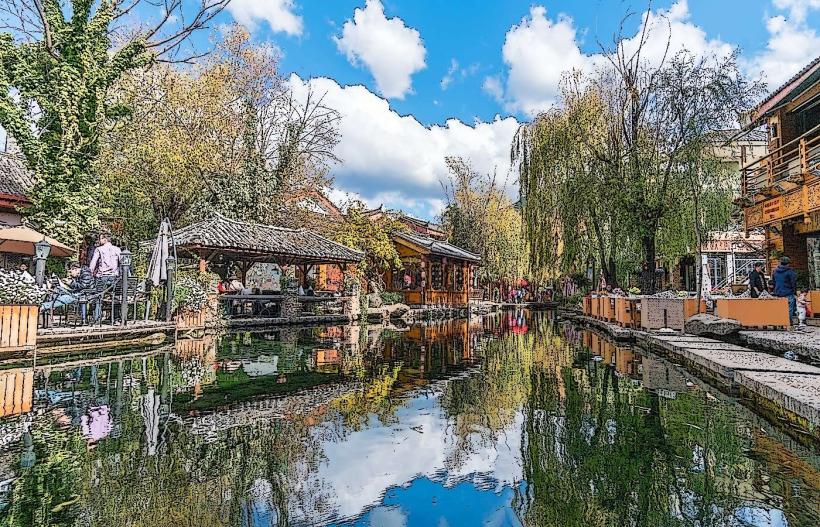
- Shuhe Ancient Town (55km South)
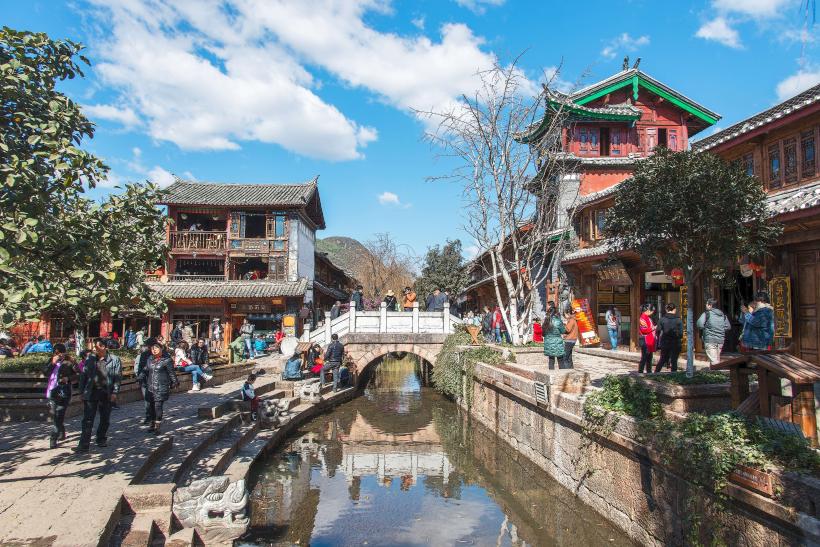
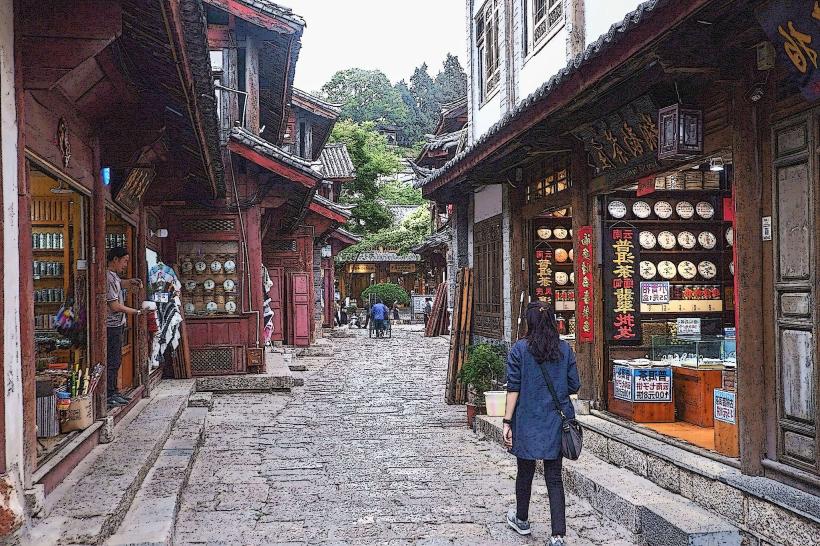
- Lijiang Old Town (60km South)
- Dukezong Ancient City, Shangri-La (70km North)
- Pudacuo National Park (85km North)