Information
Landmark: Trujillo CathedralCity: Trujillo
Country: Peru
Continent: South America
Trujillo Cathedral, Trujillo, Peru, South America
Trujillo Cathedral (Catedral de Trujillo) is a historic and architectural landmark located in the heart of Trujillo, a city on the northern coast of Peru. The cathedral is one of the most significant religious structures in the country and plays a central role in the city's spiritual and cultural life. It is known for its colonial-era architecture, historical importance, and role in the religious and social development of the region.
Overview of Trujillo Cathedral
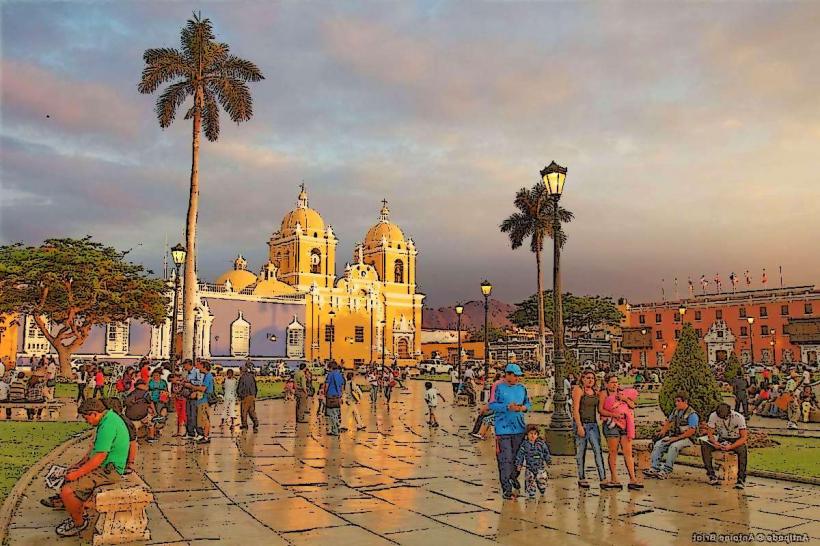
- Location: The cathedral is situated in the Plaza de Armas of Trujillo, the main square of the city, which is the historic center of Trujillo. The square is surrounded by colonial-era buildings, and the cathedral is a prominent feature in the area.
- Established: The Trujillo Cathedral was founded in 1616, though its construction began earlier in the 16th century. The building has undergone several reconstructions and restorations over the centuries, leading to the current structure that blends colonial and neo-classical architectural styles.
- Architectural Style: The cathedral’s design is primarily Baroque, with elements of neo-classical and Spanish colonial influences. The building features a large, rectangular structure with a combination of stone and adobe materials, typical of colonial-era churches in Peru.
Historical Significance
Colonial Origins:
- The origins of Trujillo Cathedral date back to the early days of the Spanish conquest of Peru. The original church was founded by Francisco Pizarro, the Spanish conquistador who founded Trujillo in 1534. The cathedral was originally built as a modest church but was gradually expanded and improved over the centuries to accommodate the growing population of the city.
- The construction of the cathedral was overseen by Spanish colonial authorities, who sought to establish a symbol of Spanish religious power and Catholic influence in the region. The cathedral became the seat of the Bishopric of Trujillo, which had been established in 1577.
Architectural Development:
- The original church was likely built with adobe bricks, a common material in the region at the time. In the 17th century, as the city's wealth grew due to agriculture and trade, the cathedral was expanded and reconstructed using stone and brick, reflecting the increased influence and prosperity of the area.
- The cathedral’s Baroque-style facade, with its intricate detailing and twin bell towers, was completed in the 18th century. The facade is a testament to the Catholic Baroque style that characterized many colonial-era churches in Peru, with its ornate carvings, religious sculptures, and gold leaf detailing.
Neo-Classical Influences:
- In the 19th century, after independence from Spain, the cathedral underwent further modifications, incorporating elements of the neo-classical style that was popular during that period. This resulted in the combination of Baroque and neo-classical features seen in the cathedral today.
Architectural Features
Facade and Bell Towers:
- The facade of the cathedral is a striking feature, with intricate carvings and a symmetrical design. The main entrance is flanked by two bell towers, which are capped with domed roofs. These towers are an iconic feature of the cathedral, and they rise above the Plaza de Armas, visible from various parts of the city.
- The baroque-style decoration on the facade includes religious figures, angels, and biblical scenes, which highlight the Catholic nature of the church and its role in the religious life of the city.
Interior Design:
- Inside, the cathedral features a spacious nave, which is divided into several sections by columns and arches. The interior is richly decorated, with golden altars, paintings, and religious sculptures that depict saints, the Virgin Mary, and Christ.
- The cathedral’s altar is one of its most impressive features, with baroque-style carvings and gold leaf accents. The altar is surrounded by paintings that date back to the 17th and 18th centuries, some of which depict significant religious events in the history of Christianity.
- The ceiling is decorated with ornate frescoes, some of which were painted in the 18th century, showcasing biblical stories and saints.
Chapel of Our Lady of the Rosary:
- One of the most important aspects of the cathedral is the Chapel of Our Lady of the Rosary. This chapel is dedicated to the Virgin Mary and is considered a place of great spiritual significance for the local population. The chapel contains a statue of the Virgin of the Rosary, which is an important religious symbol in Trujillo.
Religious and Cultural Role
Center of Catholicism in Trujillo:
- Trujillo Cathedral serves as the spiritual center for the city and the Roman Catholic Diocese of Trujillo. It hosts daily mass, religious ceremonies, and festivals, particularly those associated with Catholic saints and important religious holidays like Christmas and Easter.
- The cathedral is also the site of important cultural events, such as concerts, weddings, and baptisms, making it a central part of the city’s social and cultural life.
Patron Saint Festivals:
- The Feast of Our Lady of La Virgen de la Puerta is one of the most important religious festivals in Trujillo, and it is celebrated with great fervor at the cathedral. The festival honors the patron saint of the city, Virgen de la Puerta, and includes processions, music, and dances that reflect the strong religious and cultural traditions of Trujillo.
- The cathedral is also the focal point for processions and religious observances during Holy Week (Semana Santa), which is celebrated with elaborate ceremonies and events.
Visiting Trujillo Cathedral
- Accessibility: The cathedral is located in the Plaza de Armas, making it easy to access for visitors to Trujillo. The surrounding area is a vibrant part of the city, with colonial-era buildings, cafes, and shops, providing a perfect place to explore after visiting the cathedral.
- Tours and Events: Visitors to the cathedral can take guided tours to learn about the history and architectural features of the church. The cathedral also hosts regular religious services, and visitors are welcome to attend mass or simply admire the beauty and grandeur of the space.
Conclusion
The Trujillo Cathedral is a key historical and cultural landmark in the city, representing the deep-rooted Catholic heritage and colonial history of northern Peru. Its Baroque architecture, rich interior decoration, and role as the center of religious life in the region make it an essential stop for those interested in the history of Peru, its colonial past, and its religious traditions. The cathedral continues to serve as both a place of worship and a symbol of Trujillo's cultural identity.