Information
Landmark: Turaida Museum ReserveCity: Jurmala
Country: Latvia
Continent: Europe
Turaida Museum Reserve, Jurmala, Latvia, Europe
Visual Characteristics
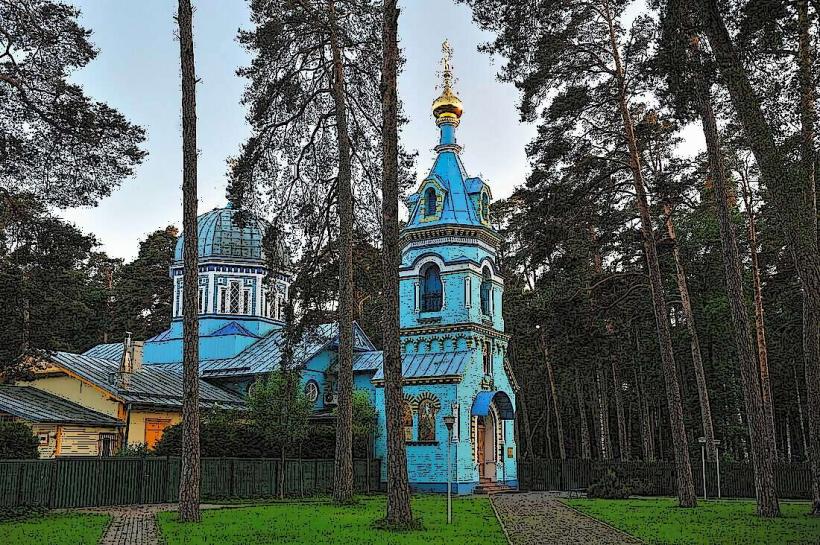
The central feature is the Turaida Stone Castle, constructed primarily from red brick and local fieldstone. Its main tower, the Main Tower, stands approximately 38 meters tall with a conical roof. The castle complex includes several restored buildings with red tile roofs and white plaster facades. The Turaida Church is a wooden structure with a steep shingle roof and a small bell tower. The surrounding landscape features rolling hills and dense deciduous and coniferous forests, particularly vibrant with green foliage in summer and varied colors in autumn.
Location & Access Logistics
The reserve is located at Turaidas iela 10, Sigulda, LV-2150. From Jurmala, access involves driving east on the A10, then north on the A2 towards Sigulda, followed by the P8 road. The site is approximately 3 kilometers north of Sigulda town center. A large paid parking lot is available on-site. Public transport includes local buses from Sigulda bus station, with a stop directly at the museum reserve entrance.
Historical & Ecological Origin
The Turaida Stone Castle was originally constructed in 1214 by the Livonian Brothers of the Sword, serving as a fortress and administrative center. It was rebuilt and expanded over centuries. The Turaida Church, built in 1750, is one of the oldest wooden churches in Latvia. The entire reserve is situated within the Gauja National Park, an area characterized by the ancient valley of the Gauja River, formed by glacial meltwaters, featuring sandstone outcrops and diverse forest ecosystems.
Key Highlights & Activities
Climbing the Main Tower of Turaida Castle provides panoramic views of the Gauja River valley. Exploring the castle's exhibition halls details its history and archaeological findings. Visiting the Turaida Church and its adjacent cemetery offers insight into local religious practices. Walking through the Folk Song Garden (Dainu kalns) allows visitors to experience sculptures inspired by Latvian folk songs. Several marked walking trails traverse the reserve's forested areas.
Infrastructure & Amenities
Restrooms are available near the main entrance and within the castle complex. Limited shaded areas are present under trees and within castle buildings. Cell phone signal (4G/5G) is generally strong throughout the reserve. A cafe and gift shop are located near the entrance, offering refreshments and souvenirs. Additional food vendors are available in Sigulda town center.
Best Time to Visit
The best months to visit are May through October for favorable weather conditions and full access to all outdoor areas. Autumn (September-October) offers particularly striking foliage colors for photography. Visiting in the morning, shortly after opening, provides optimal light for photography of the castle and fewer crowds. There are no specific high/low tide requirements as the site is inland.
Facts & Legends
The reserve is associated with the legend of the Rose of Turaida, a local girl named Maija who, in 1601, chose death over dishonor, becoming a symbol of love and sacrifice. Her grave is located within the church cemetery. A verified historical oddity is the castle's destruction by fire in 1776, after which it remained largely in ruins until extensive restoration efforts began in the 20th century. A specific tip for visitors is to allocate at least 3-4 hours to fully explore all sections of the extensive reserve.
Nearby Landmarks
- Sigulda Medieval Castle Ruins: 3.5km South
- Gutmanis Cave: 2km Southwest
- Sigulda New Castle: 3km South
- Gauja National Park: Surrounds the reserve
- Krimulda Manor: 4km West, accessible via cable car across the Gauja valley