Information
Landmark: Wall Street Historic DistrictCity: Norwalk
Country: USA Connecticut
Continent: North America
Wall Street Historic District, Norwalk, USA Connecticut, North America
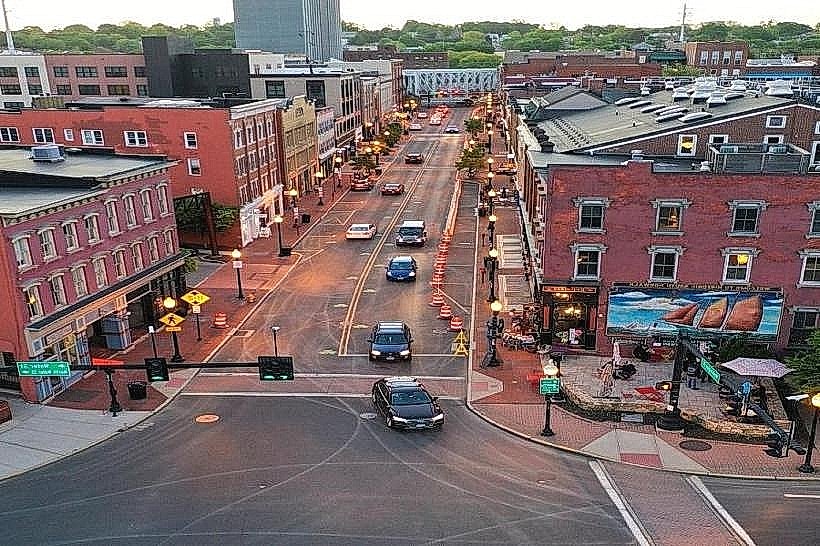
Wall Street Historic District in Norwalk, Connecticut, is a historically significant commercial and civic core that showcases the city’s development from the 18th century onward. Situated near the Norwalk River, this district has long been associated with business, finance, and community life, offering an architectural record of Norwalk’s growth while remaining a cultural hub today.
Historical Background
The area traces its roots to the colonial era, when early settlers established small businesses and civic institutions along what became Wall Street.
By the 19th century, it had developed into a center of commerce and finance, reflecting Norwalk’s prosperity tied to shipping, oystering, and manufacturing.
The district suffered setbacks, including destructive floods and fires, but was continually rebuilt, preserving a layered historical character.
In the 20th century, the district saw a blend of older landmark buildings and newer structures, balancing preservation with modernization.
Architectural Character
The Wall Street Historic District is known for its eclectic architectural mix, reflecting changes across different eras:
Greek Revival and Italianate styles from the early to mid-19th century.
Victorian commercial buildings featuring ornate detailing and brickwork.
Beaux-Arts and early 20th-century revival styles connected to Norwalk’s financial growth.
Adaptive reuse of former banks, theaters, and civic buildings adds to its historic appeal.
Key Features and Landmarks
Norwalk City Hall (former Norwalk Savings Society building) – a significant anchor structure.
Wall Street Theater – a restored performance venue that continues the district’s cultural role.
Commercial blocks and storefronts that retain historic façades, blending old and new businesses.
Streetscapes with brickwork, decorative cornices, and period details, contributing to the district’s authenticity.
Cultural and Community Role
The district is not only historic but also a modern-day arts and entertainment hub, with theaters, music venues, and galleries.
It hosts community events, live performances, and seasonal gatherings, drawing residents and visitors into its walkable core.
Restaurants, cafés, and shops enhance its lively atmosphere, making it a blend of past and present.
Preservation and Renewal
The Wall Street Historic District is listed on the National Register of Historic Places, ensuring recognition and protection of its architectural and cultural value.
Ongoing revitalization projects aim to maintain its historic charm while fostering economic development, positioning it as a central part of Norwalk’s future.
Present-Day Significance
Today, the district represents a fusion of heritage and revitalization, where historic banks, theaters, and civic buildings coexist with modern enterprises.
It continues to embody Norwalk’s economic resilience, echoing its early role as a hub of trade and commerce while embracing a cultural identity in the 21st century.
With its walkable streets, preserved architecture, and active cultural life, the Wall Street Historic District stands as both a living museum and a vibrant urban space.
The Wall Street Historic District remains one of Norwalk’s most distinctive neighborhoods, offering a tangible link to the city’s financial and civic past while serving as a dynamic hub for arts, culture, and community engagement.