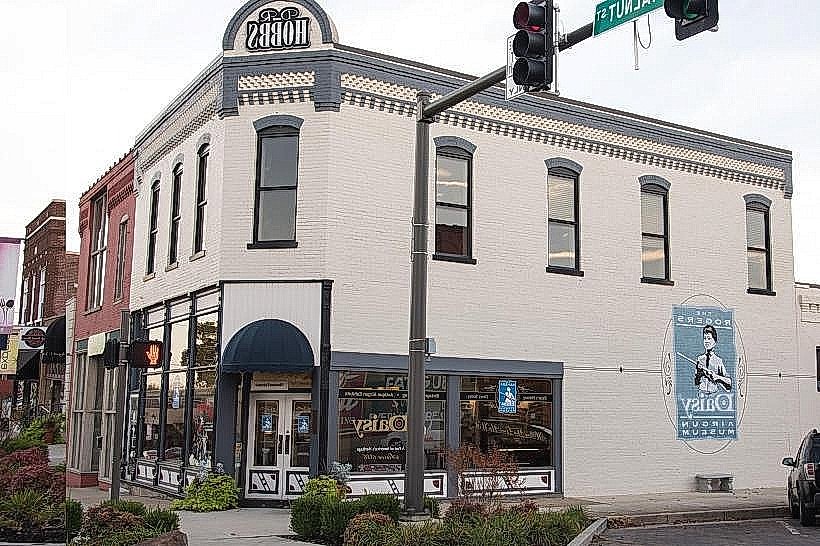
Information
Landmark: War Eagle MillCity: Rogers
Country: USA Arkansas
Continent: North America
War Eagle Mill, Rogers, USA Arkansas, North America
The Salmon River is a significant river system located in the state of Idaho, USA. It is a major tributary of the Snake River.
Visual Characteristics
The river's width varies considerably, from approximately 50 meters in narrower canyon sections to over 200 meters in wider valley areas. Water color ranges from clear to a milky, sediment-laden brown depending on recent precipitation and upstream activity. The riverbed consists of gravel, cobble, and larger boulders. Surrounding vegetation is predominantly coniferous forest on steeper slopes and riparian zones with deciduous trees along flatter banks.
Location & Access Logistics
The Salmon River flows through central and eastern Idaho. Access points are numerous along its course. Major highways paralleling sections of the river include US Route 93 and State Highway 21. From the city of Salmon, Idaho, US Route 93 North provides direct access to the river within 1 kilometer. Ample pull-offs and designated parking areas are available at various points, particularly near established campgrounds and boat launches. Public transport options directly to the river are limited; travel typically requires a private vehicle.
Historical & Ecological Origin
The Salmon River is a natural fluvial system, carved over millennia by erosion. Its geological origin is tied to the uplift of the Rocky Mountains and subsequent downcutting by water flow. Ecologically, it is a critical habitat for anadromous fish, including Chinook salmon and steelhead trout, which migrate from the Pacific Ocean to spawn in its headwaters. The river basin is part of the larger Columbia River watershed.
Key Highlights & Activities
Whitewater rafting and kayaking are primary activities, with sections rated for various skill levels. Fishing for salmon, steelhead, trout, and other species is permitted in designated areas. Hiking trails follow portions of the riverbanks, offering access to viewpoints. Scenic drives along the river provide opportunities for wildlife observation.
Infrastructure & Amenities
Restrooms are available at established campgrounds and some public access points. Shade is provided by natural tree cover along the banks and in developed picnic areas. Cell phone signal (4G/5G) is intermittent and generally unavailable in remote canyon sections. Food vendors are typically found in nearby towns such as Salmon, Challis, and Riggins, rather than directly at river access points.
Best Time to Visit
The best months for river recreation, such as rafting and fishing, are typically from May through September, when water levels are suitable and temperatures are warmer. For photography, early morning and late afternoon offer optimal lighting conditions, especially within the canyons. High and low tide are not applicable to this river system.
Facts & Legends
The Salmon River is known as the "River of No Return" due to the challenging upstream currents that historically made returning by boat difficult for early explorers. The river's drainage basin is one of the largest in the contiguous United States.
Nearby Landmarks
- Salmon National Fish Hatchery (1.5km West)
- Lemhi Pass National Historic Landmark (30km Northeast)
- Frank Church—River of No Return Wilderness (Adjacent, various access points)
- Sacajawea Center (2km South)
- Bitterroot Mountains (Visible to the North and East)