Information
City: BrightonCountry: United Kingdom
Continent: Europe
Brighton, United Kingdom, Europe
Brighton is a major seaside city in East Sussex, situated on the southern coast of England. It is a premier center for tourism, creative arts, and digital technology, recognized as the "LGBTQ+ capital of the UK" and a hub for alternative culture.
Visual Characteristics
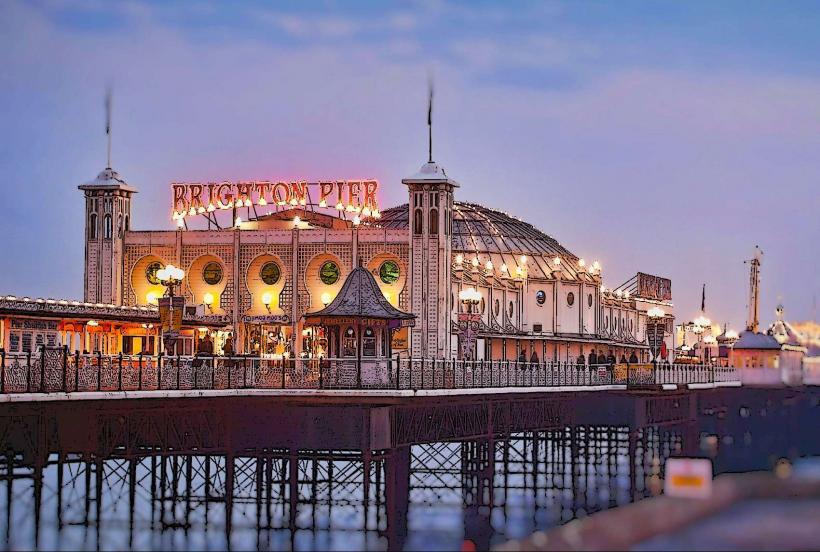
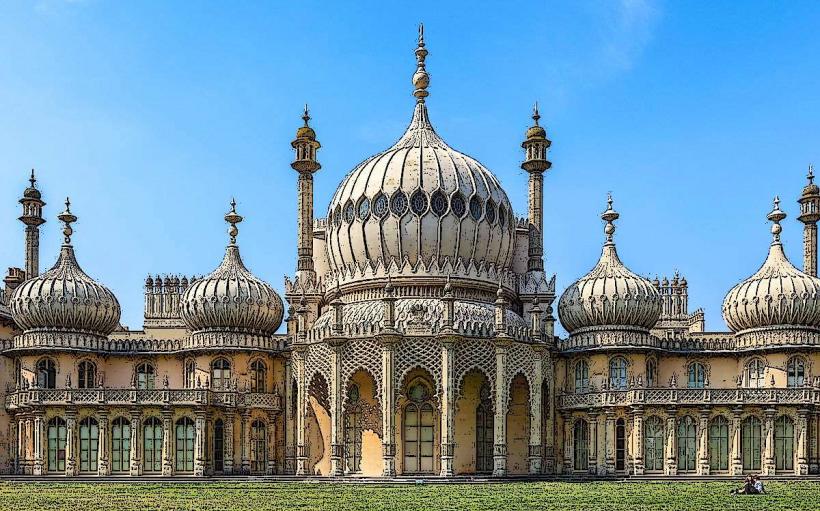
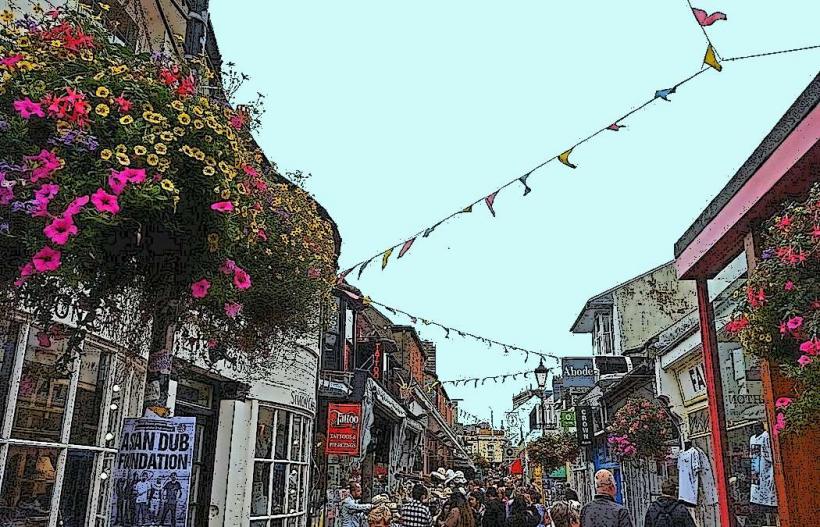
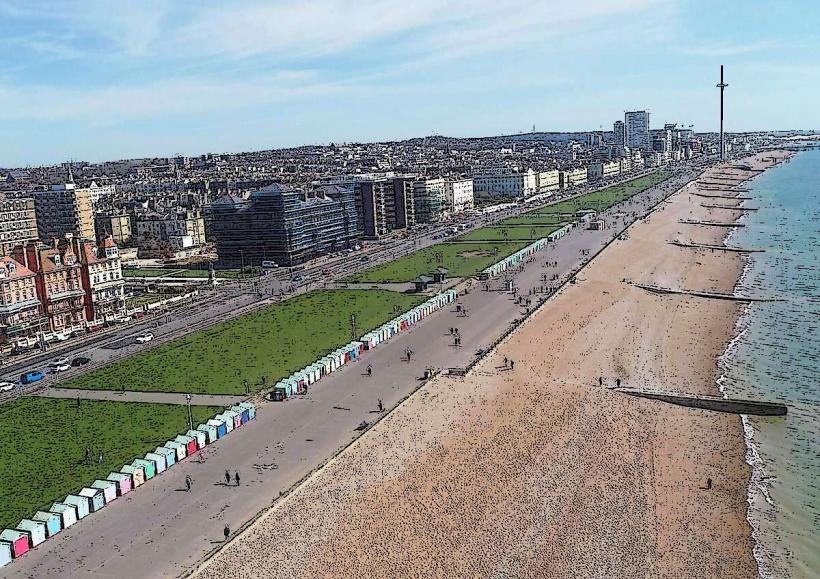
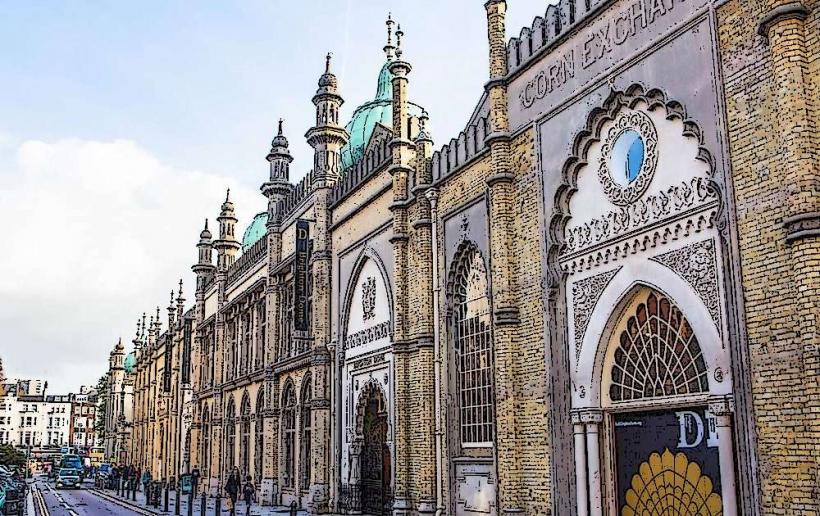
The urban landscape is defined by the juxtaposition of the Royal Pavilion-an Indo-Saracenic palace with onion domes and minarets-and the Victorian ironwork of the Brighton Palace Pier. The architecture features high-density Regency terraces in white stucco, particularly along the seafront. The "Lanes" consist of narrow, twisting medieval alleys, while the North Laine area is characterized by colorful street art and independent retail facades. The coastline is defined by a pebble beach and the skeletal remains of the West Pier.
Location & Access Logistics
Brighton is located 76 kilometers south of London. It is served by Brighton railway station, providing high-frequency rail links to London Victoria and London Bridge (approximately 60 minutes) and Gatwick Airport (30 minutes). The nearest major airport is London Gatwick (LGW). The Brighton & Hove bus network provides extensive transit; there is no light rail. Vehicle access is via the A23; parking is restricted and high-cost, concentrated in The Lanes and Churchill Square multi-story lots.
Historical & Ecological Origin
Originally the fishing village of Brighthelmstone, the city grew exponentially in the 18th century as a health resort after Dr. Richard Russell promoted the medicinal benefits of seawater. Geologically, it sits on the southern edge of the South Downs, composed primarily of chalk. The city's ecology is defined by its maritime environment and the Undercliff Walk, where the chalk cliffs meet the English Channel. The Brighton Marina is one of the largest man-made marinas in Europe.
Key Highlights & Activities
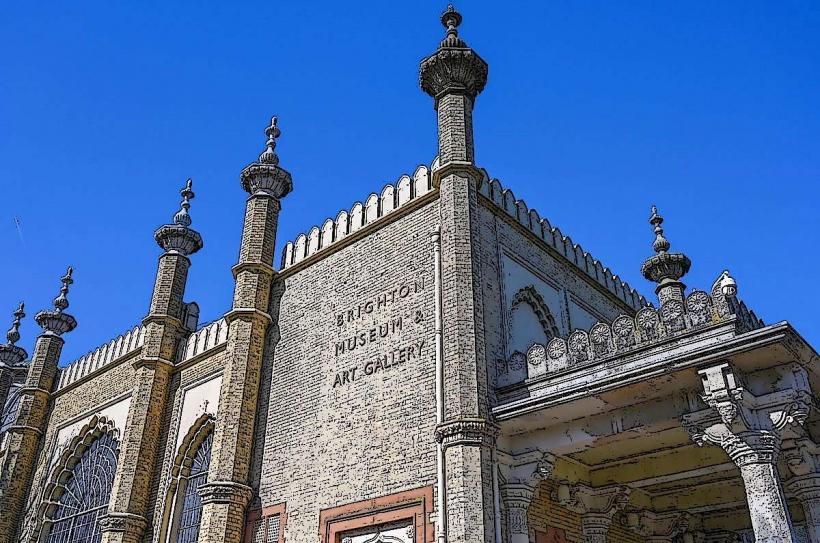
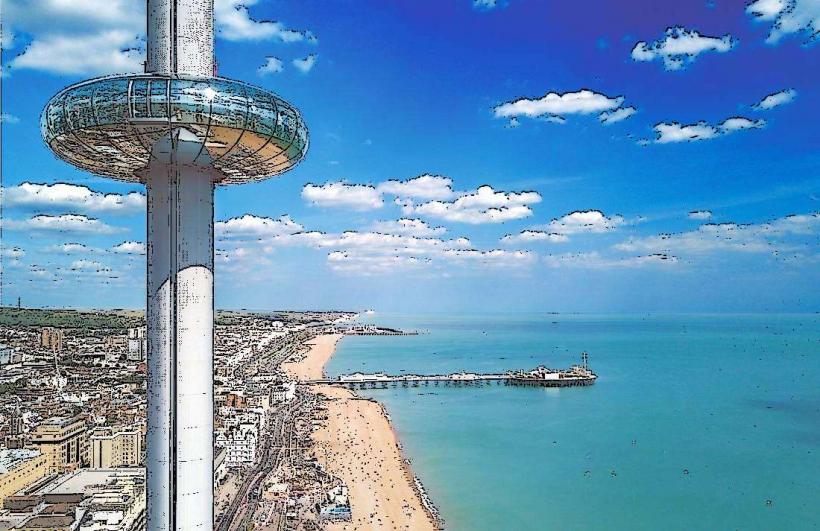
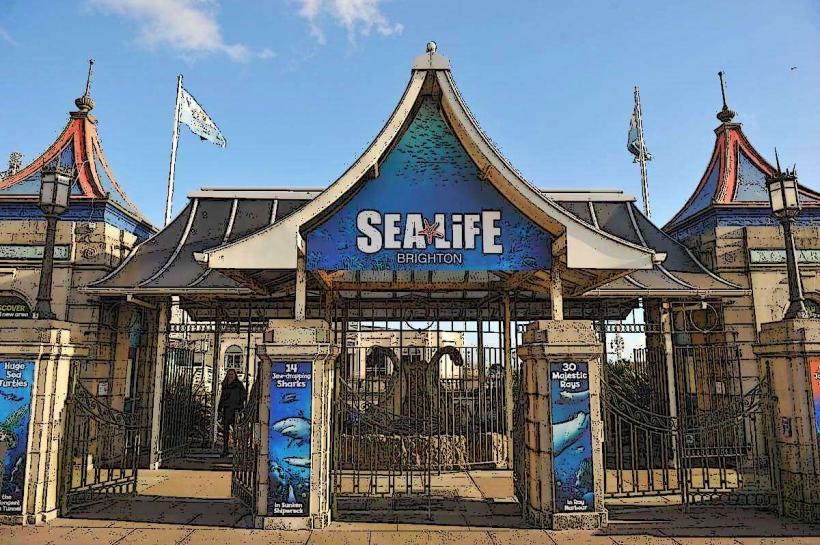
The Royal Pavilion is the primary architectural destination, featuring opulent Chinese-inspired interiors. The Brighton Palace Pier offers traditional seaside amusements and rides. The British Airways i360 provides a 162-meter vertical ascent for panoramic views of the coast and the South Downs. The Brighton Museum & Art Gallery houses significant 20th-century design and world art collections. Sea Life Brighton is the world's oldest operating aquarium (1872).
Infrastructure & Amenities
The city center is equipped with public restrooms near the West Street beach entrance and the Royal Pavilion Gardens. 5G cellular coverage is universal. The "Beryl" bike-sharing system provides automated pedal and e-bike rentals. Public drinking water fountains are available along the seafront promenade. Retail is concentrated in the Churchill Square mall and the independent North Laine district. Dining is high-density in the Lanes and Kemp Town, featuring a high concentration of vegan and vegetarian establishments.
Best Time to Visit
The climate is temperate oceanic, with higher sunshine hours than the UK average. May through September is optimal for beach activities and outdoor festivals, with temperatures between $18^{\circ}\text{C}$ and $23^{\circ}\text{C}$. Brighton Pride in August is the city’s largest cultural event, resulting in extreme pedestrian density. Photography of the West Pier ruins is best at sunset.
Facts & Legends
Brighton has the highest density of independent shops in the UK. A local historical oddity: the "Volk’s Electric Railway" is the oldest operating electric railway in the world (1883). Legend holds that Martha Gunn, the most famous "dipper" (who helped bathers in and out of the sea), was a favorite of the Prince Regent and could purportedly submerge people in the freezing water for minutes without ill effect.
Nearby Landmarks
Royal Pavilion: Central hub
Brighton Palace Pier: 0.4km South of Pavilion
The Lanes: 0.2km West of Pavilion
British Airways i360: 1.0km West of Pier
North Laine: 0.3km North of Pavilion