Information
Landmark: The LanesCity: Brighton
Country: United Kingdom
Continent: Europe
The Lanes, Brighton, United Kingdom, Europe
The Lanes is a historic retail and residential district in Brighton, United Kingdom, characterized by a dense network of narrow pedestrian alleys. It represents the oldest surviving section of the city, corresponding to the original settlement of Brighthelmstone.
Visual Characteristics
The area is defined by "twittens" (local dialect for narrow passages), some less than two meters wide. Architecture consists of 16th to 18th-century flint and brick buildings with overhanging upper stories and bow-fronted shop windows. The district is characterized by a high concentration of independent jewelry shops, antique dealers, and small-scale boutiques.
Location & Access Logistics
The district is bounded by North Street to the north, Ship Street to the west, Prince Albert Street to the south, and the Old Steine to the east.
Public Transport: 0.9 km south of Brighton Railway Station. Accessible via all city center bus routes stopping at North Street or Old Steine.
Pedestrian: Entirely pedestrianized; vehicle access is prohibited within the core alleys.
Parking: The Lanes Car Park (Black Lion Street, BN1 1ND) is the primary facility, located on the southern edge.
Access: Navigating the narrowest sections is difficult for large mobility scooters. Paving is mostly flat but includes historical irregularities and some stepped access to older basements.
Historical & Ecological Origin
The street pattern follows the layout of the 16th-century fishing village. During the 18th century, as Brighton evolved into a fashionable spa resort, these residential cottages were converted into commercial spaces. The area retains its original medieval grid, which was spared from the larger-scale Victorian redevelopments seen elsewhere in the city.
Key Highlights & Activities
Jewelry Quarter: One of the highest densities of independent jewelers in the UK, specializing in antique and bespoke pieces.
Black Lion Street: Contains the Black Lion Pub, built on the site of a 16th-century brewery.
Antique Hunting: Numerous multi-story antique centers housing dozens of independent traders.
Square Alley & Meeting House Lane: Notable for original architectural details and high-density retail.
Infrastructure & Amenities
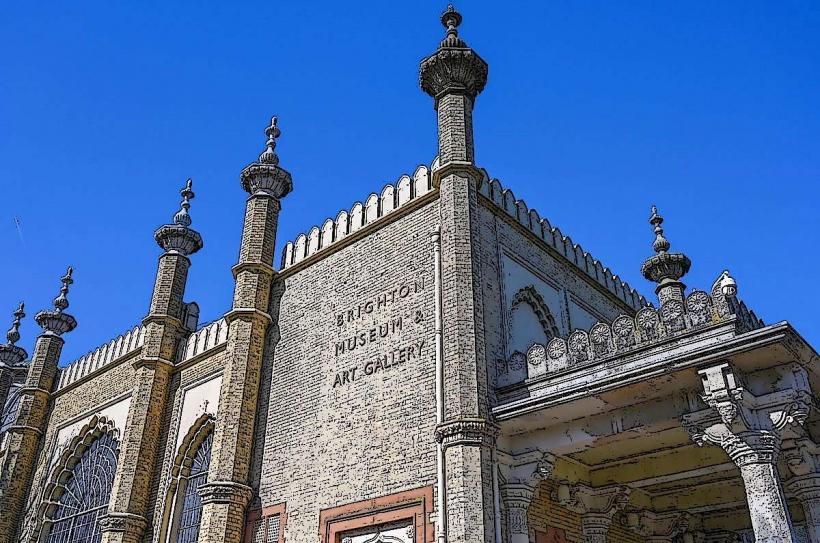
The district contains a high density of cafes, traditional pubs, and upscale restaurants (e.g., The Flint House, Donatello). Public restrooms are available at the Lanes Car Park and within the nearby Brighton Museum. 5G cellular coverage is strong, though signal penetration can be inconsistent deep within the narrowest alleys due to thick flint walls.
Best Time to Visit
Retail hours are typically 10:00–18:00. To observe the architecture without high-density crowds, visit before 09:30. The district is illuminated at night, making it suitable for architectural photography after sunset.
Facts & Legends
A verified historical oddity is the Old Thump, a ghost said to haunt the Black Lion Pub, allegedly the spirit of Deryk Carver, a Protestant martyr executed in 1555. The Lanes served as a primary filming location for the 1947 film Brighton Rock.
Nearby Landmarks
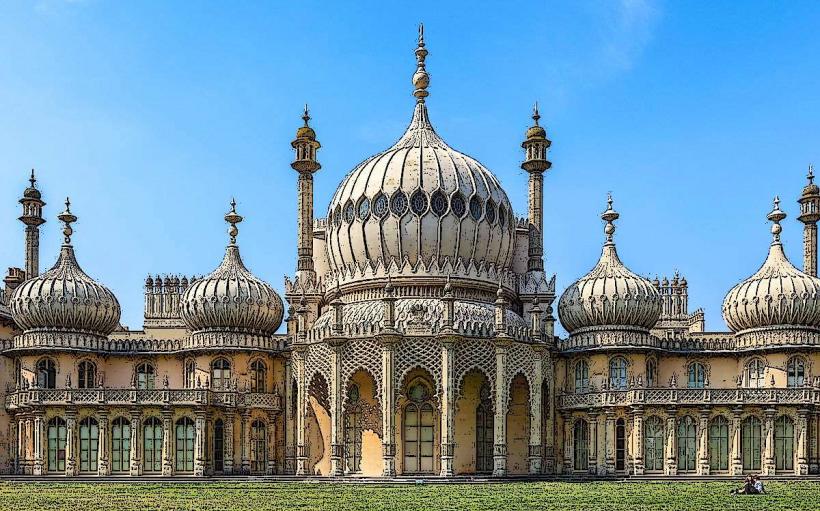
Royal Pavilion: 0.2 km East
Brighton Town Hall: 0.1 km South
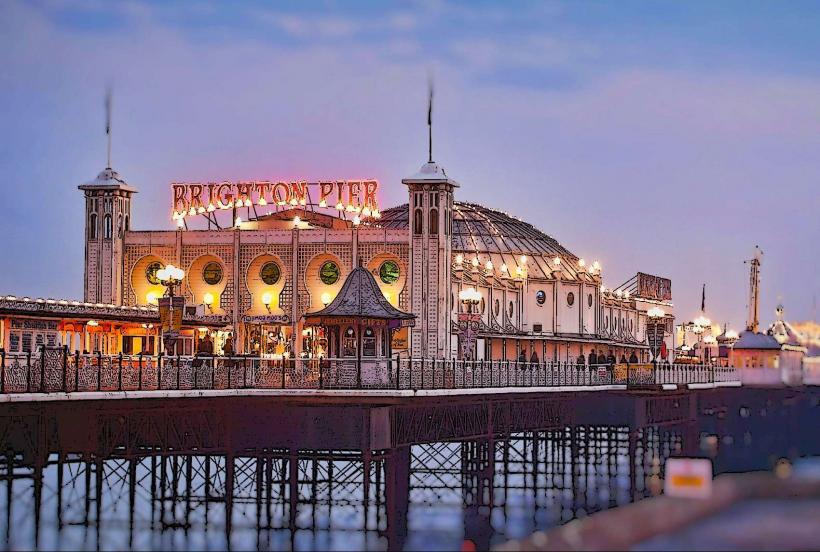
Brighton Palace Pier: 0.4 km Southeast
North Laine: 0.5 km North (Note: North Laine is a distinct, larger bohemian district often confused with The Lanes).