Information
Landmark: Brighton DomeCity: Brighton
Country: United Kingdom
Continent: Europe
Brighton Dome, Brighton, United Kingdom, Europe
Brighton Dome is a multi-venue performing arts complex located in the Royal Pavilion Estate in Brighton, United Kingdom. It is a Grade I listed structure and serves as the primary hub for the annual Brighton Festival.
Visual Characteristics
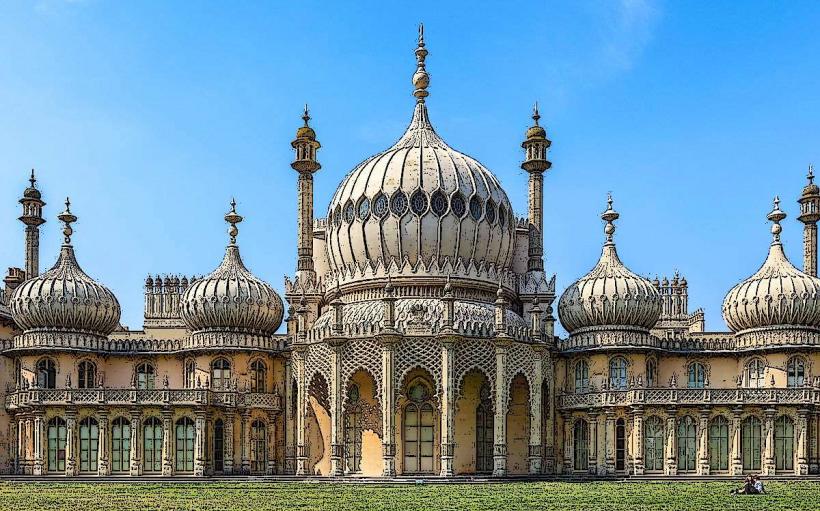
The architecture is defined by its Indo-Saracenic style, featuring a massive central dome and minarets that mirror the aesthetic of the adjacent Royal Pavilion. The interior of the main Concert Hall exhibits a blend of Art Deco and neoclassical elements following its 1930s remodel. The complex consists of three main spaces: the Concert Hall, the Corn Exchange, and the Studio Theatre, all characterized by high ceilings and ornate period detailing.
Location & Access Logistics
The venue is situated on Church Street (BN1 1UE).
Public Transport: Brighton Railway Station is 0.7km north. Major bus routes stop at the Old Steine or North Street, within 0.2km.
Road: Centrally located in the cultural quarter.
Parking: No on-site parking. The nearest facility is NCP Brighton Theatre (0.1km).
Access: All three venues are fully accessible. The 2023 renovation of the Corn Exchange and Studio Theatre included significant upgrades to accessibility, including new lifts and level-access flooring.
Historical & Ecological Origin
Commissioned by the Prince Regent (later George IV), the building was completed in 1808 as the royal stables and riding house. It was designed by architect William Porden. In 1867, it was converted into a performance space. During WWI, it served as a hospital for Indian soldiers. The building’s location within the Pavilion Gardens connects it to a managed urban ecosystem containing one of the world's most significant collections of elm trees.
Key Highlights & Activities
Concert Hall: A 1,700-capacity venue hosting international musicians, comedians, and the Brighton Philharmonic Orchestra.
Corn Exchange: A 54-meter-long clear-span timber structure (formerly the riding house) used for exhibitions and performances.
Studio Theatre: An intimate 250-seat space for theater and contemporary dance.
ABBA Connection: The venue gained international fame for hosting the 1974 Eurovision Song Contest, where ABBA won with "Waterloo."
Infrastructure & Amenities
The facility includes multiple bars and the foyer café. Ticketing is handled via a central box office shared with the Brighton Museum. Public restrooms and baby-changing facilities are available in all foyer areas. 5G cellular coverage is consistent throughout the site.
Best Time to Visit
The box office and café are open daily. Performance times vary. For architectural viewing, the exterior is best seen from the Pavilion Gardens during daylight hours. Tour slots specifically for the "Hidden Heritage" of the Dome and its tunnels are available on selected dates.
Facts & Legends
A verified historical oddity is that the Dome was once the largest structure of its kind in Europe, second only to the Pantheon in Paris. A well-documented legend involves the secret tunnel connecting the Dome to the Royal Pavilion, used by George IV to move between the buildings away from public scrutiny.
Nearby Landmarks
Royal Pavilion: 0.05km South
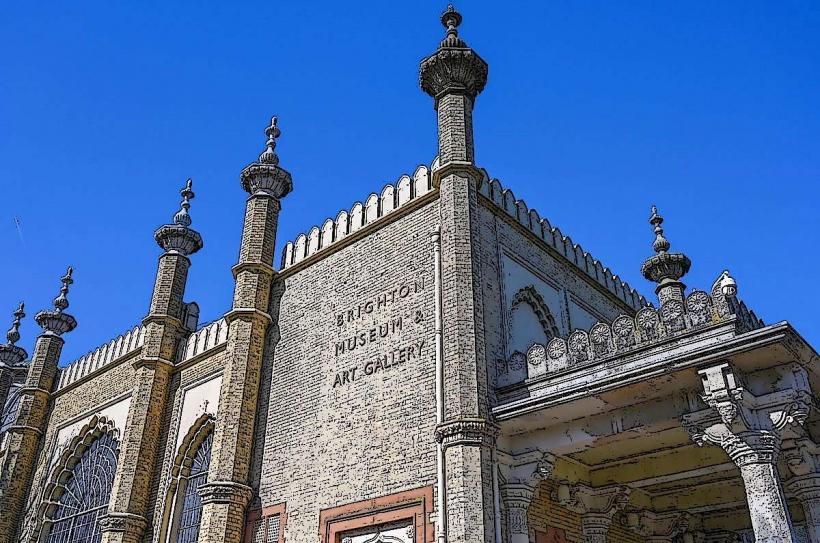
Brighton Museum & Art Gallery: 0.05km South
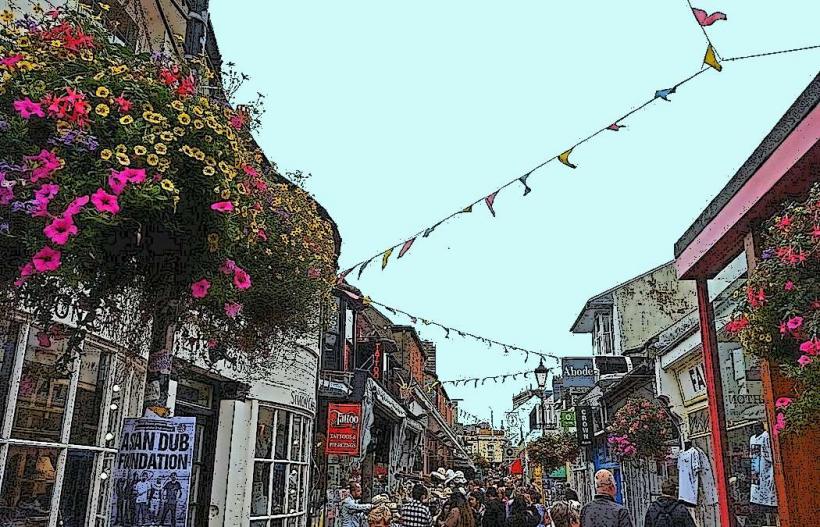
The Lanes: 0.3km South
Theatre Royal Brighton: 0.1km West
Pavilion Gardens: Immediately adjacent