Information
City: BrusselsCountry: Belgium
Continent: Europe
Brussels, Belgium, Europe
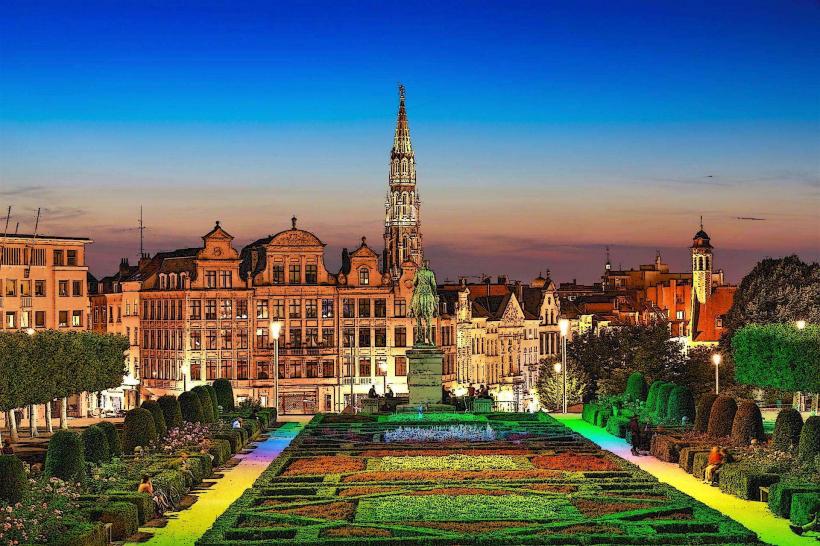
Brussels functions as the de facto capital of the European Union and the administrative center of the Kingdom of Belgium. Situated in the Senne river valley, it is a global hub for international diplomacy, hosting the headquarters of NATO and the European Commission. It is defined by its multilingualism and its architectural synthesis of Gothic, Baroque, and Art Nouveau styles.
Historical Timeline
Brussels originated as a 6th-century chapel on an island in the Senne. The primary era of governance was defined by its status as a residence for the Dukes of Burgundy and later the Spanish and Austrian Habsburgs. The primary event shaping its modern structure was the 1830 Belgian Revolution, which established Brussels as the capital of an independent kingdom, followed by the mid-20th-century of the city as the center for European integration.
Demographics & Population
The City of Brussels has a population of approximately 190,000, while the Brussels-Capital Region exceeds 1.2 million. The demographic is highly international; approximately 35% of residents are foreign nationals. French is the dominant lingua franca, though the city is officially bilingual (French/Dutch). English is the primary working language of the European Quarter. The median age is 37.5 years.
Urban Layout & Key Districts
The city is organized within the "Pentagon," a ring road following the former 14th-century walls.
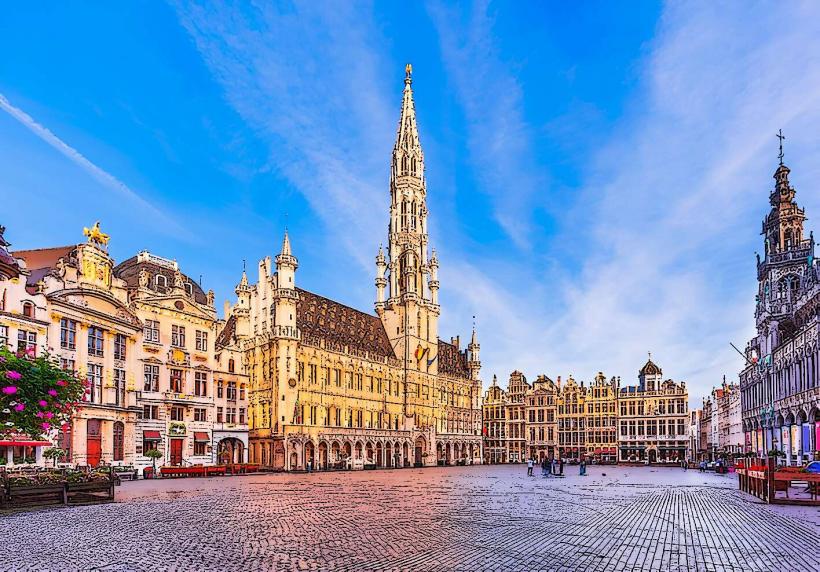
The Pentagon (City Center): The historic core containing the Grand-Place and the primary commercial axes.
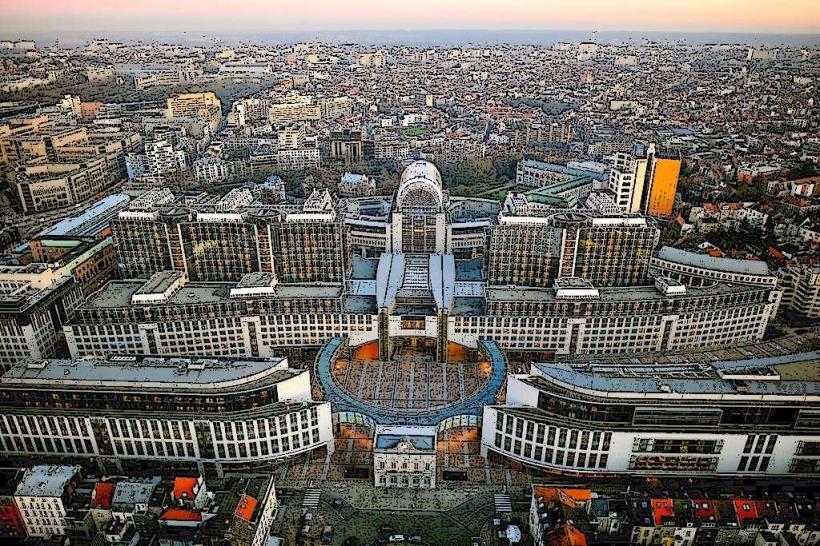
The European Quarter (Leopold Quarter): A specialized district housing the European Parliament, the Berlaymont building, and thousands of lobbyists and diplomats.
Ixelles (Elsene): A vibrant multicultural district known for the Place Lux (diplomatic social hub) and the Art Nouveau houses of the Châtelain area.
Saint-Gilles: A specialized creative hub known for its hilly streets, galleries, and the Gare du Midi.
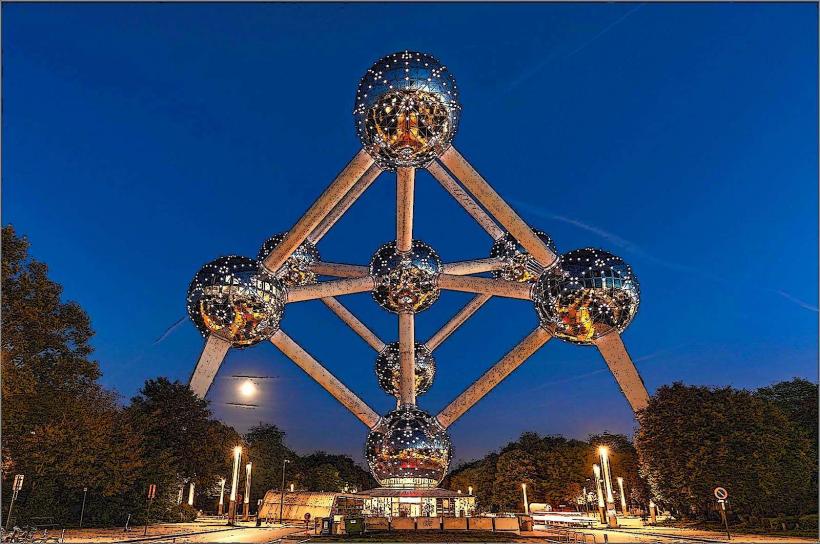
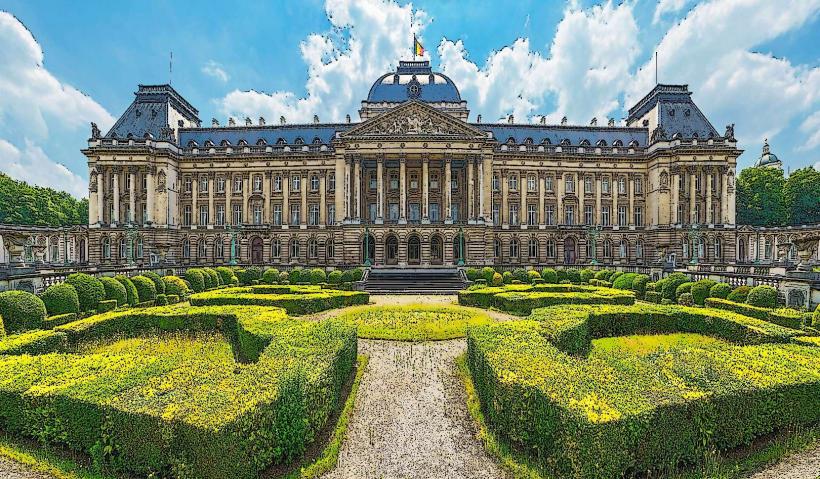
Laeken: A northern district containing the Royal Domain, the Royal Greenhouses, and the Atomium.
Top City Landmarks
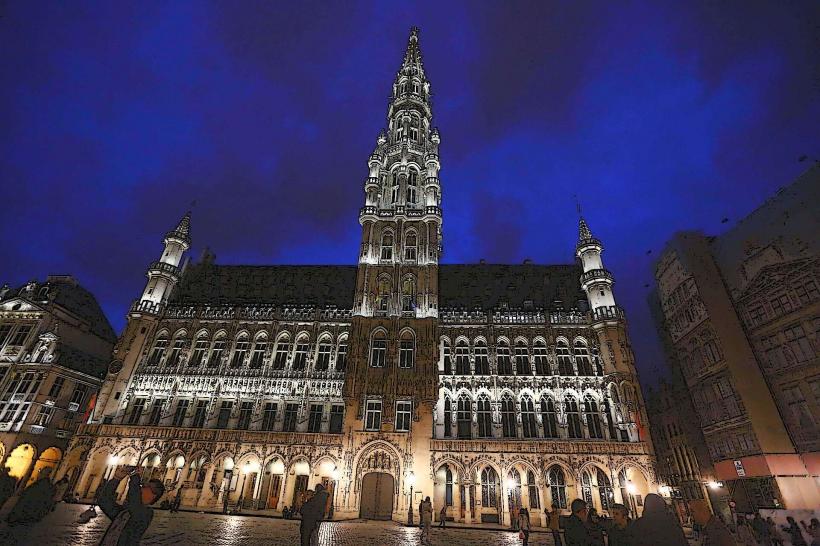
Grand-Place (Grote Markt): A UNESCO World Heritage site and one of the world's most ornate squares, surrounded by guildhalls and the City Hall.
The Atomium: A specialized 102-meter high steel structure representing a unit cell of an iron crystal magnified 165 billion times.
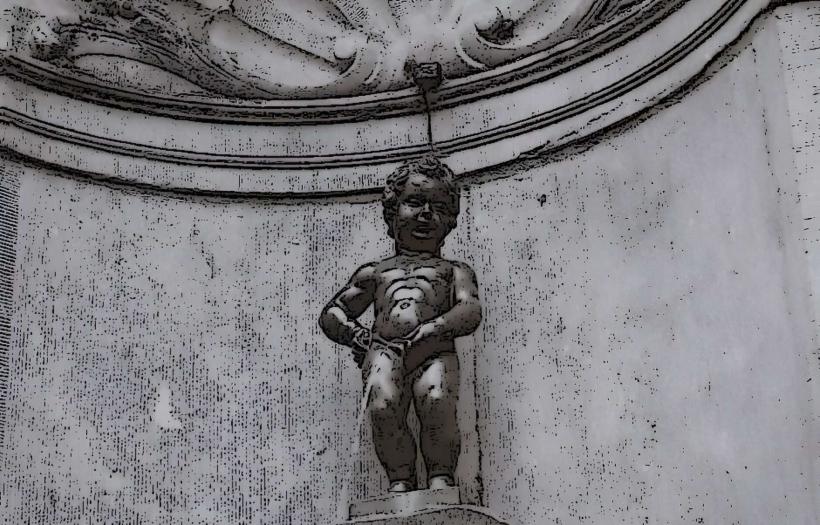
Manneken Pis: A 17th-century bronze fountain sculpture that has become the city's primary irreverent symbol.
Royal Gallery of Saint Hubert: One of the oldest covered shopping arcades in Europe (1847), featuring a specialized glazed roof.
The Palais de Justice: A massive 19th-century law court, historically the largest building constructed in the 19th century.
Transportation Network
Brussels is a central node for European high-speed rail.
STIB/MIVB: Operates an integrated metro, tram, and bus network. The metro system is noted for its specialized underground art installations.
Gare du Midi (South Station): The primary hub for Eurostar (London/Paris/Amsterdam) and Thalys.
Brussels Airport (BRU): Located 12 km northeast in Zaventem, connected to the center by a 17-minute rail link.
Cycling: The Villo! bike-sharing scheme and a growing network of specialized "Cyclostrades" connect the 19 municipalities.
Safety & "Red Zones"
The general safety level is high. Standard urban awareness is required in major transit hubs (Gare du Midi, Gare du Nord) and the tourist-dense Pentagon late at night. There are no "red zones," but the Brussels North area contains a regulated red-light district. High security is permanent in the European Quarter due to the concentration of political institutions.
Digital & Financial Infrastructure
Brussels is a leader in Legal Tech and international associations management. Internet speeds average 100–1000 Mbps via fiber. 5G coverage is universal. Card and mobile payments (Bancontact) are standard; however, some small independent cafes still maintain a "cash-only" policy for amounts under €5.
Climate & Air Quality
Brussels has a temperate maritime climate characterized by significant cloud cover and frequent, light precipitation. Daytime temperatures range from 6°C in January to 23°C in July. A specialized Low Emission Zone (LEZ) covers the entire capital region to manage air quality.
Culture & Social Norms
Social norms are defined by a mix of formal diplomacy and "Zwanze" (local self-deprecating humor). Tipping is included in prices, but rounding up for service is common. Key events include the Ommegang (historical pageant) and the Flower Carpet (biennial decoration of the Grand-Place).
Accommodation Zones
Upper Town (Sablon/Louise): Recommended for luxury stays, antique markets, and high-end retail.
European Quarter: Recommended for business travelers and proximity to EU institutions.
Sainte-Catherine: Recommended for a local atmosphere and proximity to the city's fish markets and boutiques.
Local Cost Index
1 Espresso: €3.20
1 Pint of Beer: €5.50–€7.50
1 Standard Lunch: €15.00–€25.00
Nearby Day Trips
Waterloo: 20 mins south; the site of the 1815 battle and the Lion's Mound.
Leuven: 25 mins east; a historic university city known for its Gothic Town Hall.
Hallerbos: The "Blue Forest," a specialized beech forest that turns blue with wild hyacinths in April.
Facts & Legends
Brussels is the site where the Brussels Waffle was popularized during the 1964 World's Fair in New York. Legend states that the city's patron saint, St. Michael, defeated the devil on the site of the current City Hall. A verified fact is that Brussels is the second most diverse city in the world after Dubai, with 62% of residents born elsewhere. Historically, the city’s 19th-century "Bruxellisation" became a specialized architectural term for the uncontrolled urban redevelopment of historic neighborhoods.