Information
City: CominoCountry: Malta
Continent: Europe
Comino, Malta, Europe
Comino (Kemmuna) functions as the primary ecological and recreational pivot of the Maltese archipelago. Situated between Malta and Gozo, it serves as a specialized node for Natura 2000 marine conservation, high-intensity day-trip tourism, and film production. It is defined by its near-total lack of permanent inhabitants, its car-free karst landscape, and its 2026 role as a finalized model for sustainable island management under the Blue Lagoon Strategic Plan.
Historical Timeline
Roman Era: Inhabited by farming communities and used for cumin cultivation (from which the island's name is derived).
Middle Ages: Utilized as a base for pirates and marauders; the rugged caves provided ideal staging points for raids.
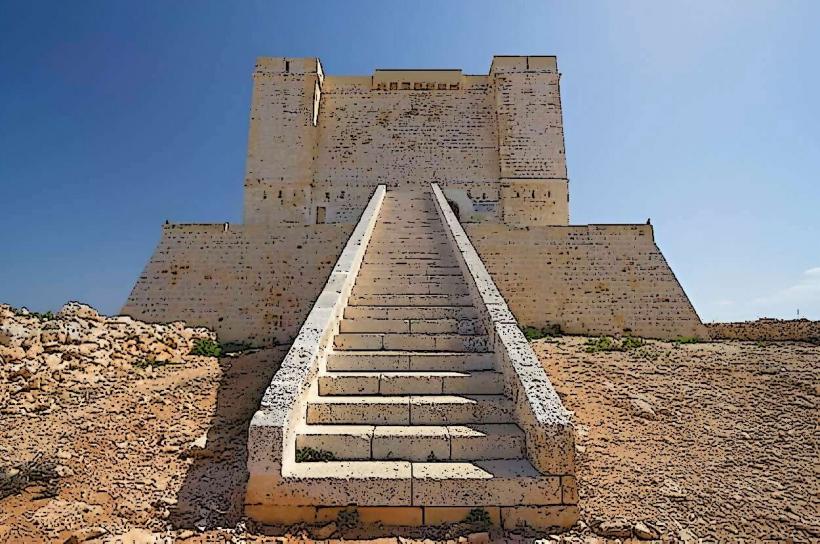
1618: Construction of St. Mary’s Tower by the Knights of St. John; part of a defensive chain of towers signaling between the main islands.
1940s: Population peaked at ~80 residents engaged in subsistence farming.
2026 Context: As of January 2026, the island has entered a specialized management phase. The Blue Lagoon Visitor Pass is now a requirement for all land-based visitors, utilizing QR codes to enforce daily capacity caps and mitigate environmental degradation.
Demographics & Population
The permanent resident population is 2 (2026 estimate). The demographic is characterized by extreme isolation, supported by a weekly visiting priest and police officer from Gozo. In peak summer months (July–August), the daily transient population can exceed 5,000–8,000 visitors, though 2026 regulations have successfully reduced this from historical peaks of 10,000 to improve the "quality of experience."
Urban Layout & Key Districts
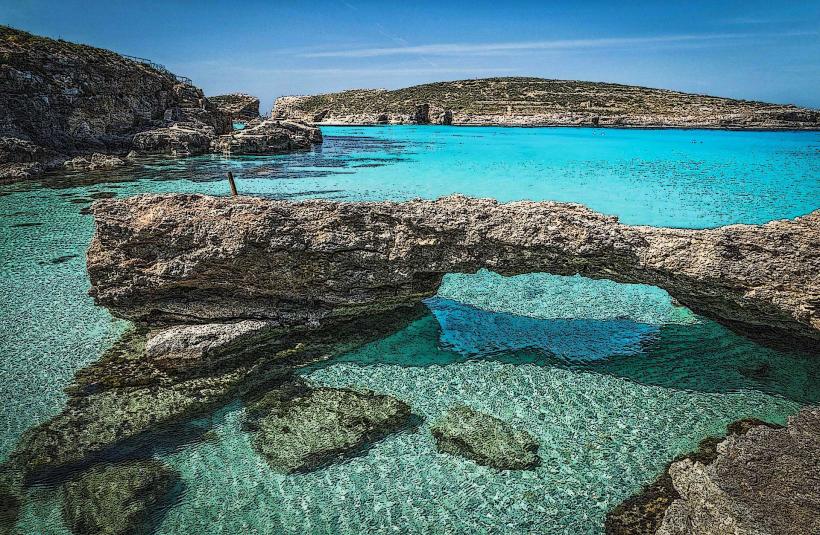
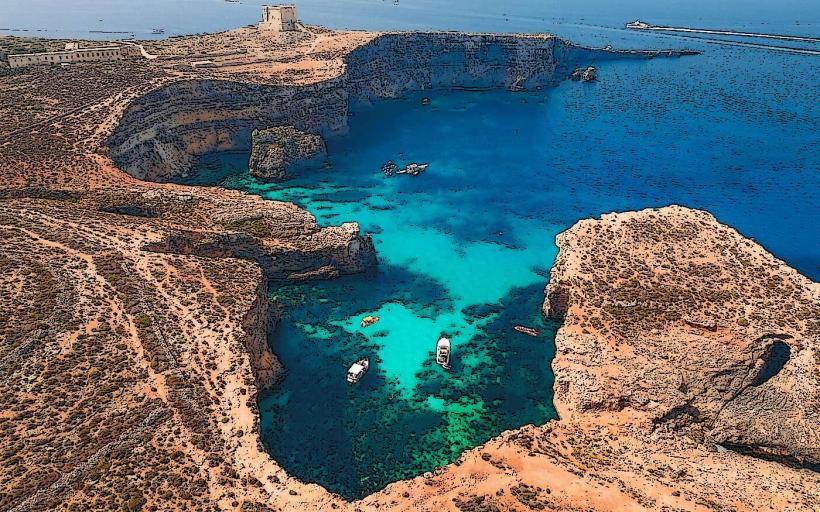
Blue Lagoon (Bejn il-Kmiemen): The specialized maritime center; a shallow, turquoise-water channel between Comino and the islet of Cominotto.
San Niklaw Bay: Site of the specialized Comino Hotel redevelopment; the 2026 masterplan focuses on a 140-bed sustainable hotel within the existing built footprint.
Santa Marija Bay: A specialized quieter alternative to the Blue Lagoon; contains a small sandy beach, a police station, and the island's only authorized camping zone (Ramlija).
Crystal Lagoon: A specialized deep-water bay accessible only by boat; characterized by sheer cliffs and high-clarity water for snorkeling and cliff diving.
Top City Landmarks
St. Mary’s Tower (It-Torri ta' Santa Marija): A specialized 17th-century fortification; serves as a 360-degree observation point. In 2026, it is managed by Din l-Art Helwa and remains open to the public when the flag is flying.
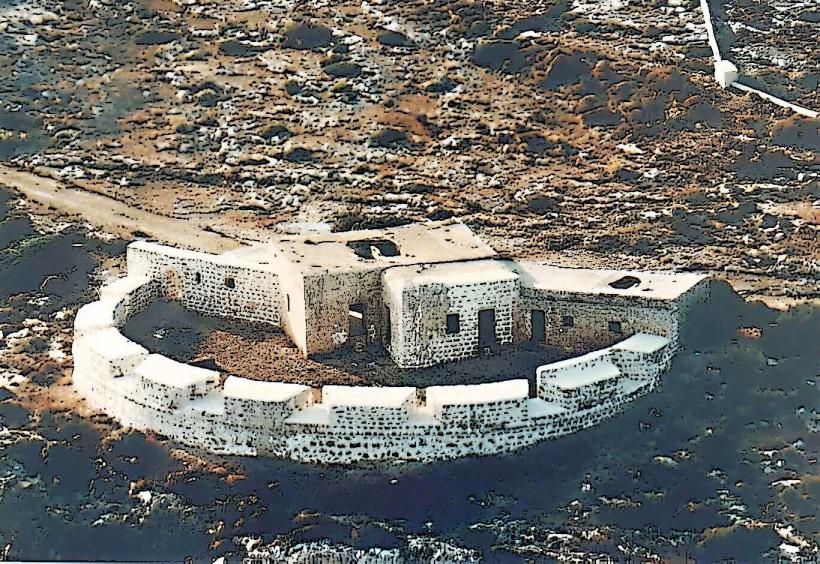
St. Mary’s Battery: A specialized semi-circular artillery fortification (1715) on the southern coast, built to protect the South Comino Channel.
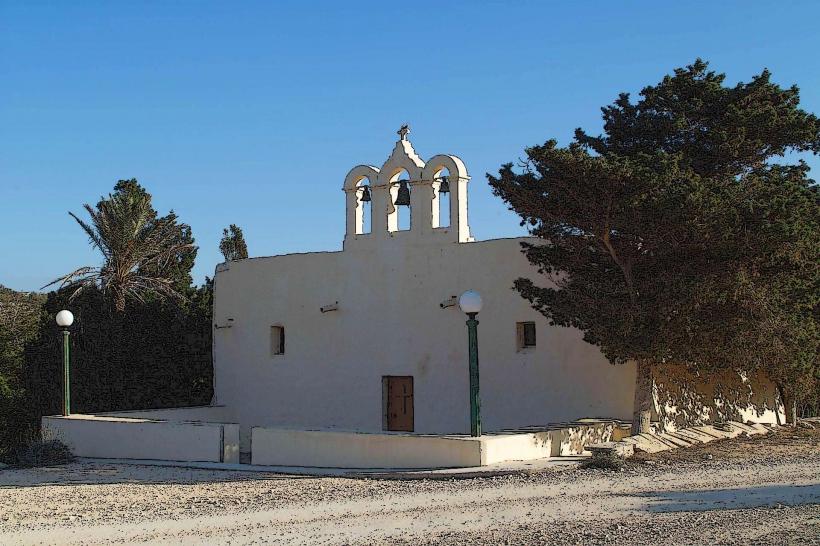
The Chapel of the Return from Egypt: A specialized 1618 structure; serves the island’s residents and visitors. It is one of the few buildings in the Mediterranean with its original roof of stone slabs (xorok).
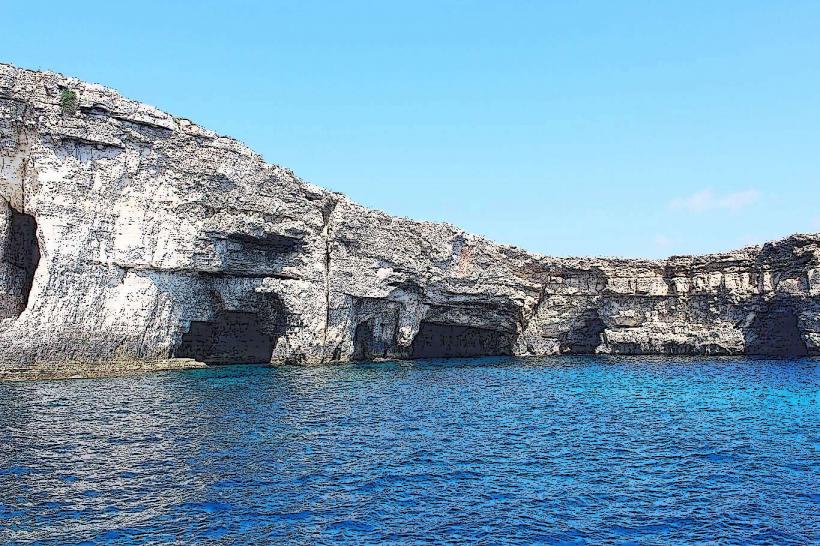
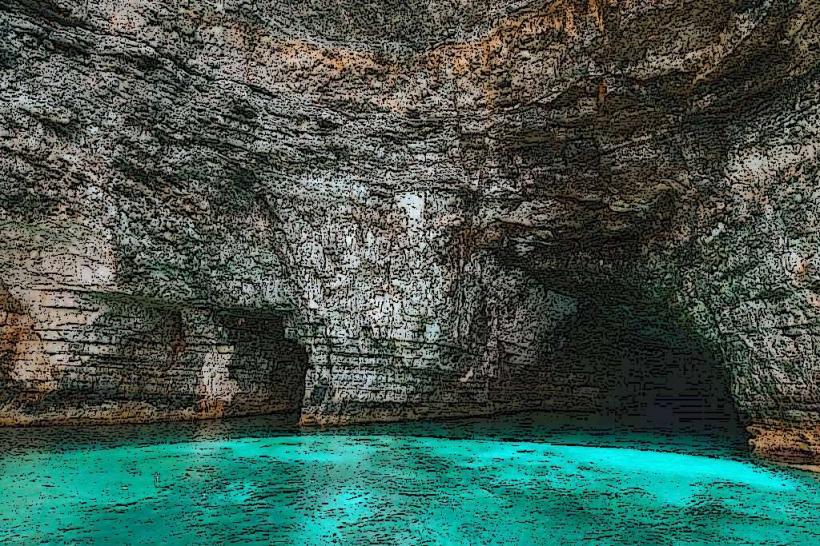
Comino Caves: A specialized network of sea caves, including the Santa Marija Caves, which are a primary destination for diving and maritime photography.
Elephant Rock: A specialized natural rock formation on the northern coast resembling an elephant's head and trunk.
Transportation & 2026 Logistics
Ferry Services: In 2026, ferries operate from Ċirkewwa (Malta) and Mġarr (Gozo) every 30–60 minutes. Standard return fare is €13.00–€15.00.
Visitor Pass (2026): All visitors stepping onto land at the Blue Lagoon must register via the official 2026 portal to receive a QR code and corresponding wristband on arrival.
Commercial Units: Under the 2026 Kiosk Reform, all food and beverage stalls have been moved away from the shoreline to a designated upper zone, with uniform "eco-sensitive" designs.
Zero-Emission Goal: In 2026, all authorized transport on the island (primarily for hotel and logistics) is strictly electric.
Safety & Environment
The general safety level is high, though maritime hazards exist. Warning: Drones are strictly prohibited without a specialized permit due to Natura 2000 status. In 2026, the "Team Blue Lagoon" enforcement unit patrols the island to ensure visitors remain on designated paths to protect the 35,000 m² of restored garigue landscape.
Local Cost Index (2026 Estimates)
Return Ferry Ticket: €13.00 – €15.00
Blue Lagoon Visitor Pass: (Variable based on residency/booking window)
Bottle of Water (Kiosk): €2.50 – €3.50
Small Pineapple Cocktail: €10.00 – €12.00
Deckchair & Umbrella Rental: €15.00 – €25.00
Facts & Legends
Comino is a specialized film location, appearing as the "Château d'If" in The Count of Monte Cristo (2002) and featuring in Troy (2004). Legend states that the island was the home of the exiled Jewish prophet Abraham Abulafia in the 13th century, who composed his kabbalistic works in total solitude. A verified fact is that the island is a designated bird sanctuary, serving as a critical stopover for migratory species between Europe and Africa. Historically, the Knights were so protective of the island’s wild boar and hares that poachers were sentenced to three years as galley slaves.