Information
City: DubrovnikCountry: Croatia
Continent: Europe
Dubrovnik, Croatia, Europe
Dubrovnik functions as the administrative center of the Dubrovnik-Neretva County and a premier global maritime heritage hub. Situated on the Adriatic coast at the foot of Mount Srđ, it serves as a specialized node for high-end tourism, heritage conservation, and luxury hospitality. It is defined by its status as a UNESCO World Heritage site, its perfectly preserved medieval fortifications, and its historical legacy as the "Republic of Ragusa," a maritime rival to Venice.
Historical Timeline
Dubrovnik was established in the 7th century (as Ragusa). The primary era of governance was defined by the Republic of Ragusa (1358–1808), which maintained independence through sophisticated diplomacy and maritime trade. The primary event shaping its modern identity was the 1991–1992 Siege of Dubrovnik during the Croatian War of Independence, followed by an intensive structural restoration. Historically, it was the first state to formally recognize the independence of the United States and abolished the slave trade in 1416.
Demographics & Population
The population is approximately 41,000 (2026 estimate). The demographic profile is heavily seasonal, with a workforce specialized in tourism management, maritime services, and international diplomacy. The city hosts the University of Dubrovnik and several specialized international graduate schools.
Urban Layout & Key Districts
The city is organized around the fortified historic core and its subsequent coastal expansions.
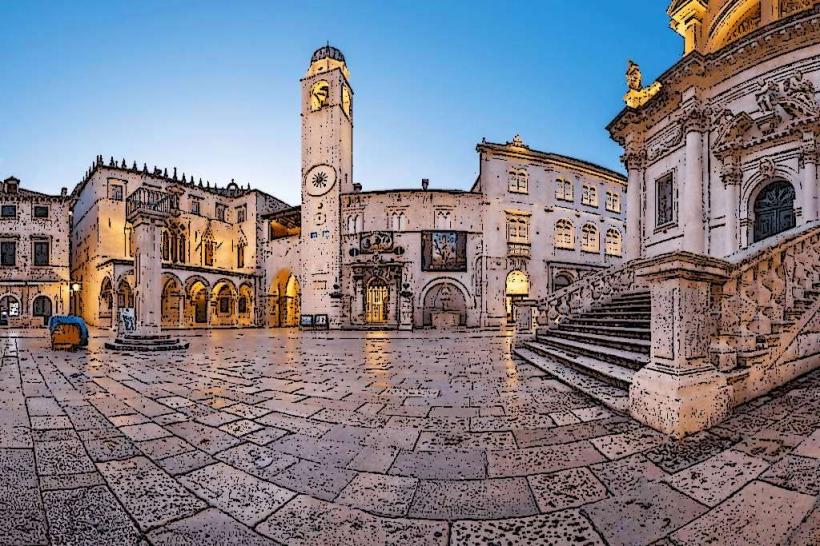
Old Town (Stari Grad): A specialized limestone-paved pedestrian zone enclosed by 2 kilometers of stone walls.
Lapad: A specialized residential and hotel district located on a peninsula west of the center, known for its beaches and promenades.
Gruž: A specialized district housing the city’s primary commercial port and the central bus station.
Ploče: A specialized high-end eastern district offering panoramic views of the Old Town and the island of Lokrum.
Top City Landmarks
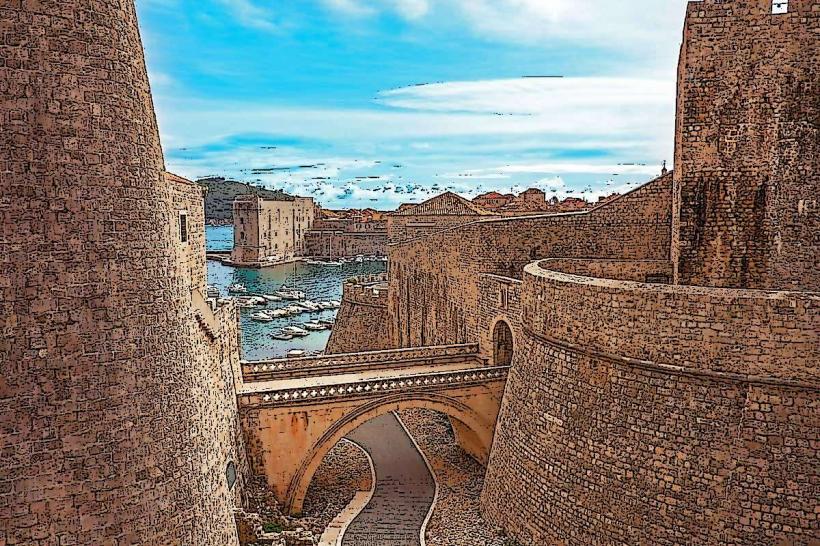
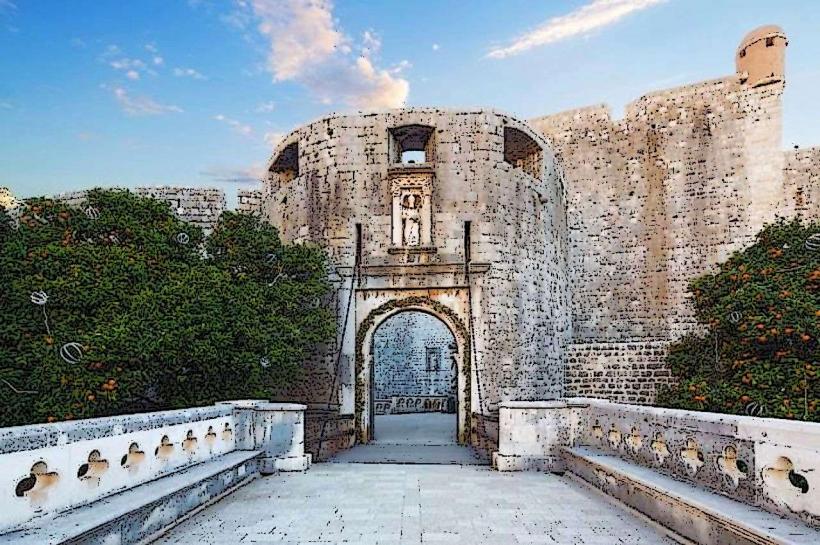
City Walls: A specialized defensive system built between the 12th and 17th centuries, reaching 25 meters in height and featuring monumental towers like Minčeta.
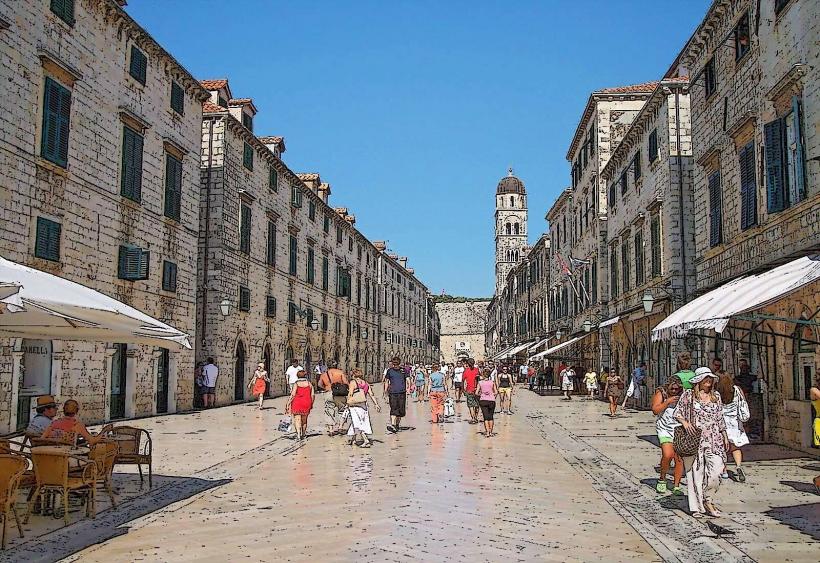
Stradun (Placa): The specialized 300-meter limestone main street that bisects the Old Town, polished by centuries of pedestrian traffic.
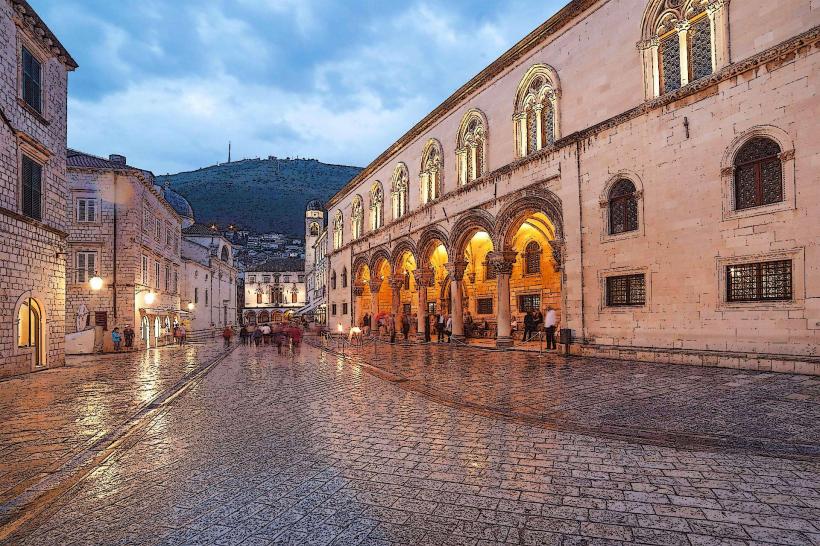
Rector’s Palace: A specialized Gothic-Renaissance building that served as the seat of the Republic's Rector; it now houses the Cultural History Museum.
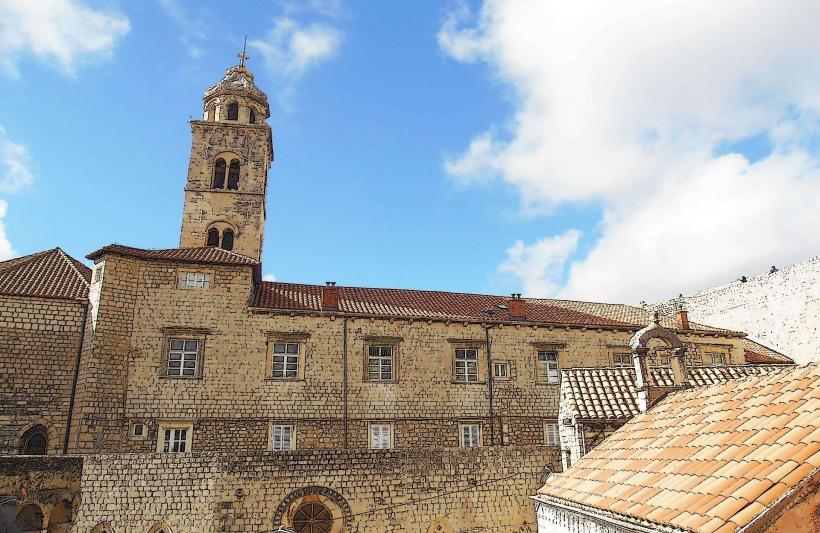
Dubrovnik Cathedral: A specialized Baroque structure containing a treasury of gold and silver reliquaries and a polyptych by Titian.
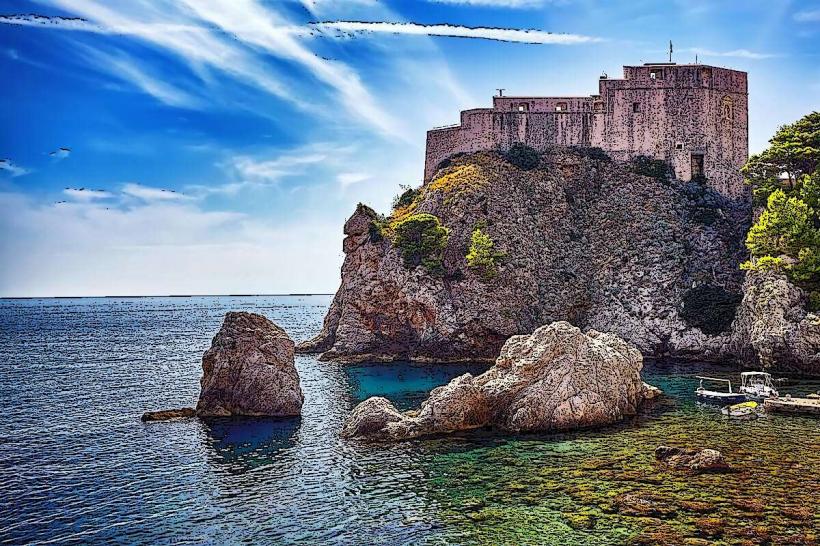
Lovrijenac Fortress: A specialized detached fortress built on a 37-meter-high cliff, known as the "Gibraltar of Dubrovnik."
Onofrio’s Fountain: A specialized 16-sided polygonal water structure built in 1438 as the terminus of the city’s 12-km aqueduct.
Transportation Network
Dubrovnik is a primary entry point for southern Dalmatia.
Dubrovnik Airport (DBV): A major international hub located 15.5 km south in Čilipi, featuring specialized modern terminal infrastructure.
Port of Gruž: A specialized cruise and ferry terminal; in 2026, it serves as the primary node for international links to Italy (Bari) and coastal lines to Split and Hvar.
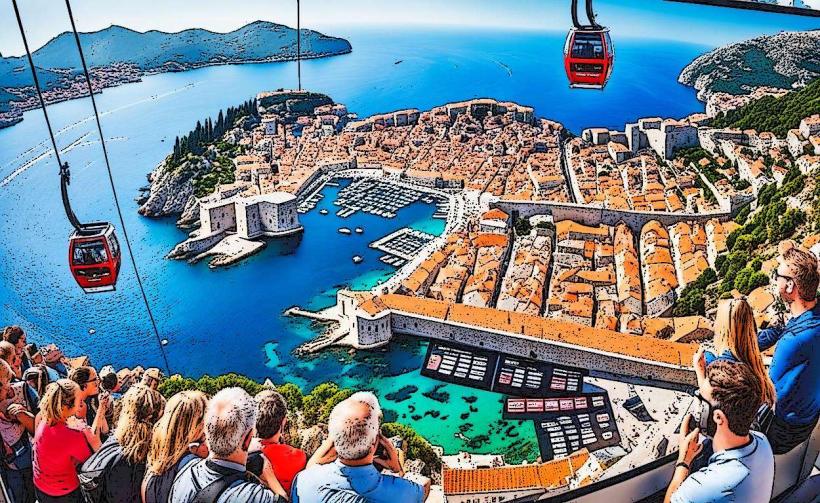
Cable Car: A specialized aerial link connecting the city center to the summit of Mount Srđ (412m) in less than 4 minutes.
Public Transit (Libertas): A specialized bus network. In 2026, the fleet is integrated with a digital smart-access system for managing tourist flow into the historic core.
Safety & "Red Zones"
The general safety level is very high. Dubrovnik is statistically one of the safest tourist destinations in the Mediterranean. There are no "red zones." The Old Town is pedestrian-only and under continuous monitoring.
Digital & Financial Infrastructure
The city is a leader in Digital Nomad Services and Heritage Digitization. Internet speeds average 400–1000 Mbps. 5G is universal. In 2026, the city utilizes a specialized "Dubrovnik Pass" system, integrating AI-driven traffic management to mitigate overtourism.
Climate & Air Quality
Dubrovnik has a Mediterranean climate. Average temperatures range from 9°C in January to 29°C in July. Air quality is exceptionally high due to the lack of heavy industry and the cleansing effect of the "Bura" and "Maestral" winds.
Culture & Social Norms
Social norms are characterized by "Gospu" (local aristocracy) etiquette and a strong maritime identity. Tipping (10%) is standard. The primary cultural event is the Dubrovnik Summer Festival (July–August) and the Feast of St. Blaise (February 3rd).
Local Cost Index (2026 Estimates)
1 Espresso: €3.50 – €5.00 (Old Town pricing)
1 Pint of Local Beer: €6.00 – €9.00
1 Standard Lunch: €25.00 – €45.00
City Walls Entry: €35.00
Nearby Day Trips
Lokrum Island: 15 mins by ferry; a specialized nature reserve featuring a salt lake (Mrtvo More) and wild peacocks.
Elafiti Islands: 30–60 mins away; a specialized archipelago of car-free islands (Koločep, Lopud, Šipan).
Cavtat: 30 mins away; a specialized historic town and birthplace of the painter Vlaho Bukovac.
Facts & Legends
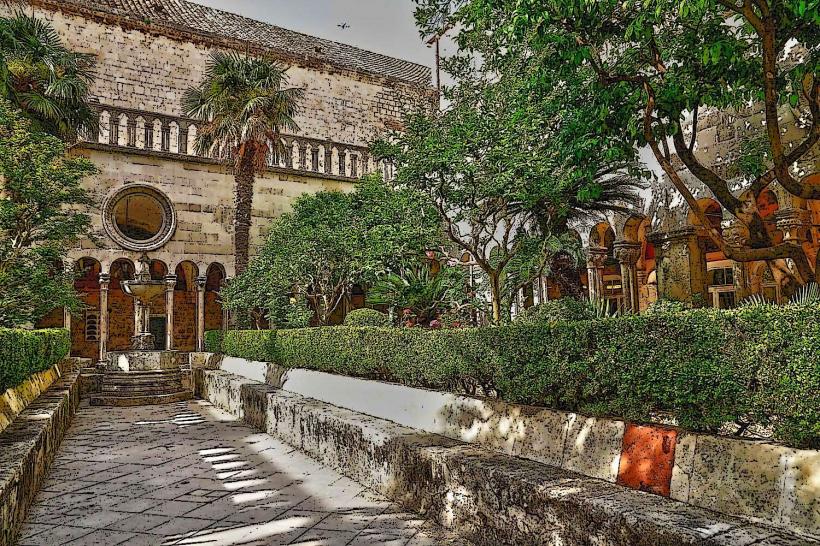
Dubrovnik is the site where the world's first quarantine (Lazareti) was established in 1377 to prevent the spread of plague. Legend states that King Richard the Lionheart was shipwrecked on Lokrum and vowed to build a cathedral in the city. A verified fact is that the city’s Franciscan Pharmacy, founded in 1317, is the oldest continuously operating pharmacy in Europe. Historically, the city’s motto remains "Libertas" (Liberty), which was displayed on its flags and above the entrance to its fortresses.