Information
City: GorisCountry: Armenia
Continent: Asia
Goris, Armenia, Asia
Goris serves as the primary cultural and administrative center of the Syunik Province and acts as a critical transit node on the North-South corridor linking Armenia to Iran. It is situated in the valley of the Vararakn River, surrounded by the Zangezur Mountains in Southeastern Armenia.
Historical Timeline
Goris was officially planned as a city in 1870 by the Russian Empire, though the area has been inhabited since the Stone Age. It transitioned from a medieval cave-dwelling civilization to a modern urban center under the direction of German architects and Russian planners. The most significant architectural reconstruction occurred in the late 19th century, establishing the city's unique "checkerboard" street plan and distinctive stone masonry. The primary event shaping the current urban form was the Soviet-era industrialization which expanded the city beyond the historic river basin into the surrounding plateaus.
Demographics & Population
The population within city limits is approximately 20,000. The primary demographic is Armenian (99.2%), with a small community of Greeks and Russians. The median age is 37.1 years.
Urban Layout & Key Districts
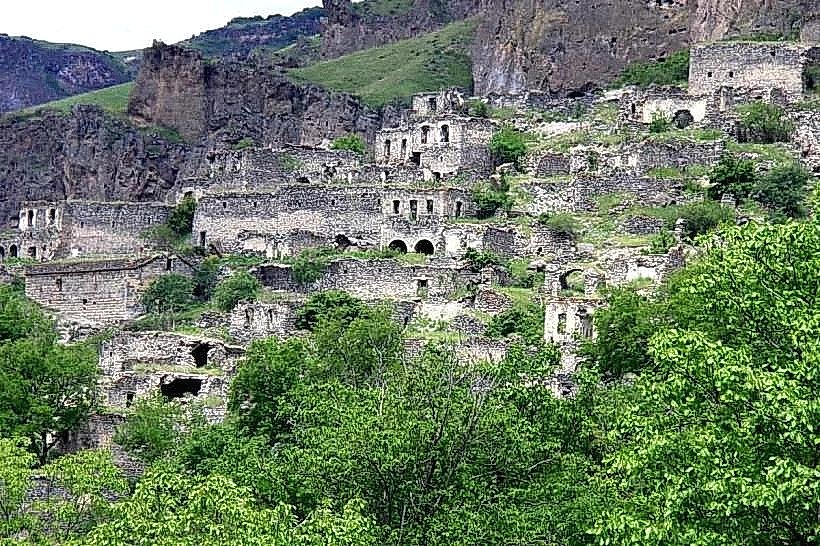
The city is organized on a strict grid system, making it unique among Armenian mountain towns. The most important districts are the Town Center (Central), containing the main square and 19th-century stone houses; Old Goris (East), located across the river and featuring the historic cave dwellings and "earth pyramids"; and the New District (West), consisting of Soviet-era residential blocks.
Top City Landmarks
Old Goris Cave Dwellings (Medieval rock-cut city)
Saint Gregory the Illuminator Cathedral
Axel Bakunts House-Museum
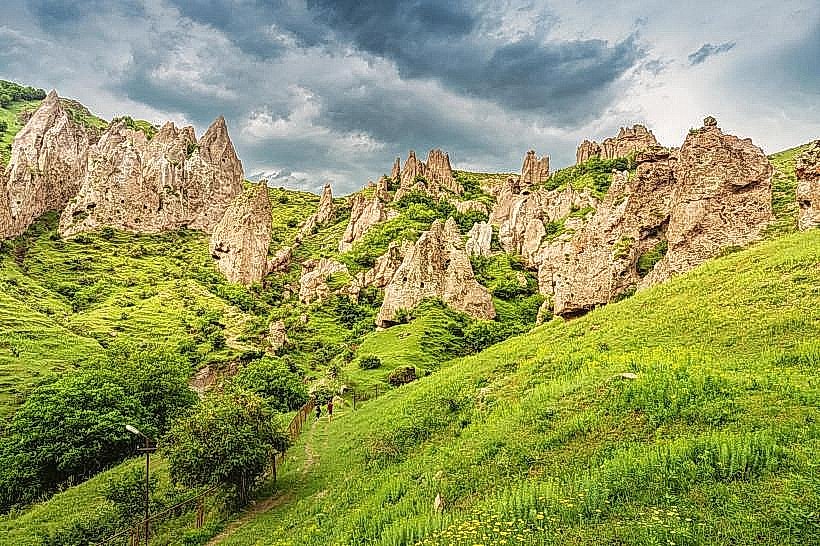
Goris Rock Forest (Natural volcanic formations)
Syunik Regional Museum
Transportation Network
Movement within Goris is primarily on foot or via private vehicles. There is no metro or tram system. Regional transit is dominated by "Marshrutkas" (minibuses) connecting to Yerevan and Kapan. Ride-sharing via the GG app is the most reliable digital platform, though Yandex Go has limited availability. Taxis are common and inexpensive; fares to nearby sites like Tatev are usually negotiated as a flat rate. Traffic density is low, though heavy cargo trucks from Iran pass frequently through the city's periphery.
Safety & "Red Zones"
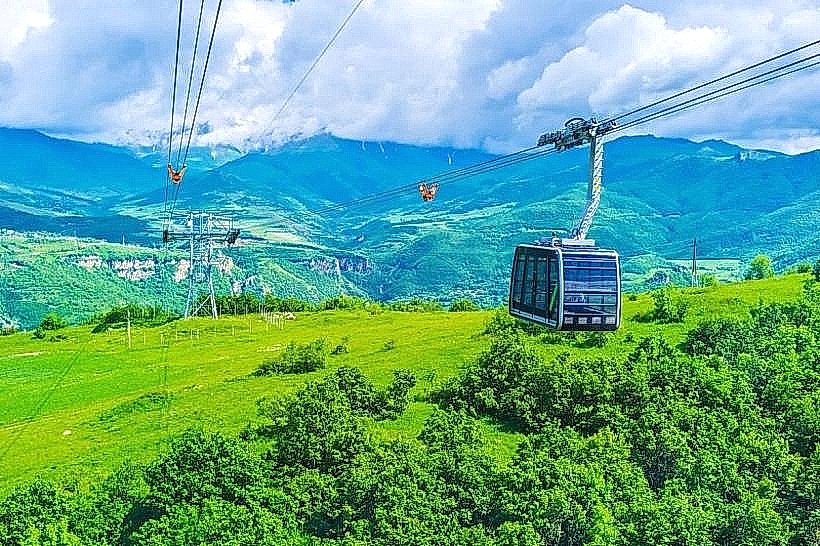
The general safety level is high. There are no designated "red zones" within the city. Visitors should avoid hiking in unmarked areas near the border zones due to the ongoing geopolitical situation; stay on established trails. Common scams are non-existent, but always verify the operation of the Tatev Aerial Tramway before traveling as it is weather-dependent.
Digital & Financial Infrastructure
Average internet speed is 40–70 Mbps via Team Telecom or Ucom. Main mobile carriers are Viva-MTS and Team. Card acceptance is high in hotels and modern restaurants, but cash (Armenian Dram) is required for local markets and small guesthouses. ATMs are concentrated around the central square and Mikoyan Street.
Climate & Air Quality
Temperatures range from -8°C in January to 26°C in July. Goris is known for its microclimate, characterized by frequent dense fogs and high humidity. Air quality is exceptionally high due to the lack of heavy industry and the dense surrounding forests.
Culture & Social Norms
Tipping of 10% is customary in cafes. Handshakes are the standard greeting. Dress code is casual, but modest clothing is required for churches. The local dialect is distinct and a source of regional pride. Alcohol, particularly mulberry and cornelian cherry vodka, is a central part of traditional hospitality.
Accommodation Zones
Stay in the Historic Center (near the main square) for walking access to 19th-century architecture and dining.
Stay in Old Goris (East bank) for unique boutique hotels situated among the rock formations.
Local Cost Index
1 Espresso: 900 AMD ($2.25)
1 Standard Lunch: 4,500 AMD ($11.25)
1 Intra-city Taxi Trip: 600 AMD ($1.50)
Nearby Day Trips
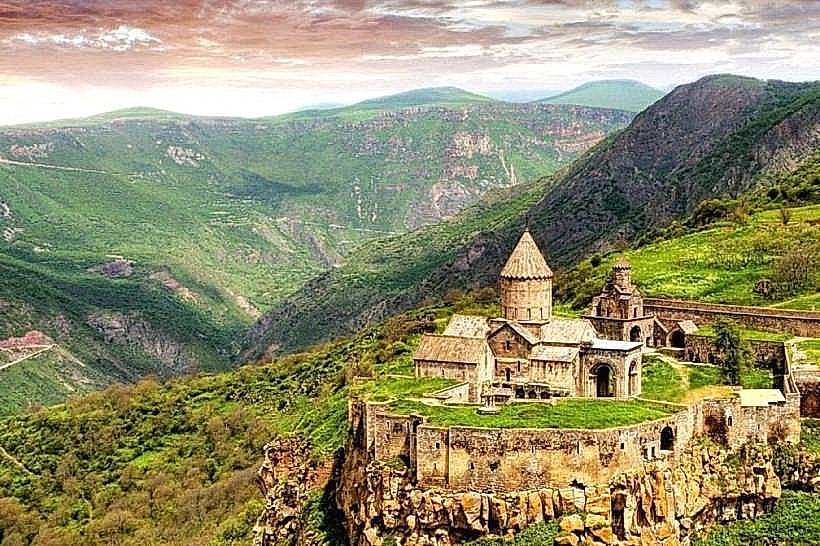
Tatev Monastery and "Wings of Tatev" Tramway (20 km southwest)
Khndzoresk Swinging Bridge and Cave Village (15 km east)
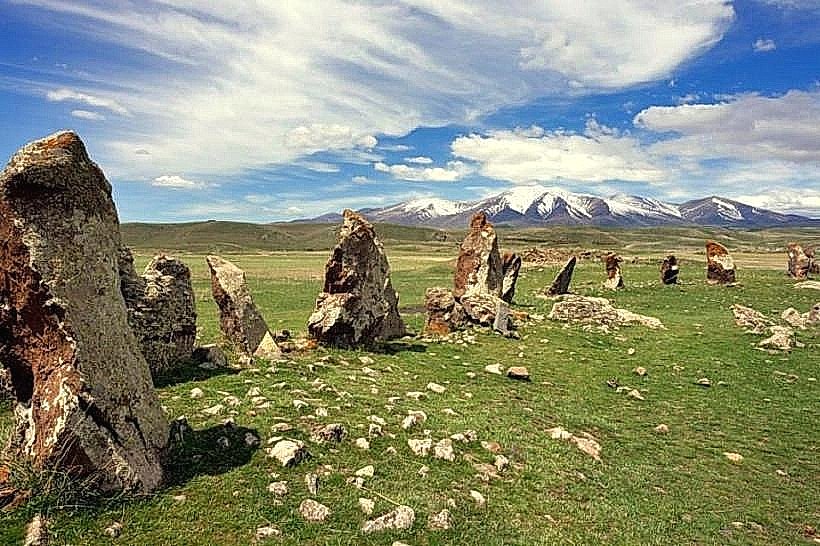
Karahunj (Zorats Karer) Observatory (35 km northwest)
Shurnukh Forest (30 km south)
Facts & Legends
Goris is famous for its "forest" of volcanic pillars and hoodoos, which the locals call "Kyores." A prominent local legend suggests that the cave dwellings of Old Goris were inhabited by giants in ancient times, a myth fueled by the massive scale of some of the natural rock chambers. The city is also the birthplace of the novelist Axel Bakunts, whose descriptions of the "checkerboard" city solidified its image in Armenian literature.