Information
City: GroningenCountry: Netherlands
Continent: Europe
Groningen, Netherlands, Europe
Groningen functions as the primary economic and educational capital of the northern Netherlands. Isolated from the Randstad by the expanse of the IJsselmeer, it serves as a self-sufficient hub for energy transition (hydrogen), digital services, and agriculture. It is defined by its youthful demographic, with over 25% of the population being students.
Historical Timeline
Groningen originated as a northern trading outpost on the Hondsrug ridge. The primary era of governance was the 15th century, when it joined the Hanseatic League as a semi-independent city-state. The primary event shaping its modern identity was the discovery of the Groningen Gas Field in 1959, once the largest in Europe, followed by the 2020s structural transition away from gas extraction due to seismic activity.
Demographics & Population
The city population is approximately 240,000. It has the lowest median age in the Netherlands (approx. 35 years) due to the presence of the University of Groningen and Hanze University of Applied Sciences. Dutch is official, but English is the lingua franca of the city center.
Urban Layout & Key Districts
The city is organized around a medieval core surrounded by a "diepenring" (canal ring).
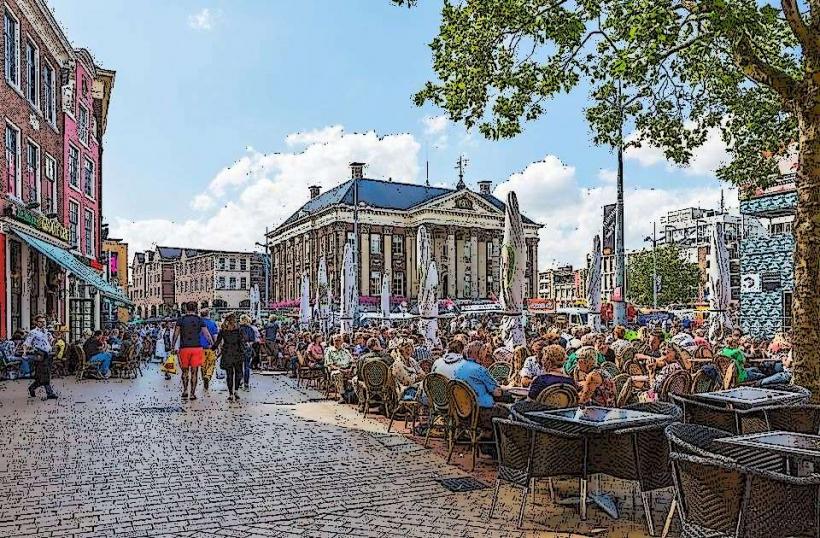
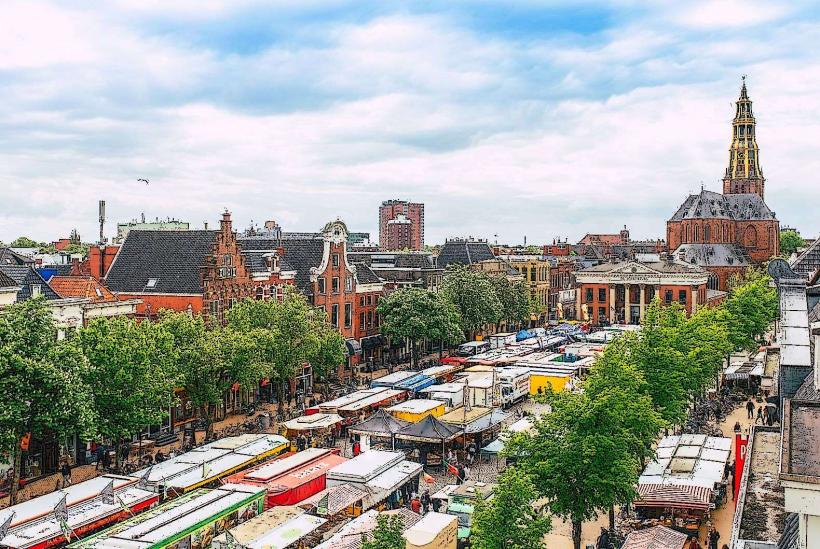
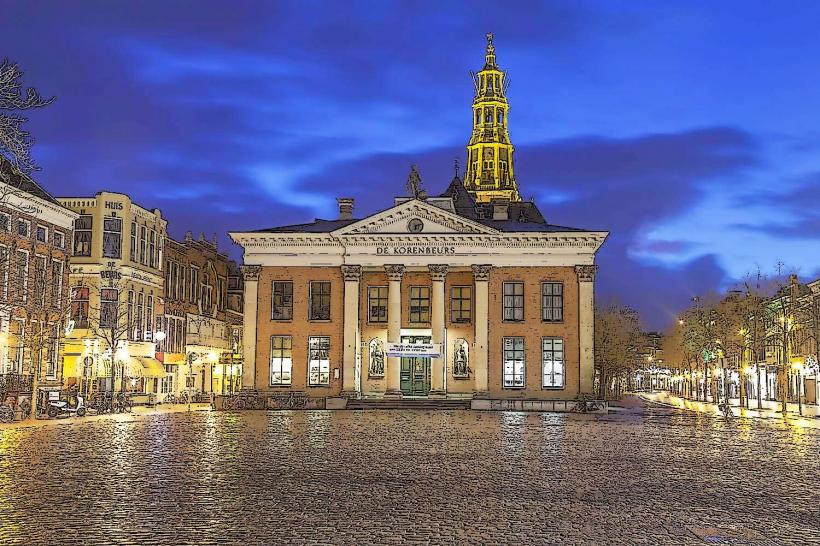
Binnenstad: The pedestrianized commercial heart, centered on the Grote Markt and Vismarkt.
Ebbingekwartier: A specialized "Open Lab" district known for creative industries and sustainable architecture.
Zernike Campus: A specialized northern district housing high-tech research facilities, data centers, and university laboratories.
Oosterparkwijk: A historic residential district known for "Blue Village" social housing experiments.
Top City Landmarks
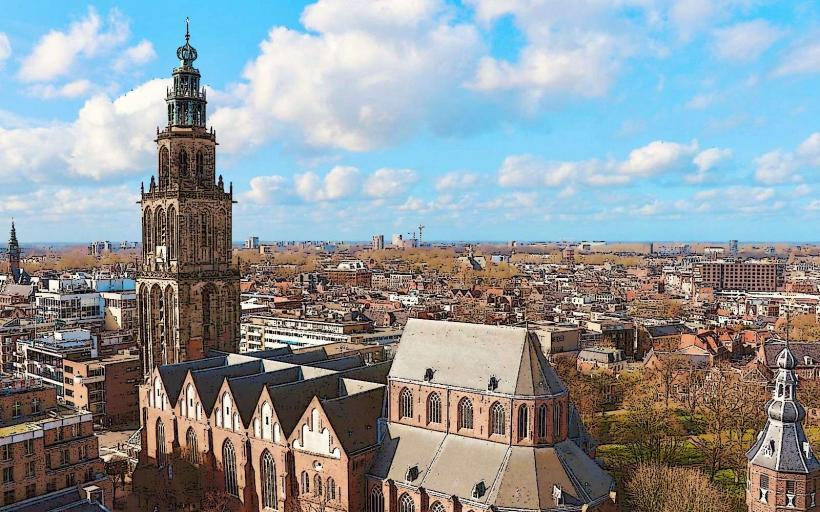
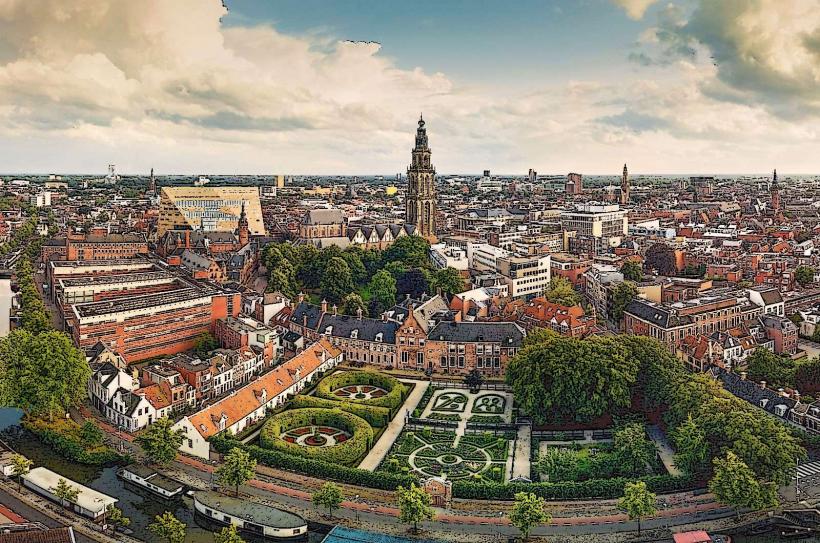
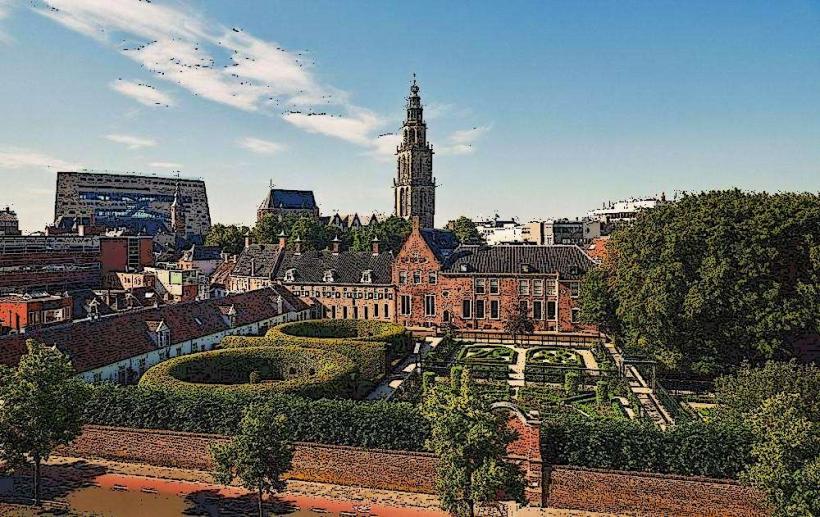
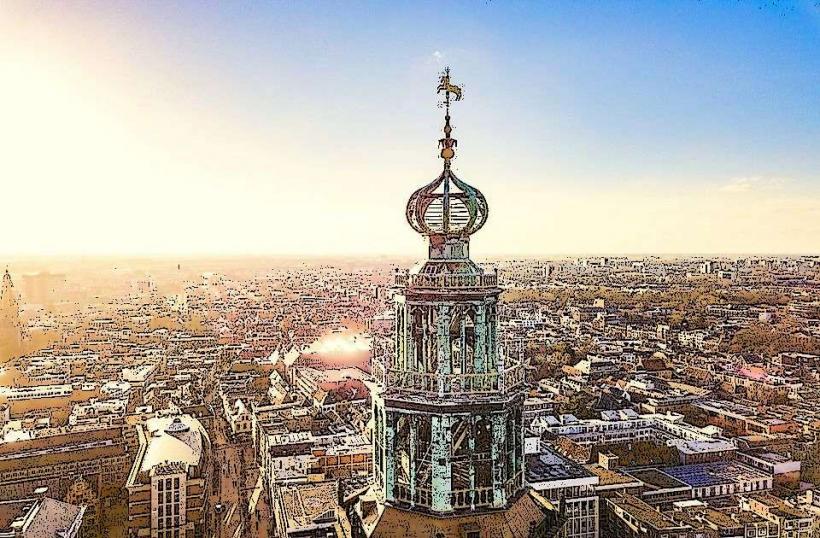
Martinitoren: The 97-meter "Old Grey One" bell tower, providing the primary visual orientation for the region.
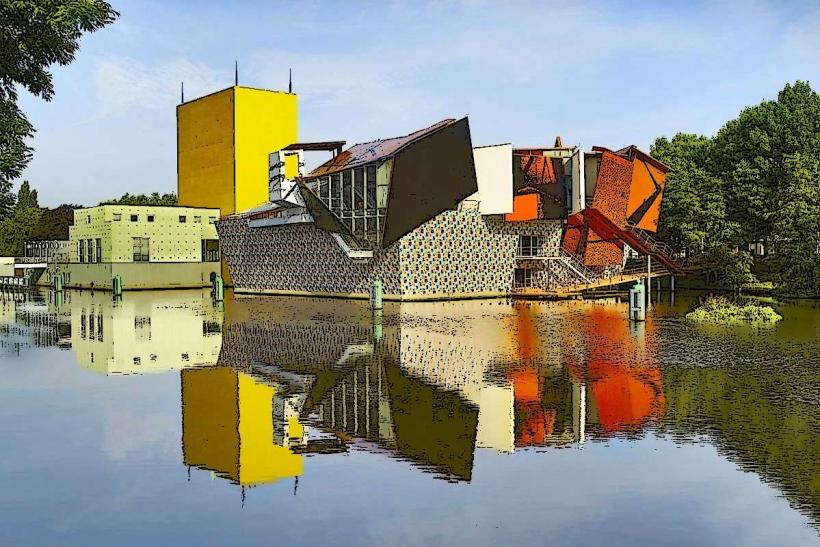
Groninger Museum: A specialized postmodern architectural landmark designed by Alessandro Mendini, situated in the water opposite the station.
Forum Groningen: A 45-meter tall specialized cultural center featuring a "vertical square" design, rooftop terrace, and cinema.
Der Aa-kerk: A specialized Gothic church used for cultural exhibitions, located in the historic harbor area.
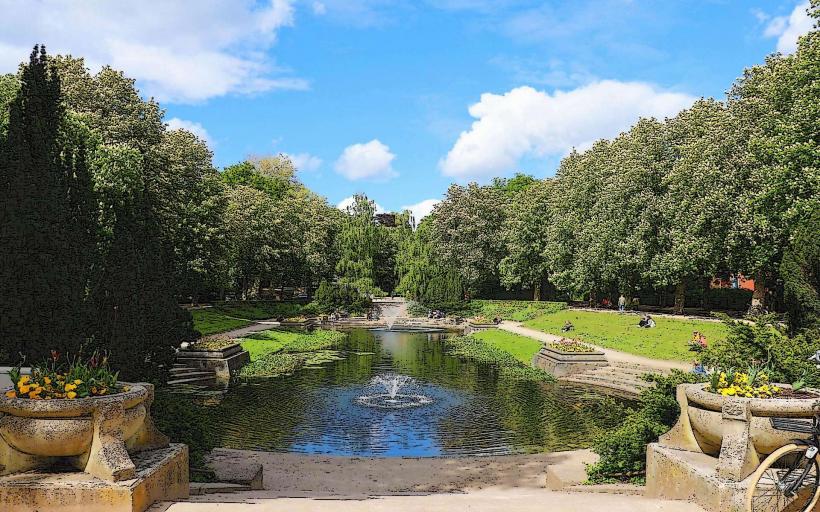
Prinsentuin: A Renaissance-style formal garden featuring a specialized sun dial and rose tunnels.
Transportation Network
Groningen is the most bicycle-friendly city in the world; over 60% of all trips are made by bike.
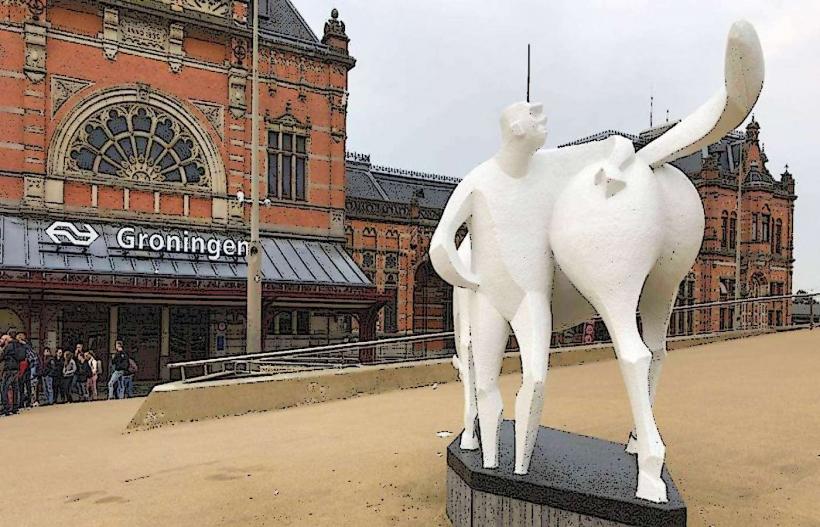
Groningen Hoofdstation: A 19th-century Neo-Gothic landmark connecting to Amsterdam (2 hours) and Germany.
Bus Hub: The city operates a specialized high-capacity bus network with dedicated lanes to compensate for the lack of a tram system.
Cycling Infrastructure: The city center is largely car-free, utilizing a specialized "sector system" that prevents cars from driving through the center.
Safety & "Red Zones"
The general safety level is very high. Crime is limited to high rates of bicycle theft. There are no "red zones." The city center remains active 24/7 due to the absence of mandatory closing times for bars, requiring standard urban awareness during early morning hours.
Digital & Financial Infrastructure
Groningen is a global hub for Green Hydrogen research and data storage (hosting major Google facilities). Internet speeds average 100–1000 Mbps via fiber. 5G is universal. Card and mobile payments are the standard; many student-facing businesses are "cashless."
Climate & Air Quality
Groningen has a maritime climate, often cooler and windier than the south. It is subject to "Groningen earthquakes"-minor seismic events (up to 3.6 magnitude) caused by historical gas extraction. Air quality is exceptional.
Culture & Social Norms
Social norms are characterized by "Noorderlijke nuchterheid" (northern down-to-earth directness). Tipping is not mandatory; rounding up 5% is common. Key events include Eurosonic Noorderslag (ESNS), Europe’s primary music industry showcase, and the Noorderzon performing arts festival.
Accommodation Zones
Grote Markt/Centrum: Recommended for nightlife and proximity to landmarks.
Westerhaven: Recommended for shopping access and modern hotels.
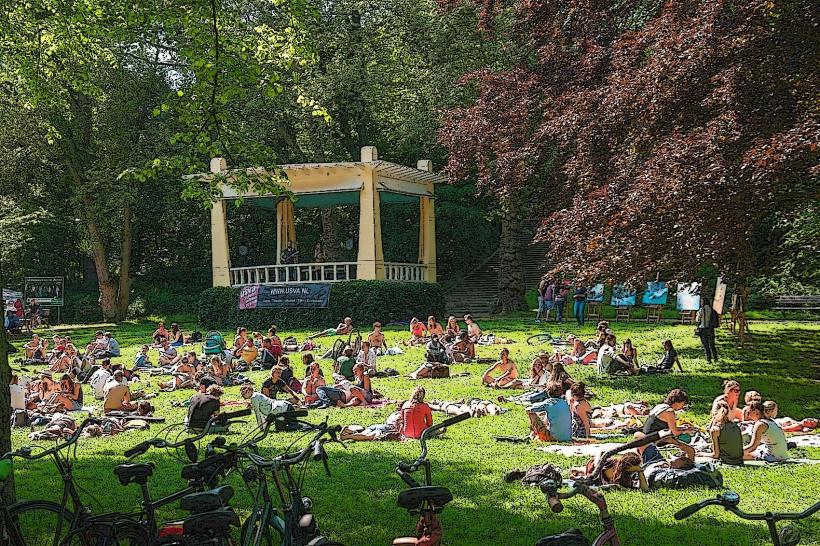
Noorderplantsoen: Recommended for quiet stays near the city's primary park.
Local Cost Index
1 Espresso: €3.00
1 Pint of Beer: €5.00–€6.50
1 Standard Lunch: €12.00–€20.00
Nearby Day Trips
Bourtange: 45 mins east; a specialized 16th-century star-shaped fortress village.
Schiermonnikoog: A car-free Wadden Island National Park, accessible via ferry from Lauwersoog.
Lauwersmeer National Park: A Dark Sky Park specialized for stargazing and bird watching.
Facts & Legends
Groningen is the site where the first female university student in the Netherlands, Aletta Jacobs, studied medicine. Legend states the Martinitoren has survived several fires and collapses because the spirit of St. Martin protects the city. A verified fact is that Groningen has the highest density of bicycles per capita in Europe. Historically, the city has remained the undisputed "Metropolis of the North" due to its geographic isolation from other major Dutch urban centers.