Information
City: Hill CityCountry: USA South Dakota
Continent: North America
Hill City, USA South Dakota, North America
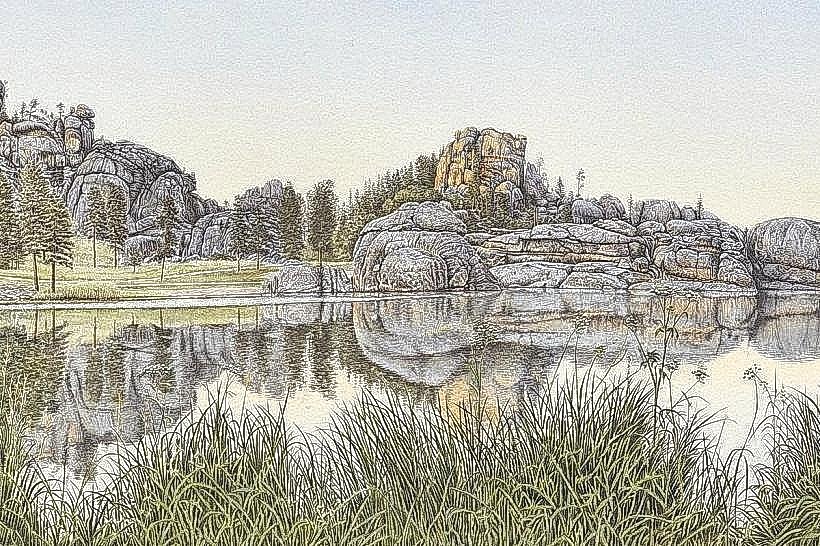
Hill City is an incorporated city in Pennington County, situated in the central Black Hills. Known as the "Heart of the Hills," it is defined by its status as the oldest city in the county, its central proximity to major monuments, and its transformation from a rowdy 19th-century mining camp into a premier center for arts and fossils.
Historical Timeline
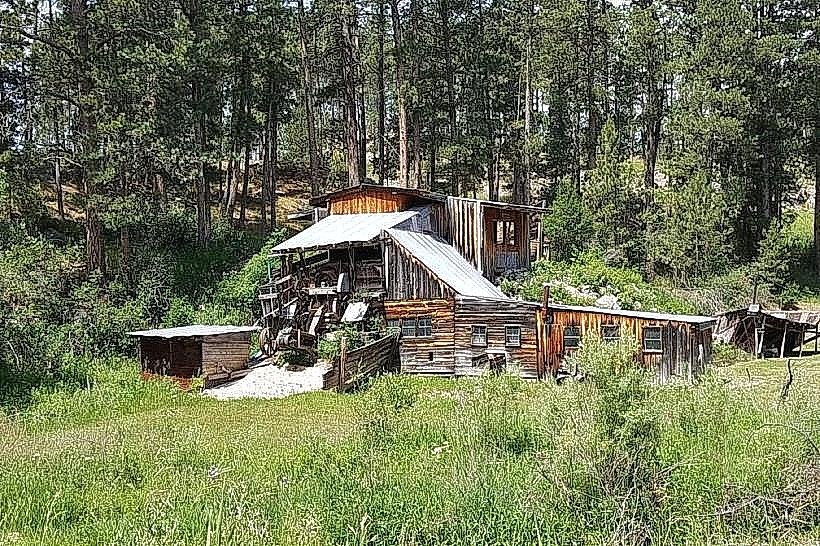
Inhabited by the Lakota Sioux, who referred to the Black Hills as Paha Sapa. Founded in 1876 as the second American settlement in the Black Hills during the gold rush. A critical historical event occurred in the 1880s when the town transitioned to tin mining, attracting significant British capital and leading to a population surge. In the 20th century, the city survived the decline of mining by pivoting to timber and tourism, bolstered by the 1957 launch of the 1880 Train. In the 21st century, Hill City has gained international scientific importance through the Black Hills Institute, which has been involved in the excavation of some of the world's most famous T. rex specimens.
Demographics & Population
The population is approximately 1,050. The demographics are predominantly White (90%), with a notable presence of seasonal residents and artists. The economy is driven by tourism, specialized retail, and the arts, with a significant influx of capital during the summer months and the Sturgis Motorcycle Rally.
Urban Layout & Key Districts
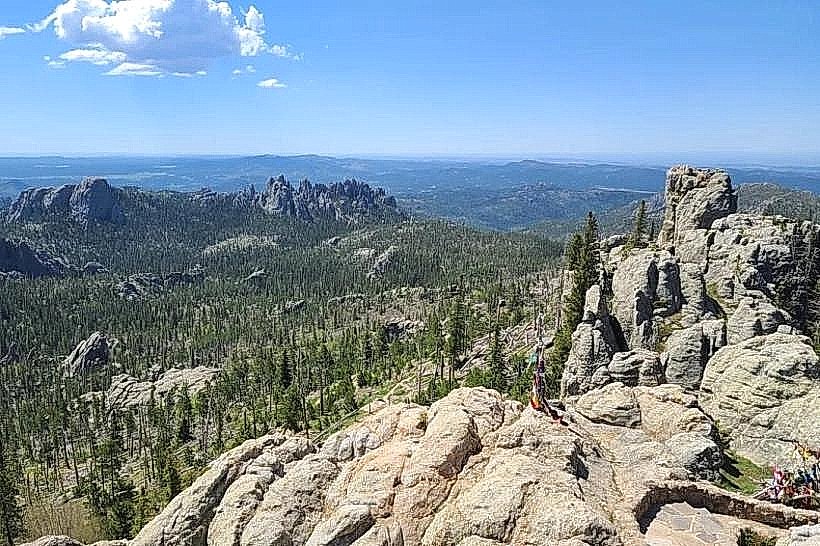
Hill City follows a linear layout along a central valley, bordered by Spring Creek.
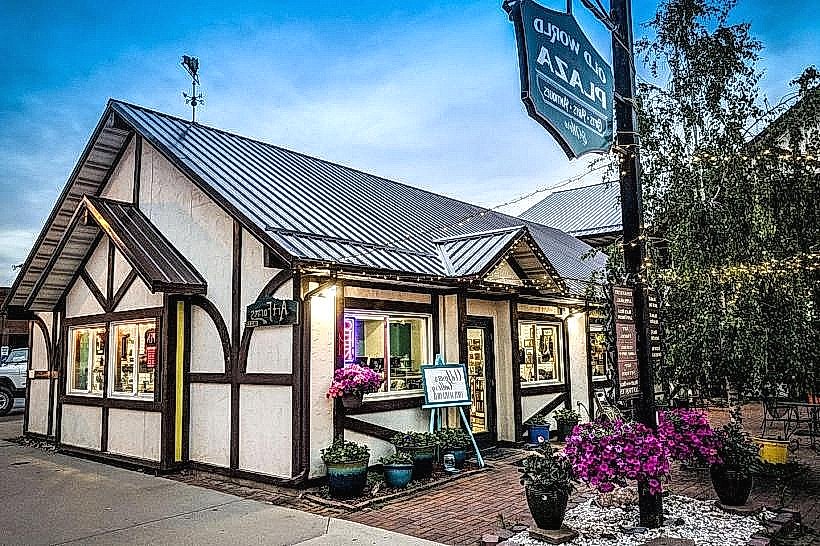
Main Street: The primary commercial and historic artery, characterized by high-density retail, Western-themed art galleries, and historic hotels.
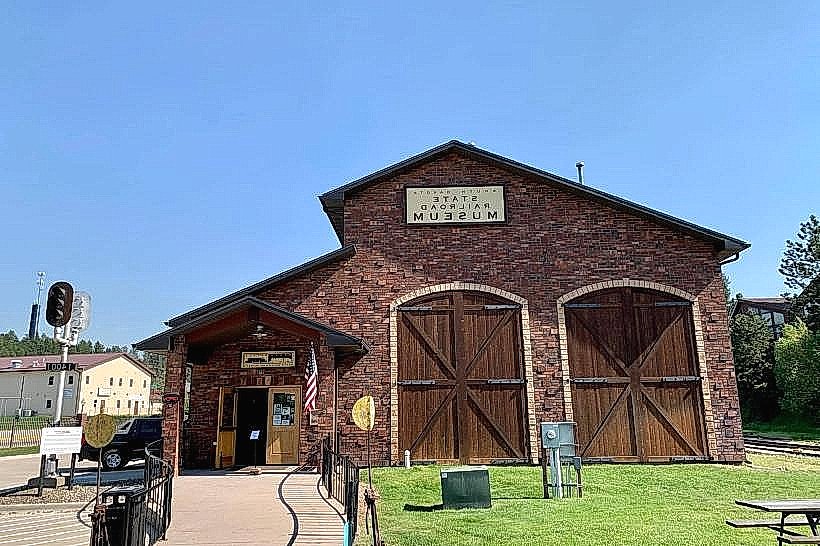
Railroad District: Located on the eastern edge of the core, housing the 1880 Train station and the South Dakota State Railroad Museum.
The "Mile of Hell": A historical reference to the original mile-long stretch of Main Street that once housed 15 saloons; now the center of the city’s dining and boutique shopping.
Top City Landmarks
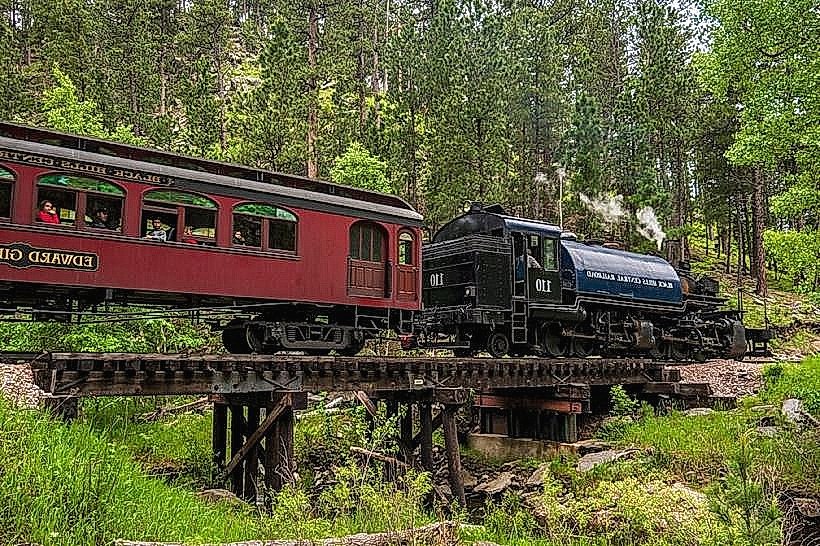
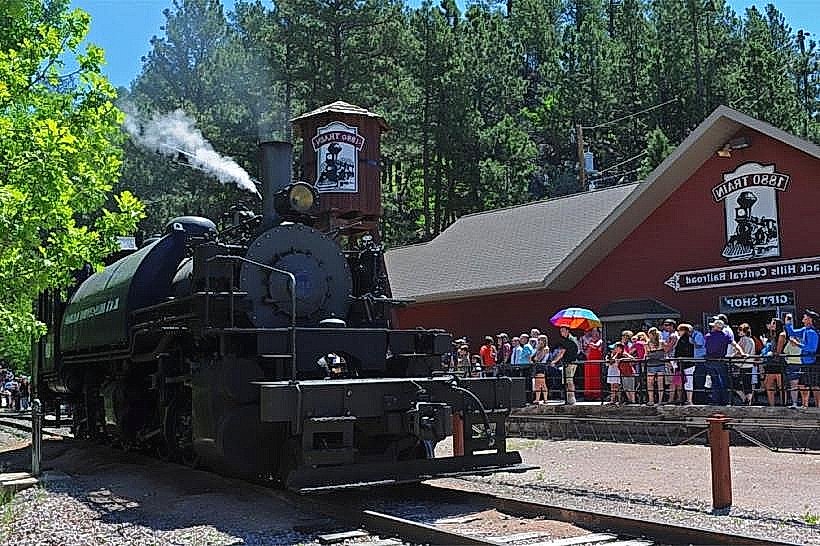
1880 Train (Black Hills Central Railroad): A historic steam-powered excursion train that travels between Hill City and Keystone, featuring authentically refurbished late-19th-century equipment.
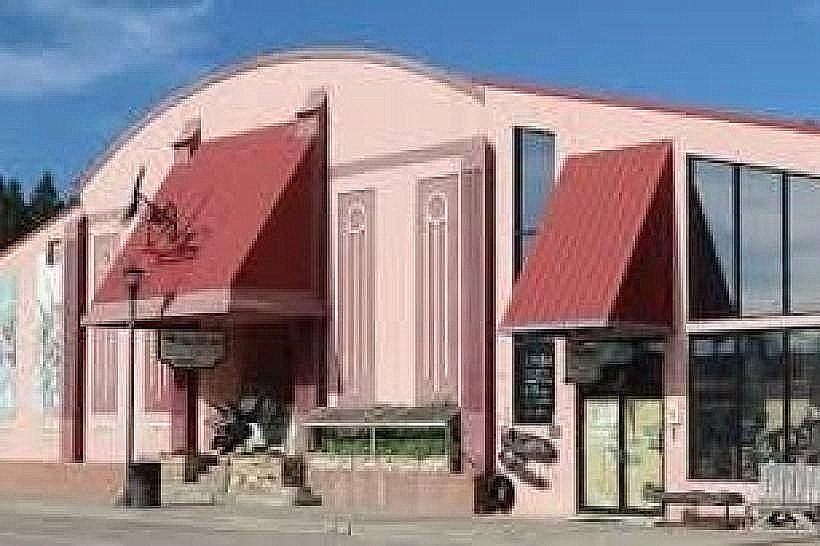
Museum at Black Hills Institute: A world-renowned paleontological research center and museum housing over 1,300 fossils, including significant dinosaur skeletons.
The Alpine Inn: Housed in the restored 1884 Harney Peak Hotel; a landmark restaurant famous for its limited menu and historic European-style lodging.
South Dakota State Railroad Museum: A facility dedicated to preserving the rail history of the Great Plains, located adjacent to the 1880 Train depot.
Jon Crane Gallery: A flagship gallery showcasing the watercolor works of one of the Black Hills' most prominent artists.
Mickelson Trail: A 175-kilometer "rails-to-trails" path that passes directly through the city, utilized for hiking, biking, and snowmobiling.
Transportation Network
Movement is automotive-centric, with heavy pedestrian traffic on Main Street. The city is the junction of US-16 and US-385. There is no local public transit, though seasonal shuttles are common during major events. Commercial air service is via Rapid City Regional (RAP), 42 km northeast.
Safety & "Red Zones"
The general safety level is very high. Property crime is negligible outside of high-volume event windows. There are no "red zones." Environmental hazards include severe winter blizzards and significant wildfire risk due to the dense surrounding Ponderosa pine forest.
Digital & Financial Infrastructure
Internet speeds average 200–500 Mbps with fiber availability via Golden West. Main mobile carriers are Verizon and AT&T. Card acceptance is universal. South Dakota has no state income tax. Sales tax is 4.2% (plus 2% city tax).
Climate & Air Quality
Temperatures range from -12°C to 1°C in winter and 12°C to 28°C in summer. Its valley location provides some shelter from high prairie winds, though it remains prone to heavy snowfall. Air quality is pristine.
Culture & Social Norms
The standard tipping percentage is 20%. A "Polite-Frontier" greeting is standard. Dress codes are "Active-Casual" (outdoor gear is standard attire). The city is culturally defined by its Mascot (Smokey Bear)-the only school district in the U.S. authorized to use it-and its identity as the "Artistic Hub" of the Hills.
Local Cost Index
1 Espresso: $5.00 (USD)
1 Standard Lunch: $17.00 (USD)
1 1880 Train Ticket: $34.00.
Nearby Day Trips
Mount Rushmore National Memorial: (20 km east).
Crazy Horse Memorial: (15 km south).
Sheridan Lake: (10 km north; a major destination for fishing and swimming).
Facts & Legends
Hill City is home to "Teddy Bear Town," which holds a Guinness World Record for the largest teddy bear collection. Historically, it was a "wide open" town where law enforcement was sparse until the mid-20th century. A local legend involves the "Hillyo Ghost," a miner said to haunt the creek beds near the town's original settlement site. Another legend concerns the "Lost English Tin," alleged to be buried near the former Harney Peak Tin Mining headquarters.