Information
Landmark: Museum @ Black Hills InstituteCity: Hill City
Country: USA South Dakota
Continent: North America
Museum @ Black Hills Institute, Hill City, USA South Dakota, North America
Setting and Overview
The Museum @ Black Hills Institute, located in Hill City, South Dakota, stands as one of the most fascinating natural history museums in the Black Hills region. Known internationally for its exceptional collection of fossils, minerals, and prehistoric artifacts, the museum offers an in-depth look into Earth’s deep past-particularly the era when massive dinosaurs roamed what is now the Great Plains.
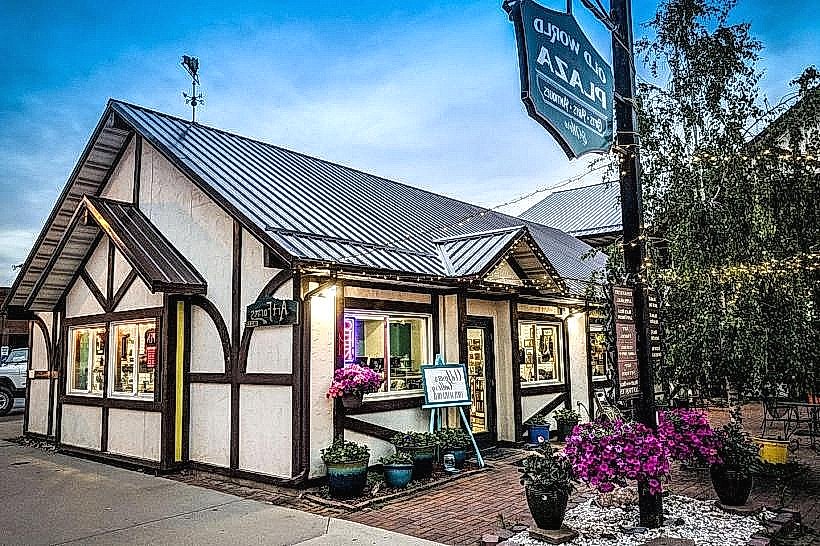
Set in a modest stone-and-brick building just off Hill City’s main street, the museum houses one of the largest private fossil collections in the world. It’s operated by the Black Hills Institute of Geological Research, an organization famed for discovering and preparing some of the most complete dinosaur skeletons ever found, including “Sue,” the world’s most famous Tyrannosaurus rex.
History and Legacy
The Black Hills Institute was founded in 1974 by brothers Peter and Neal Larson, passionate paleontologists who aimed to collect, preserve, and study fossils from the rich geological formations of the northern Great Plains. Over the decades, their work in fossil excavation brought global attention-not only for their scientific achievements but also for their role in the historic legal battle over the T. rex named Sue, now displayed at the Field Museum in Chicago.
To share their discoveries with the public, the Institute opened the Museum @ Black Hills Institute in 1992, transforming Hill City into a quiet but significant hub for paleontological research and public education.
Exhibits and Collections
The museum’s interior is a treasure trove of prehistoric life. The exhibits are dense and captivating, filled with fossils and reconstructions that draw both casual visitors and serious enthusiasts. Highlights include:
Tyrannosaurus rex Specimens: Several T. rex fossils and casts, including the impressive “Stan,” one of the most complete skeletons ever found, which served as the model for replicas displayed in museums around the world.
Triceratops and Edmontosaurus Fossils: Large, beautifully preserved skulls and skeletons from the Late Cretaceous period.
Marine Reptiles: Fossils of Mosasaurus and Plesiosaurus that tell the story of South Dakota’s prehistoric inland sea.
Pterosaur Displays: Winged reptiles suspended from the ceiling, illustrating flight and adaptation in the age of dinosaurs.
Paleobotany Section: Fossilized plants and petrified wood that reveal the ancient ecosystems once thriving across the region.
Mineral and Gem Hall: A glittering collection of quartz, calcite, amethyst, and rare minerals from the Black Hills, alongside crystals from around the world.
Every exhibit is accompanied by clear explanations and diagrams, helping visitors understand how fossils are discovered, extracted, and prepared for study.
Paleontological Work and Research
Beyond its exhibits, the museum is a functioning research institution. The Black Hills Institute remains a leader in fossil excavation and preparation, working on projects across the globe. The museum showcases this process, displaying real tools, plaster jackets, and fossil preparation labs where visitors can observe technicians cleaning delicate bones under microscopes.
This behind-the-scenes look at paleontology-complete with explanations about how fossils are stabilized, dated, and reconstructed-offers an unusually intimate glimpse into the science itself.
Educational Role
The museum serves as an educational cornerstone for schools, universities, and visiting groups. Its programs emphasize the importance of fieldwork, scientific ethics, and fossil preservation. Guided tours, lectures, and fossil workshops are often organized for students and aspiring paleontologists.
Exhibits are designed to appeal to all ages: children can marvel at the sheer size of dinosaur skeletons, while adults appreciate the complexity of geological timelines and the meticulous artistry of fossil reconstruction.
Visitor Experience
Stepping inside, visitors are greeted by towering dinosaur skeletons under warm, focused lighting that gives the space a cinematic quality. The air carries the faint scent of stone dust and polish, a reminder that this is both a museum and an active workshop.
The gift shop extends the experience with geological books, fossil replicas, minerals, and authentic field tools. The staff-many of them researchers themselves-are approachable and often share personal stories about field expeditions in the Dakotas, Montana, and Wyoming.
Most guests spend one to two hours exploring, but enthusiasts could easily stay longer, absorbing the detailed displays and the sense of connection to Earth’s prehistory.
Atmosphere and Impression
What distinguishes the Museum @ Black Hills Institute is its authenticity. It feels less like a polished tourist attraction and more like an active scientific space that welcomes the public inside. There’s an electric mix of curiosity and reverence here-the awe of seeing ancient bones up close, and the respect for the human effort behind their discovery.
Everywhere you look, there’s something fascinating: a fossilized claw, a delicate ammonite spiral, a cast of a prehistoric skull that once roamed the same land. For anyone visiting the Black Hills, the museum offers an unforgettable encounter with the deep history beneath South Dakota’s soil-a journey through time that captures both science and wonder in perfect balance.