Information
Landmark: DhanushadhamCity: Janakpur
Country: Nepal
Continent: Asia
Dhanushadham, Janakpur, Nepal, Asia
Dhanushadham is a major religious municipality and pilgrimage site located in the Dhanusha District of south-eastern Nepal. It is historically and mythologically significant as the site where a portion of the divine Shiva Dhanush (Pinaka bow) fell after being broken by Lord Ram.
Visual Characteristics
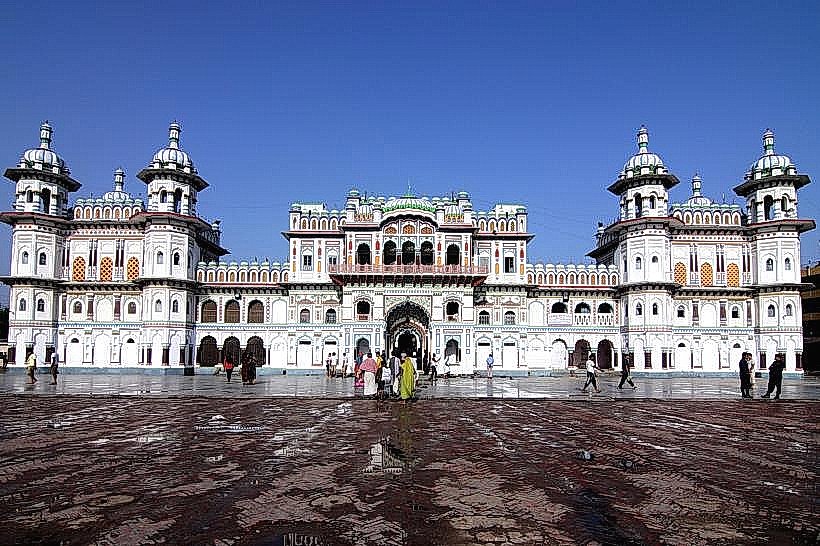
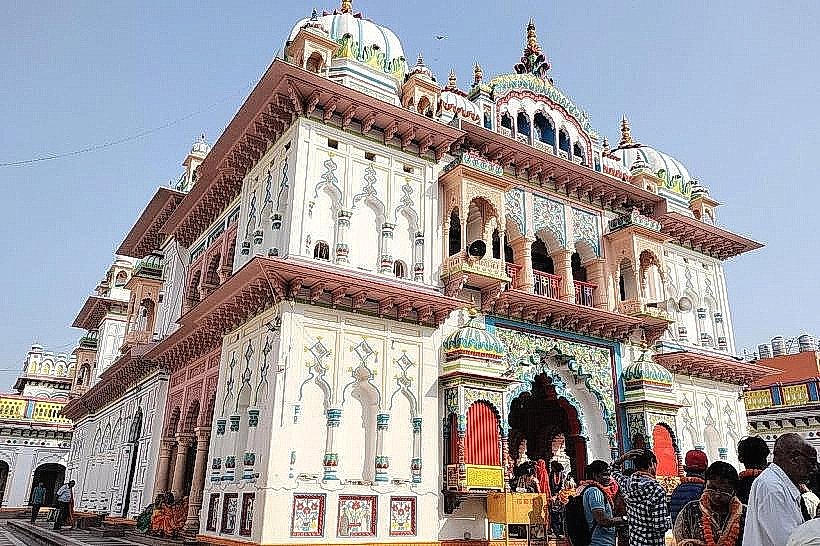
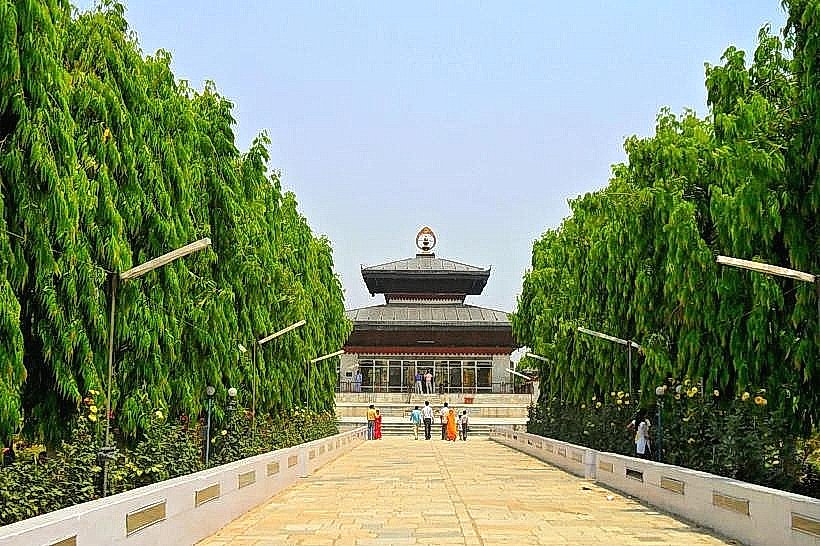
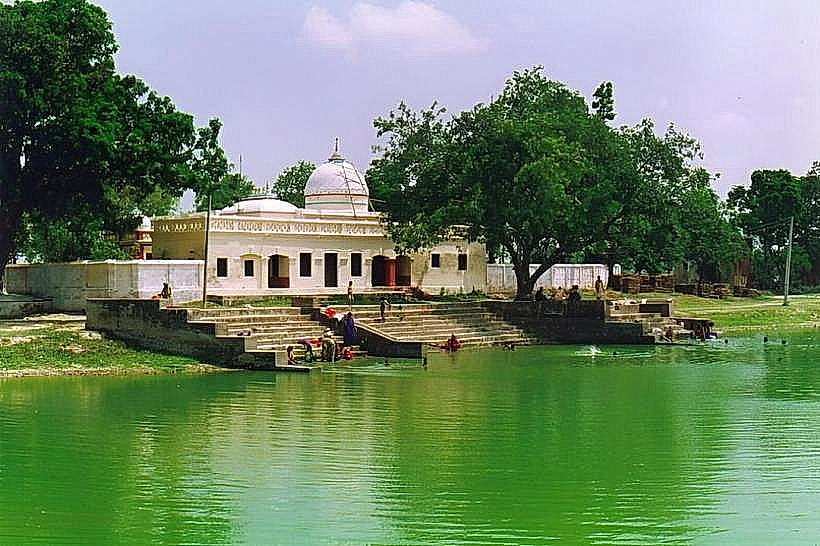
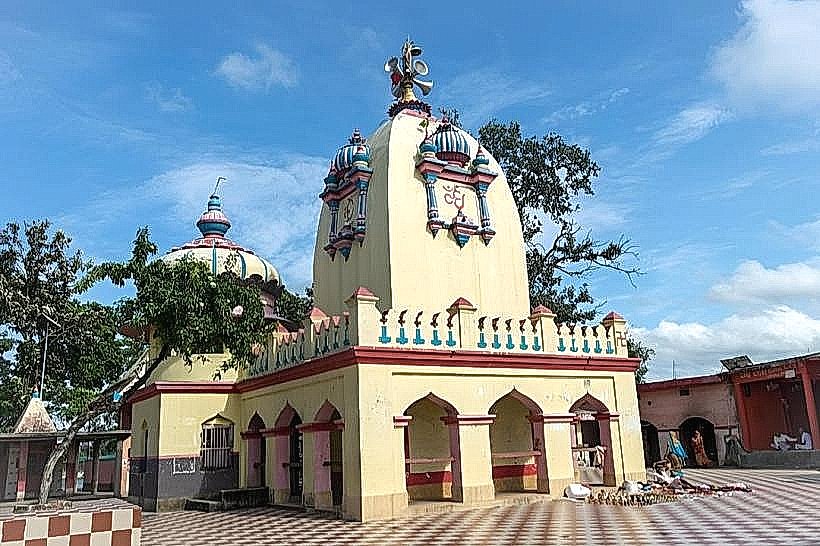
The landmark is centered around the Dhanusha Temple, which houses a growing, fossilized rock formation believed to be a fragment of the divine bow. The structure is characterized by traditional Hindu temple architecture with white-washed walls and a prominent dome. The surrounding area includes the Dhanushadham Protected Forest, the only remaining forest in the Terai region of Dhanusha, providing a green canopy that contrasts with the surrounding agricultural plains.
Location & Access Logistics
Coordinates: $26^{\circ}50'24''N \ 86^{\circ}04'12''E$
Distance: Situated approximately 18 km northeast of Janakpurdham.
Transport: * Road: Accessible via a paved concrete road. Travel by private car or motorbike takes approximately 30 minutes.
Public Transport: Local buses from Janakpur depart regularly and take about 45 minutes.
Rickshaws: Electric rickshaws from Janakpur are available for private hire (approx. $400 \text{ NPR}$).
Historical & Ecological Origin
According to the Ramayana, King Janak set a challenge for suitors of Princess Sita to string the Pinaka, the divine bow of Lord Shiva. Lord Ram effortlessly lifted the bow, but it snapped into three pieces due to its immense power. One piece fell into the heavens, one into the underworld, and the middle portion fell here, forming the foundation of Dhanushadham. Ecologically, the site includes a 360-hectare protected forest that serves as a vital bio-unit for local biodiversity.
Key Highlights & Activities
Dhanusha Temple: The primary activity is worshipping the fossilized bow fragment. Local belief holds that the stone fragment is slowly growing in size over time.
Makar Mela: A massive month-long festival held every Sunday in the Nepali month of Magh (Jan/Feb). It is the most significant annual gathering at the site.
Forest Exploration: Visitors often walk through the protected forest area, which serves as a center for environmental education and local wildlife conservation.
Infrastructure & Amenities
The municipality offers basic infrastructure, including small local lodges, tea shops, and religious souvenir stalls. While 4G cellular signal is available, luxury amenities are limited; most visitors complete the trip as a half-day excursion from Janakpur. The site features a community-led visitor information center and basic public restrooms.
Best Time to Visit
Daily: Early morning (06:00–08:00) is preferred for a quiet atmosphere and to avoid the midday Terai heat.
Annual: During Makar Sankranti (January) for the Makar Mela, or during Vivaha Panchami (Nov/Dec) and Ram Navami (March/April).
Weekly: Sundays are the busiest and most significant days for local rituals.
Facts & Legends
Growing Stone: Devotees claim the "bow" relic in the temple grows a few millimeters every year.
Sin Cleansing: Mithila philosophical texts state that a single visit to Dhanushadham is sufficient to wash away a lifetime of sins.
The Blast: Legend says the breaking of the bow caused a thunderous sound so loud it was heard across the three worlds.
Nearby Landmarks
Janakpurdham (Janaki Mandir) – 18km Southwest
Baal Ganga River – 0.5km East
Parashuram Kunda – 3km North
Yagyabhumi – 2km West
Dhanushadham Protected Forest – Adjacent to temple grounds