Information
City: Lau IslandsCountry: Fiji
Continent: Australia
Lau Islands, Fiji, Australia
The Lau Islands function as Fiji's most remote eastern province and the primary cultural bridge between Melanesian Fiji and Polynesian Tonga. The group comprises approximately 60 islands and islets-of which 30 are inhabited-spread across 487 square kilometers of the southern Pacific Ocean, east of the Koro Sea.
Historical Timeline
The Lau Islands were traditionally divided into three independent chiefdoms: Northern Lau, Southern Lau, and the Moala Group. The primary era of unified governance began in 1855 when the Tongan prince Enele Ma'afu, with the support of the Tui Nayau (Paramount Chief of Lau), established a centralized administration at Lomaloma. Ma'afu was subsequently granted the title "Tui Lau" (King of Lau). The primary event shaping the current urban and administrative form was the 1874 British annexation, which integrated the Lauan confederacy into the Colony of Fiji, effectively halting Tongan political expansion.
Demographics & Population
The total population of the Lau Group is approximately 10,700. The demographics are predominantly iTaukei (Indigenous Fijian) with a high degree of Tongan ancestry. The median age is approximately 25 years, reflecting a younger demographic than the national average due to the emigration of working-age adults to Suva and Viti Levu.
Urban Layout & Key Districts
The group lacks a centralized urban center, operating instead through a series of island hubs:
Lakeba (Tubou): The traditional and chiefly capital of the Lau Islands and the seat of the Tui Nayau.
Vanua Balavu (Lomaloma): The administrative and commercial hub of Northern Lau, known for its mixed Fijian-Tongan heritage.
Moala Group: A specialized agricultural cluster located to the west of the main chain.
Ono-i-Lau: The most southerly inhabited point of Fiji, serving as a critical maritime marker.
Top Landmarks
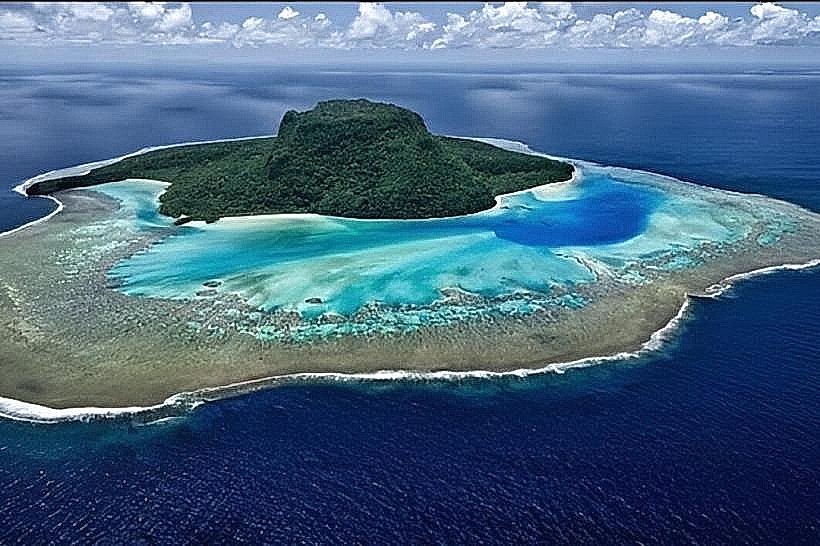
Vatu Vara (Hat Island): A massive, uninhabited limestone "table" island rising 314 meters, considered one of the most distinctive profiles in the Pacific.
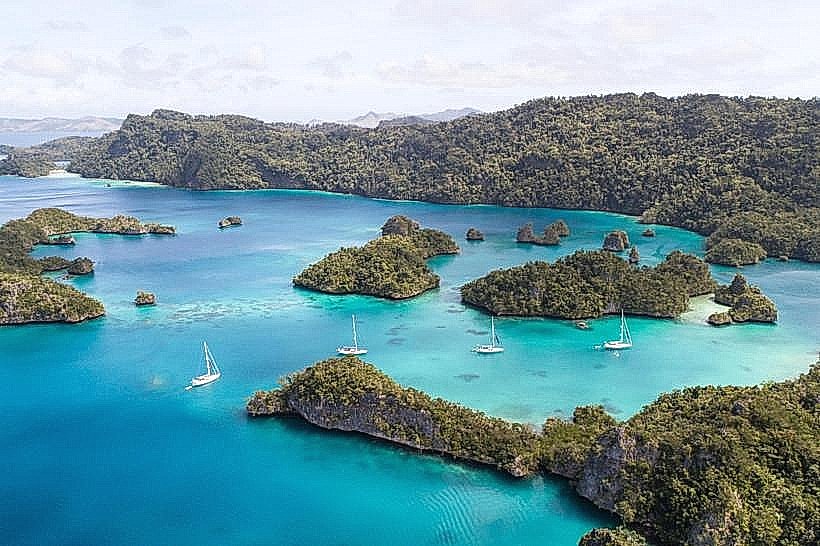
Bay of Islands (Qilaqila): A protected marine area in Vanua Balavu featuring hundreds of limestone islets and karst formations.
Tubou Village (Lakeba): The site of the chiefly residences and historical meeting grounds between Tongan and Fijian nobility.
Waitabu Marine Park: A community-led conservation site in the north of the group.
Transportation Network
Movement to and within the Lau Islands is the most difficult in Fiji. Logistics are provided primarily by Goundar Shipping and Patterson Brothers ferries on monthly or bi-monthly schedules. Small grass-strip airfields are located on Lakeba, Vanua Balavu, Cicia, and Moala, serviced by Fiji Link on a weekly basis. There are no paved roads; transport on islands consists of limited 4WD vehicles and communal trucks. Inter-island transit relies on private "fiber" outboards.
Safety & "Red Zones"
The general safety level is absolute, governed by strict traditional communal systems. There are no "red zones." The primary risks are logistical and environmental: running out of supplies (fuel/food) due to delayed shipping or being stranded by sudden changes in sea state.
Digital & Financial Infrastructure
Internet speeds are extremely low (sub-5 Mbps), primarily via satellite. Vodafone and Digicel have limited 2G/3G towers in the main villages; data is often non-functional. The islands operate on a cash-only economy. There are no ATMs in the Lau Group; all financial transactions must be completed in Suva before departure.
Climate & Air Quality
The group features a tropical marine climate with a distinct dry season (April–October). Northern islands are volcanic and wet, while southern islands are limestone-based and prone to water scarcity. Air quality is pristine. The primary weather risks are tropical cyclones and drought, as many limestone islands lack natural springs.
Culture & Social Norms
Lauan culture is the most traditional in Fiji. The presentation of a sevusevu (kava root) is an absolute requirement for all visitors. Polynesian (Tongan) influence is visible in the architecture (rounded vale ends) and the dialect. Public displays of affection, wearing hats in villages, or walking through a village during matanigasau (evening prayer) are strictly prohibited.
Accommodation Zones
Vanua Balavu (Lomaloma/Daliconi): Recommended for eco-tourism and marine exploration.
Lakeba (Tubou): Recommended for those interested in Fijian chiefly history and traditional governance.
Local Cost Index
1 Standard Lunch: 10.00–15.00 FJD ($4.50–$6.70 USD) (Typically in village guest houses)
1 Boat Charter (Inter-island): 200.00–500.00 FJD ($89.00–$223.00 USD)
1 Airfare (Suva to Lakeba): 250.00–350.00 FJD ($111.00–$156.00 USD)
Nearby Day Trips
Qilaqila Bay: 20-minute boat trip from Lomaloma.
Ono-i-Lau Sandbanks: Accessible only via specialized maritime expedition.
Vatoa Island: A remote coral island south of the main group.
Facts & Legends
The Lau Islands are the site of the legend of the "Flight of the Chiefs," where Tongan and Fijian nobles competed in high-speed sailing races across the Koro Sea. Historically, the islands provided the hardwoods (vesi) used to build the great drua (double-hulled canoes) that dominated Pacific naval warfare. A verified historical fact is that the first Christian missionaries to Fiji landed at Lakeba in 1835, but were initially forced to live on the beach because the Tui Nayau refused to let them enter the village.