Information
Landmark: Fulaga IslandCity: Lau Islands
Country: Fiji
Continent: Australia
Fulaga Island, Lau Islands, Fiji, Australia
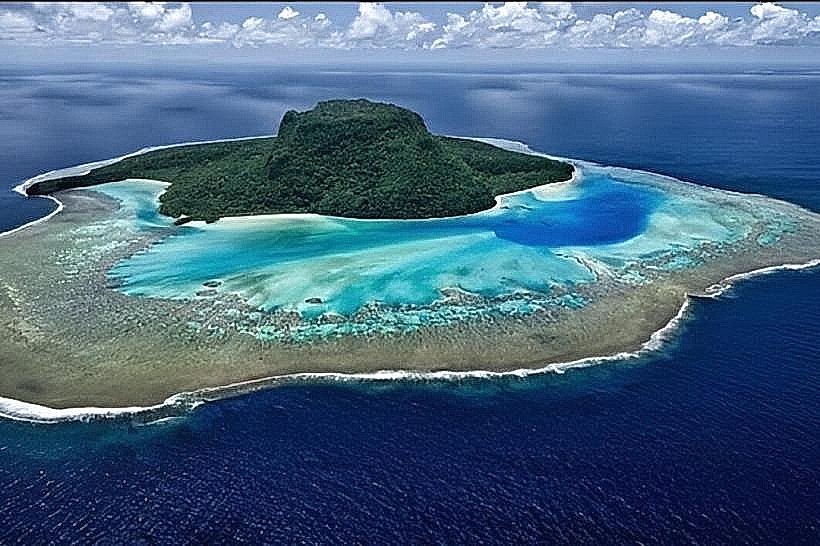
Fulaga is a 18.5-square-kilometer limestone crescent in the southern Lau Group, situated within a vast 100-square-kilometer lagoon. It is a raised coral atoll characterized by a unique karst topography and high-fidelity traditional social structures.
Geography and Topography
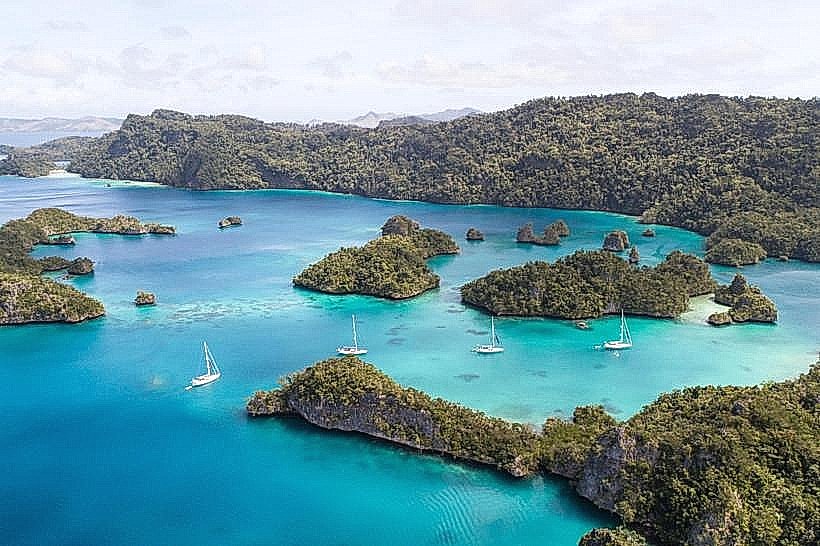
The island’s formation is defined by a central lagoon containing approximately 300 mushroom-shaped limestone islets.
Geology: Composed entirely of raised reef limestone.1 The islets feature dramatic undercutting at the waterline caused by tidal erosion and chemical weathering.
Flora: One of the primary remaining habitats for the Vesi tree (Intsia bijuga), which thrives in the island's alkaline, rocky soil.
Marine Environment: The lagoon is shallow with high clarity, connected to the open ocean via the Muaiwa Passage, a narrow and treacherous tidal channel on the northeastern perimeter.
Social and Cultural Structure
Population is concentrated in three villages on the southern coast: Muanaicake, Muanaira, and Naividamu.2
Master Carving: The male population is recognized as Fiji's preeminent woodworkers, specialized in the production of tanoa (kava bowls) and traditional sailing vessels.
Protocols: The island operates under a strict traditional administration. Visitors must perform sevusevu and are integrated into a mandatory host-family system.3
Subsistence: Livelihoods depend on artisanal fishing and the cultivation of root crops in small, scattered soil pockets among the limestone.
Logistics
Access: No airstrip exists. Arrival is restricted to monthly inter-island cargo vessels or private maritime craft.
Infrastructure: No commercial accommodation or retail outlets. Power is limited to village-scale solar grids; water is sourced exclusively from communal rain-catchment tanks.
Connectivity: Telecommunications are intermittent; satellite or long-range radio is the primary means of external contact.
Nearby Landmarks
Kabara Island: 45km Northwest (Carving center)
Vuaqava Island: 40km Northwest (Uninhabited volcanic island)
Ono-i-Lau: 140km South