Information
City: MysoreCountry: India
Continent: Asia
Mysore, India, Asia
Mysore (officially Mysuru) is the second-largest city in Karnataka and the cultural capital of the state. Situated at the base of the Chamundi Hills, it is defined by its royal heritage as the seat of the Kingdom of Mysore, its world-renowned sandalwood and silk industries, and its status as a global center for Ashtanga Yoga.
Historical Timeline
Ruled by the Ganga Dynasty and Hoysala Empire before the Wadiyar Dynasty established the Kingdom of Mysore in 1399. A critical historical event occurred in the late 18th century when Hyder Ali and his son Tipu Sultan seized power, turning Mysore into a formidable military force that fought four wars against the British. Following Tipu's death in 1799, the Wadiyars were reinstated as subsidiary rulers under the British Raj. In 2026, Mysore is recognized as one of India's cleanest cities and a major hub for heritage conservation and higher education.
Demographics & Population
The 2026 metro area population is approximately 1,320,000. The demographics are predominantly Kannada-speaking Hindus (74%), with a significant Muslim minority (22%) and a long-standing community of Jains and Christians. The economy is driven by Tourism, Education, Sandalwood and Silk manufacturing, and a growing IT/ITES sector centered around Hebbal.
Urban Layout & Key Districts
Mysore is a planned city characterized by wide boulevards, circular "circles," and numerous parks.
Heritage Core: Centered around the Mysore Palace; contains the Devaraja Market and historic institutional buildings.
Gokulam: The northern residential district; serves as the international hub for Yoga practitioners and boutique cafes.
Yadavagiri & Jayalakshmipuram: Affluent neighborhoods featuring sprawling gardens and high-end residential real estate.
Chamundi Hill: The southern boundary and spiritual anchor of the city, accessible via a winding road or 1,000 stone steps.
Top City Landmarks
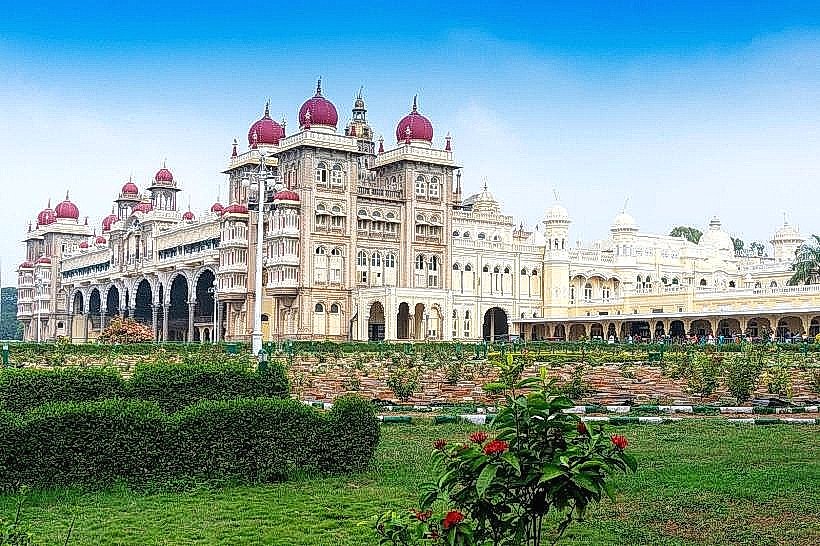
Mysore Palace (Amba Vilas): An Indo-Saracenic masterpiece featuring rosewood doors, ivory-inlay work, and nearly 100,000 lightbulbs that illuminate the facade on Sundays and holidays.
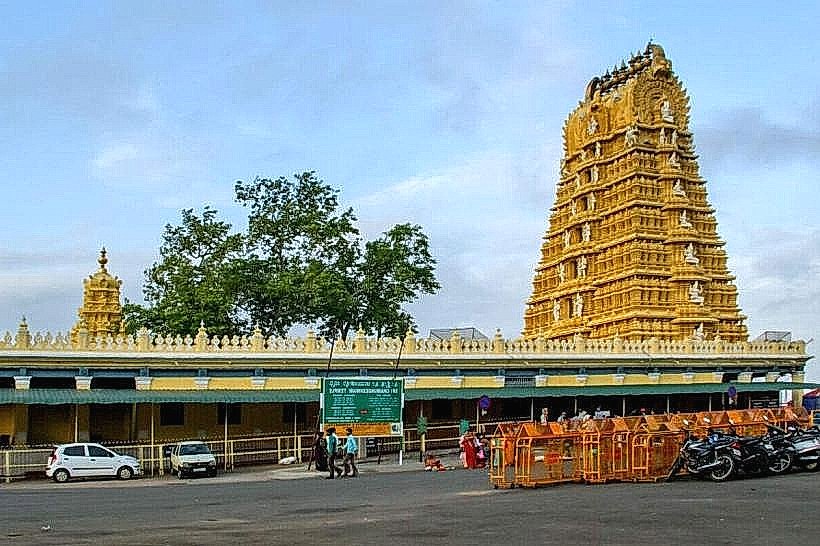
Chamundeshwari Temple: Perched atop Chamundi Hill; a 12th-century temple dedicated to the city's patron goddess.
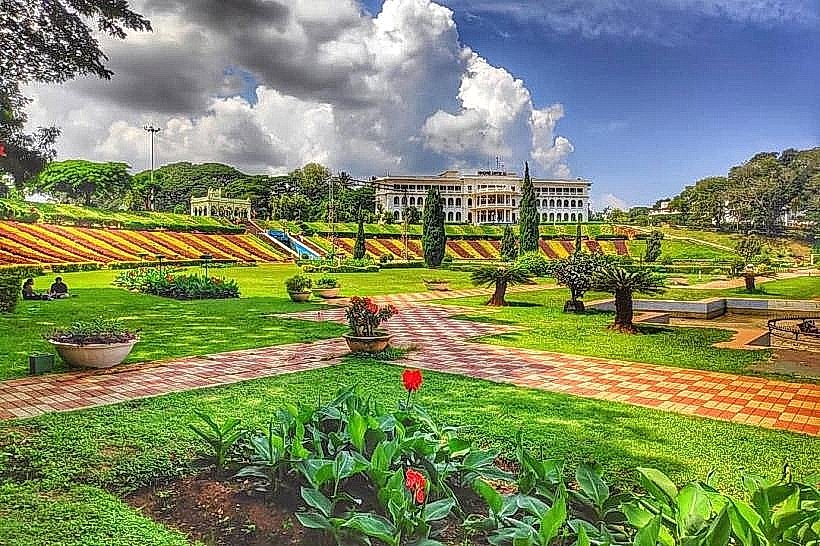
Brindavan Gardens: (Located 20 km northwest); an expansive terrace garden featuring musical fountains, situated below the KRS Dam.
Devaraja Market: A vibrant 100-year-old traditional bazaar famous for its mounds of colored powder (kumkum), flowers, and incense.
St. Philomena’s Cathedral: One of the tallest churches in India, built in the Neo-Gothic style inspired by the Cologne Cathedral.
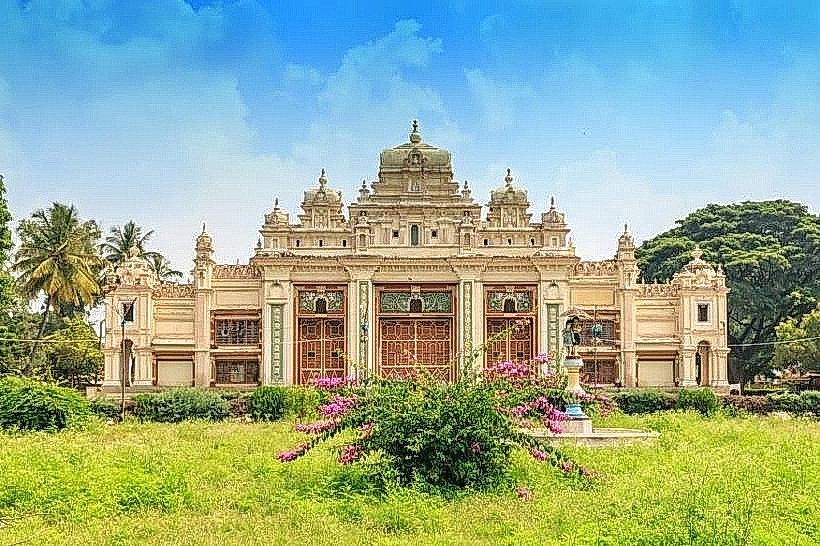
Jaganmohan Palace: A former royal residence now housing an art gallery with a significant collection of paintings by Raja Ravi Varma.
Transportation Network
Movement is facilitated by a robust local bus network (KSRTC), auto-rickshaws, and the Mysuru Metro (currently in the planning/early construction phase in 2026). Mysuru Airport (MYQ) offers limited domestic connections, primarily to Bangalore and Chennai. The city is a major rail head on the SWR network, connected to Bangalore via the high-speed Vande Bharat Express (approx. 90-minute transit).
Safety & "Red Zones"
General safety is very high; Mysore is consistently ranked among the safest cities in India for students and travelers. Standard awareness is advised against scams involving "genuine" sandalwood in the markets near the palace. Environmental hazards include stray leopard activity near the foothills of Chamundi and heavy traffic congestion during the Dasara festival in October.
Digital & Financial Infrastructure
5G connectivity is universal. UPI payments are the absolute standard for all commercial activity. Mysore is a "Smart City" with high digitization of municipal services. Karnataka state taxes apply to luxury retail and spirits.
Climate & Air Quality
Temperatures range from 15°C to 30°C in winter and 22°C to 35°C in summer. The climate is tropical savanna, generally milder than Bangalore. Air quality is exceptional for an Indian urban center due to extensive green cover.
Culture & Social Norms
The standard tipping percentage is 10%. A "Polite-Traditional" greeting is standard. Dress codes are "Conservative-Casual"; footwear must be removed before entering temples and the inner sanctums of palaces. The city is culturally defined by Mysore Dasara, Carnatic Music, and Mysore Pak (a local sweet).
Local Cost Index
1 Espresso: ₹140 ($1.70 USD)
1 Standard Lunch: ₹220 ($2.65 USD)
1 Mysore Palace Entry: ₹100 (Indians) / ₹1,000 (Foreigners).
Nearby Day Trips
Srirangapatna: (15 km north; the historic island capital of Tipu Sultan).
Somnathpur: (35 km east; home to the exquisitely carved 13th-century Chennakesava Temple).
Bandipur National Park: (75 km south; a premier tiger reserve on the way to Ooty).
Facts & Legends
Mysore is the birthplace of modern yoga, specifically through the lineage of T. Krishnamacharya. Historically, the Kingdom of Mysore was the first in India to use iron-cased rockets in warfare. A local legend involves the "Curse of Talakadu," a 16th-century curse placed on the Wadiyar dynasty by Queen Alamelamma, which supposedly prevented them from having natural heirs for centuries. Another legend concerns the goddess Chamundeshwari, who is said to have slain the buffalo-demon Mahishasura on the site of the current city, giving "Mahishuru" (Mysore) its name.