Information
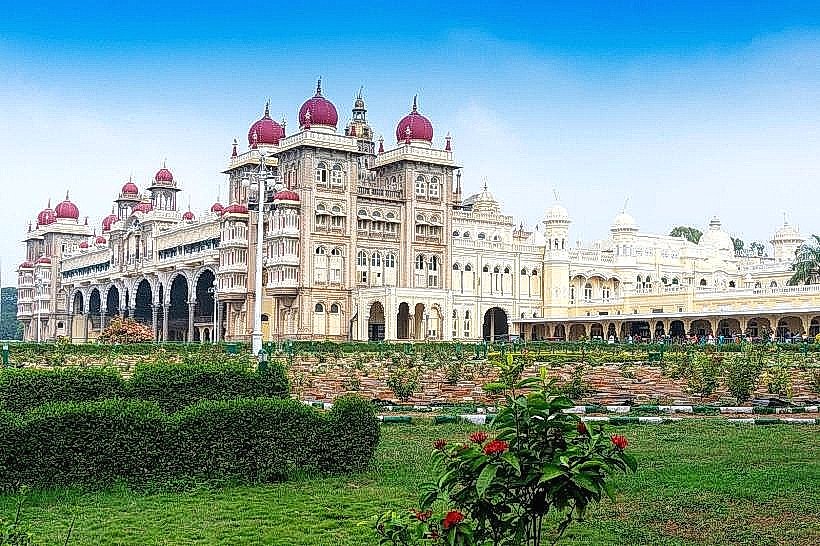
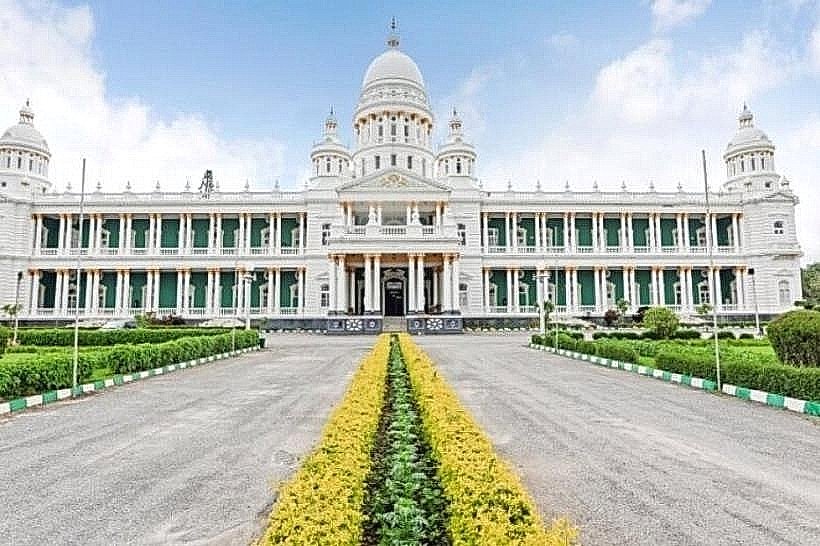
Landmark: Jaganmohan Palace & Art GalleryCity: Mysore
Country: India
Continent: Asia
Jaganmohan Palace & Art Gallery, Mysore, India, Asia
Raj Ghat is a memorial dedicated to Mahatma Gandhi, located on the banks of the Yamuna River in New Delhi, India.
Visual Characteristics
The memorial consists of a simple, raised platform of black marble. A perpetual flame burns at one end of the platform. The surrounding area is a landscaped garden with pathways and trees. The platform is approximately 50 meters long and 20 meters wide.
Location & Access Logistics
Raj Ghat is situated on Ring Road, approximately 3 kilometers east of Connaught Place, the city center. Vehicle access is via Ring Road. Parking is available in designated lots adjacent to the memorial. Several Delhi Transport Corporation (DTC) bus routes serve the area, with stops located within a 500-meter walk. The nearest metro station is Violet Line's ITO station, approximately 1.5 kilometers away.
Historical & Ecological Origin
Raj Ghat was established shortly after Mahatma Gandhi's assassination on January 30, 1948. The memorial was designed by Vanu G. Bhuta. It serves as the cremation site of Gandhi and is a place of remembrance and reflection.
Key Highlights & Activities
Visitors can observe the eternal flame and the black marble platform. The area is suitable for quiet contemplation. A museum dedicated to Gandhi's life is located nearby. Photography is permitted in most areas, with restrictions around the immediate memorial platform.
Infrastructure & Amenities
Restrooms are available on the premises. Shaded areas are provided by trees and covered walkways. Cell phone signal (4G/5G) is generally good within the complex. Food vendors are typically located outside the main memorial complex, along Ring Road.
Best Time to Visit
For optimal lighting for photography, early morning (sunrise) or late afternoon (before sunset) is recommended. The best months for weather are October through March, when temperatures are cooler and humidity is lower. There are no tide-related considerations.
Facts & Legends
A unique aspect of Raj Ghat is the inscription of Gandhi's last words, "Hey Ram," on the marble platform. The memorial is designed to be accessible to all, reflecting Gandhi's philosophy of equality.
Nearby Landmarks
- National Gandhi Museum (0.3km West)
- Shanti Vana (0.8km North)
- Feroz Shah Kotla Ground (1.2km Southwest)
- Old Fort (Purana Qila) (1.8km Southwest)
- National Museum (2.5km West)