Information
City: OradeaCountry: Romania
Continent: Europe
Oradea, Romania, Europe
Oradea serves as the administrative capital of Bihor County and a strategic economic gateway between Romania and Central Europe. It is situated on the banks of the Crișul Repede River in western Romania, approximately 13 kilometers from the Hungarian border.
Historical Timeline
The city was officially founded in 1113 under the name Varadinum, though its fortress origins date back to the 11th century as an episcopal residence. It has operated under the governance of the Kingdom of Hungary, the Ottoman Empire (1660–1692), and the Habsburg Monarchy, before integrating into Romania after World War I. The most significant architectural reconstruction occurred in the 18th and early 20th centuries, transitioning from Baroque planning under Franz Anton Hillebrandt to a massive Art Nouveau (Secession) movement. The primary event shaping its current urban form was the rapid industrialization and urban planning of the late 19th century, which established its reputation as the "Art Nouveau Capital of Romania."
Demographics & Population
The population within city limits is approximately 183,100, while the metropolitan area encompasses roughly 245,000 inhabitants. The top three ethnic demographics are Romanian (77.5%), Hungarian (20.9%), and Romani (approx. 1%). The median age of the population is 42.6 years.
Urban Layout & Key Districts
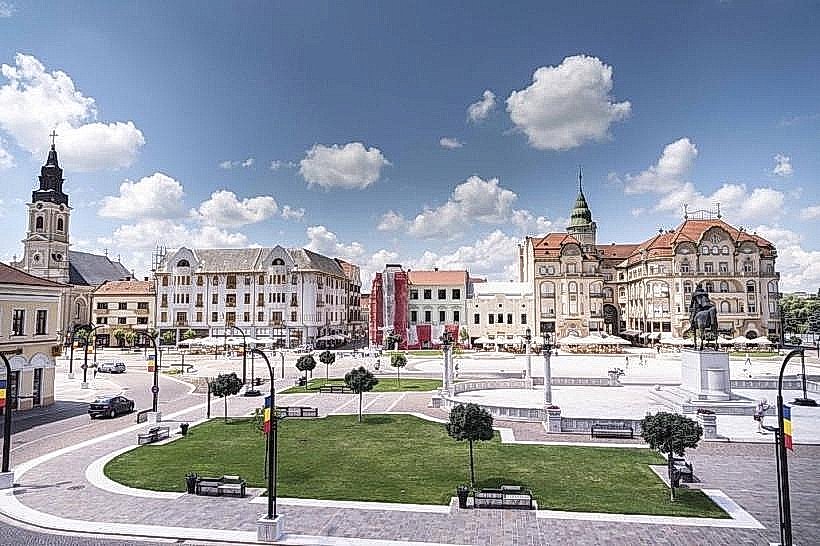
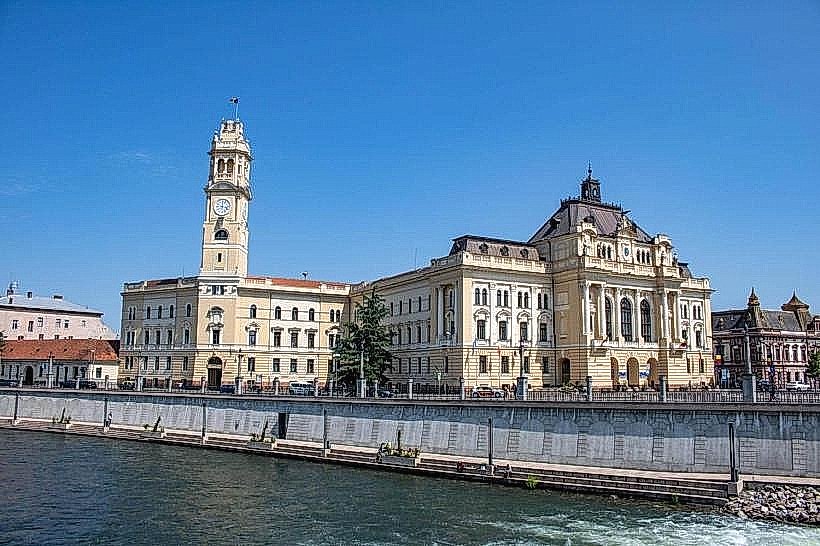
Oradea is divided by the Crișul Repede River into Northern and Southern sectors. Piața Unirii (Union Square) serves as the historical core and primary landmark zone, located on the southern bank. Centrul Civic (Civic Center) lies to the east of the square, housing administrative functions. The Rogerius district, located to the northwest, is the city's largest residential and market hub, while Nufărul to the southeast is a modern residential area providing the primary transit link to the Băile Felix spa resort.
Top City Landmarks
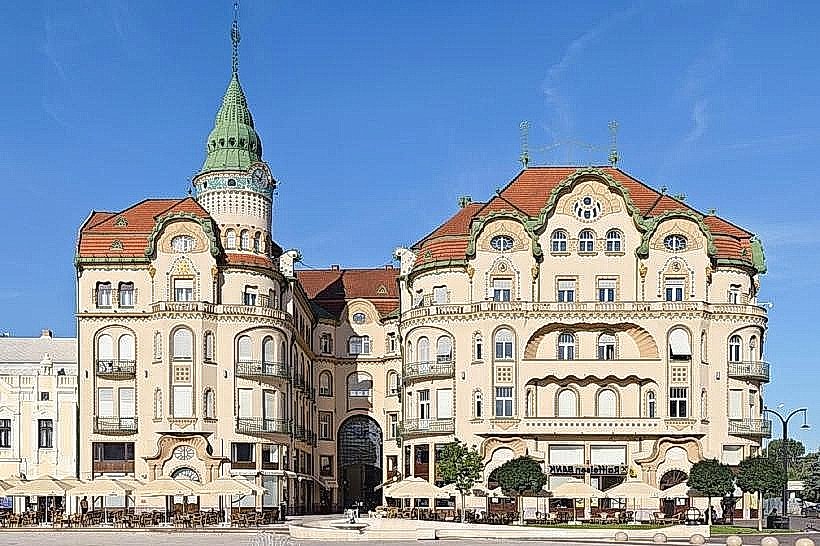
The Black Eagle Palace (Vulturul Negru)
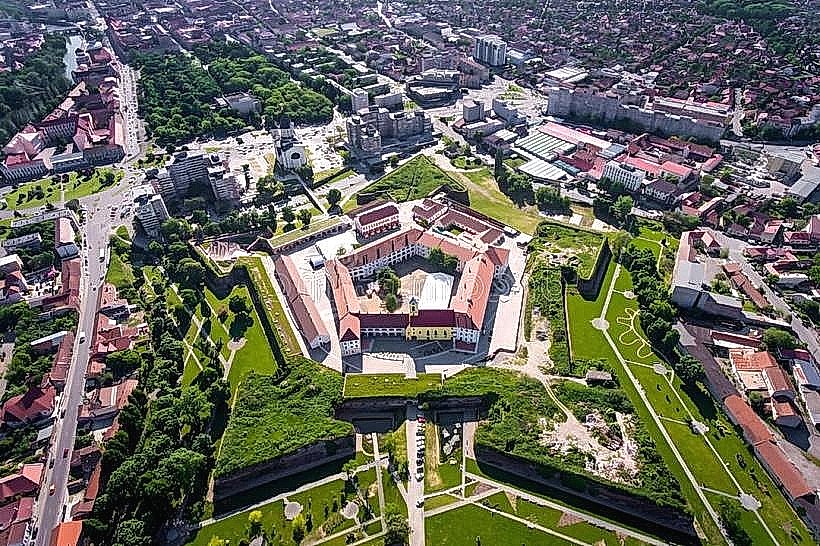
Oradea Fortress (Cetatea Oradea)
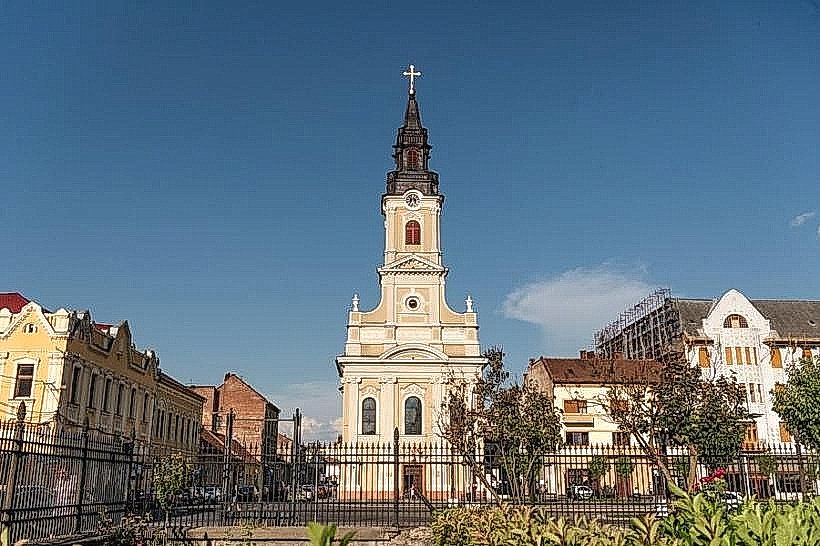
The Moon Church (Biserica cu Lună)
Darvas-La Roche House (Art Nouveau Museum)
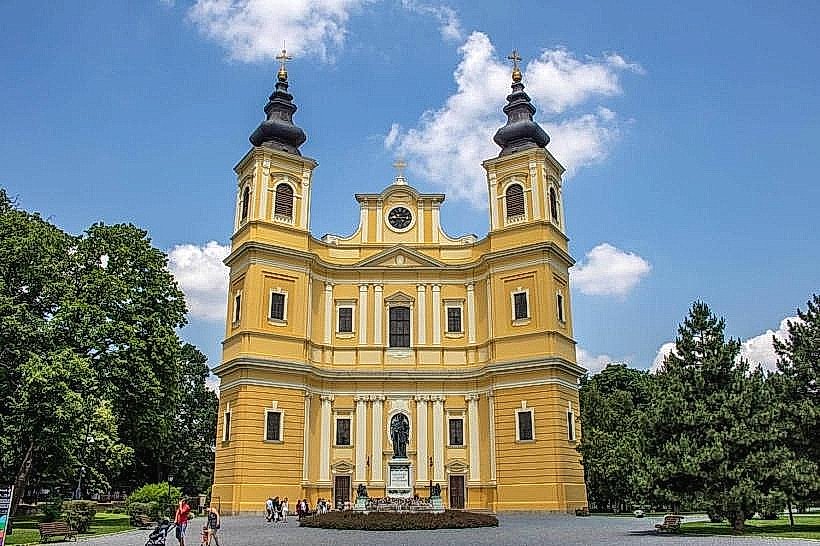
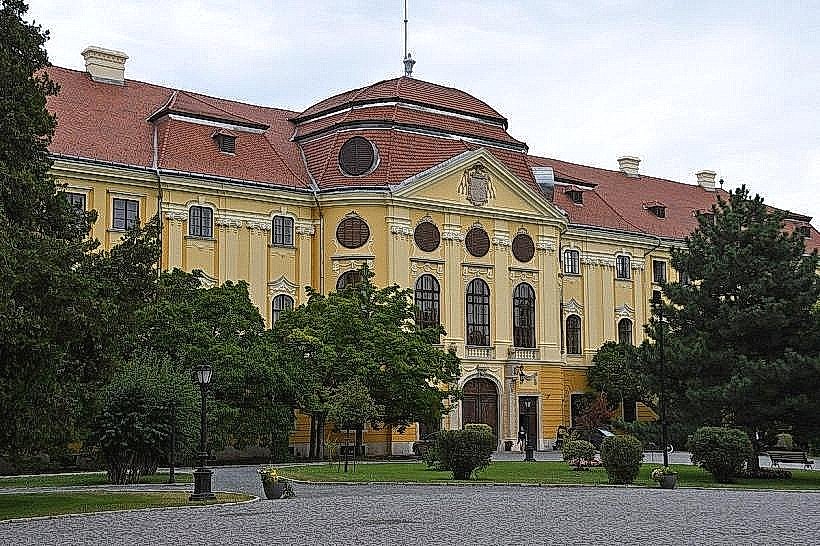
Roman Catholic Basilica and Baroque Palace Complex
Transportation Network
Internal movement is dominated by the OTL tram network, which is highly reliable and recently modernized with low-floor vehicles. There is no Metro system. Uber and Bolt are the primary ride-sharing apps, and official taxis are yellow, typically charging a tariff of 3.50–4.00 RON per kilometer. Traffic density is moderate compared to Bucharest but peaks at the bridge crossings and the Ring Road (Centura) during 08:00–09:30 and 16:30–18:00.
Safety & "Red Zones"
Oradea is consistently ranked as one of the safest cities in Romania. There are no definitive "no-go" zones, though the areas around the Central Train Station and parts of the Ioșia and Velența districts can be poorly lit at night. Common scams are rare, but visitors should avoid unregulated currency exchange individuals and verify the meter is running in non-app taxis.
Digital & Financial Infrastructure
Internet speeds average 140 Mbps with widespread 5G coverage. Main mobile carriers include Digi Mobil, Orange, and Vodafone. Card acceptance is high in the city center, hotels, and malls; however, cash (RON) is frequently required for small vendors in the Rogerius market and for public toilets. ATMs are densely distributed throughout the pedestrian zones of Republicii Street and Union Square.
Climate & Air Quality
Temperatures range from -5°C to 2°C in winter (January) and 16°C to 28°C in summer (July). Air quality is generally good (AQI <50), though winter thermal inversions occasionally trap smog from residential heating. The primary weather risk is occasional flash flooding of the Crișul Repede during heavy spring rains.
Culture & Social Norms
The standard tipping rate is 10% in restaurants. Handshakes are the standard formal greeting. Dress code is casual, though conservative attire (covered shoulders/knees) is expected in the Roman Catholic and Orthodox cathedrals. Public smoking is prohibited in all indoor venues and at transport stops. Alcohol consumption is restricted to licensed outdoor terraces.
Accommodation Zones
Stay in the City Center (Piața Unirii/Republicii): Recommended for immediate walking access to Art Nouveau landmarks and dining.
Stay in Nufărul: Recommended for travelers seeking modern amenities and direct proximity to the thermal spa resorts of Băile Felix.
Local Cost Index
1 Espresso: 12 RON ($2.60)
1 Standard Lunch: 45 RON ($9.80)
1 Tram/Bus Ticket: 3 RON ($0.65)
Nearby Day Trips
Băile Felix (Thermal Spa Resort): 8 km
Apuseni Mountains (Hiking/Caves): 85 km
Stâna de Vale (Mountain Resort): 90 km
Facts & Legends
A verified historical oddity of Oradea is its "Prime Meridian" status; between 1464 and 1667, the city's observatory was used by navigators and cartographers as the reference point for 0° longitude (the "Tabula Varadiensis"), centuries before the adoption of the Greenwich Meridian. Local legend also maintains that the body of King Ladislaus I was miraculously transported by an unmanned carriage to the city's cathedral, cementing its status as a major medieval pilgrimage site.