Information
Landmark: Oradea FortressCity: Oradea
Country: Romania
Continent: Europe
Oradea Fortress, Oradea, Romania, Europe
Oradea Fortress is a pentagonal late-Renaissance fortification located on the eastern edge of the historic city center of Oradea, Romania. It serves as one of the most significant architectural monuments in Transylvania, characterized by its "New Italian" style of bastion defense.
Visual Characteristics
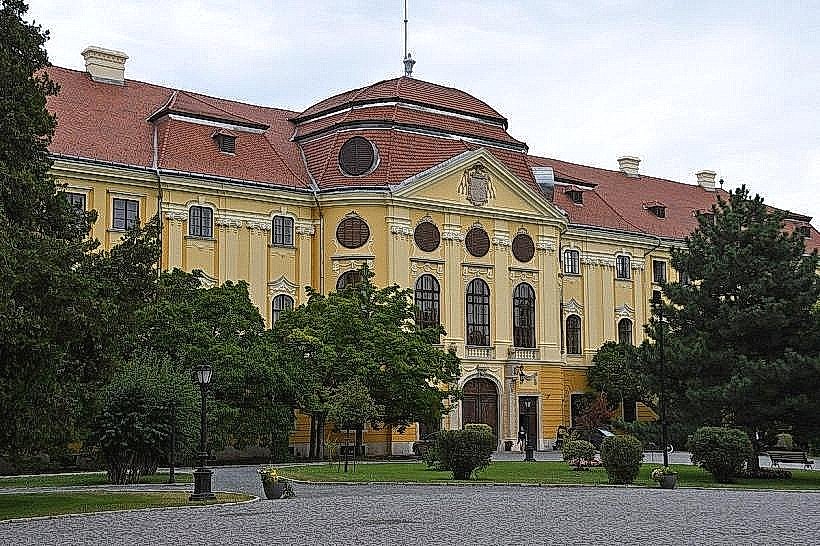
The fortress is defined by its star-shaped layout consisting of five bastions (Golden, Red, Grew, Bethlen, and Crăișorul) connected by curtain walls. The exterior is composed of red brick and limestone, surrounded by a wide moat that was historically filled with thermal water from the Peța River. The interior features the Princely Palace, a central complex of Baroque and Renaissance buildings arranged around a circular courtyard.
Location & Access Logistics
The site is located at Strada Emanuil Gojdu 39-41. It is accessible on foot from Union Square (Piața Unirii) via a 10-minute walk (0.8km). Public transport is available through tram lines 1R, 1N, 3R, and 3N, stopping at the "Cetate" station. A large public parking lot is situated immediately outside the fortress walls near the eastern entrance.
Historical & Ecological Origin
The first earthen and wood fortification was established in the 11th century. The current masonry structure was built primarily between 1570 and 1618 under the direction of Italian architects. It served as a strategic point for the Kingdom of Hungary and later the Principality of Transylvania, enduring multiple sieges by Ottoman forces before being captured in 1660 and regained by the Habsburgs in 1692. It underwent a massive restoration project completed in 2015.
Key Highlights & Activities
The Princely Palace houses the Oradea City Museum, which features archaeological finds, medieval weaponry, and a lapidarium. Visitors can explore the bastions, the underground casemates, and the reformed church located within the walls. The central courtyard and the "Moat Park" are used for cultural events, medieval festivals, and open-air concerts. The site also hosts a traditional crafts center and various art galleries.
Infrastructure & Amenities
The fortress contains a tourist information center, public restrooms, and several cafes and restaurants located in the restored cellar spaces. The interior paths are paved with cobblestone and are accessible for wheelchairs in most areas. 5G cellular coverage is strong throughout the complex. The moat area has been converted into a public park with walking paths and benches.
Best Time to Visit
The fortress is most active during the Medieval Festival (typically in July) and the Oradea City Days in October. For photography, the late afternoon provides the best light for the red brick bastions and the palace facade. The inner museum is generally closed on Mondays. The moat park is ideal for morning walks when crowds are minimal.
Facts & Legends
Oradea Fortress was once the site of the Great Cathedral, which housed the tomb of King Ladislaus I of Hungary. A legend claims that the "Golden Bastion" earned its name because it was the only one that never fell during a direct assault. Historically, the fortress was a major European center for astronomy; between 1445 and 1667, the "Zero Meridian" was established here by the astronomer Georg von Peuerbach.
Nearby Landmarks
Nymphaea Aquapark: 0.6km East
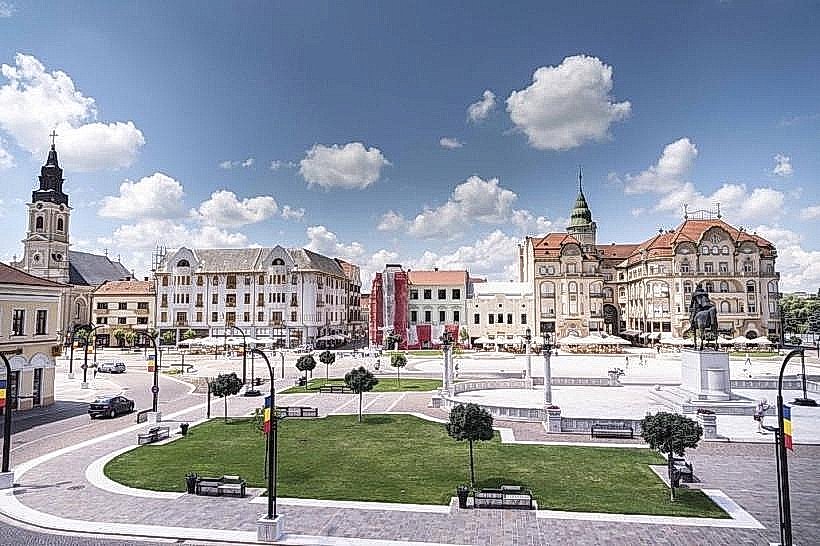
Union Square (Piața Unirii): 0.8km West
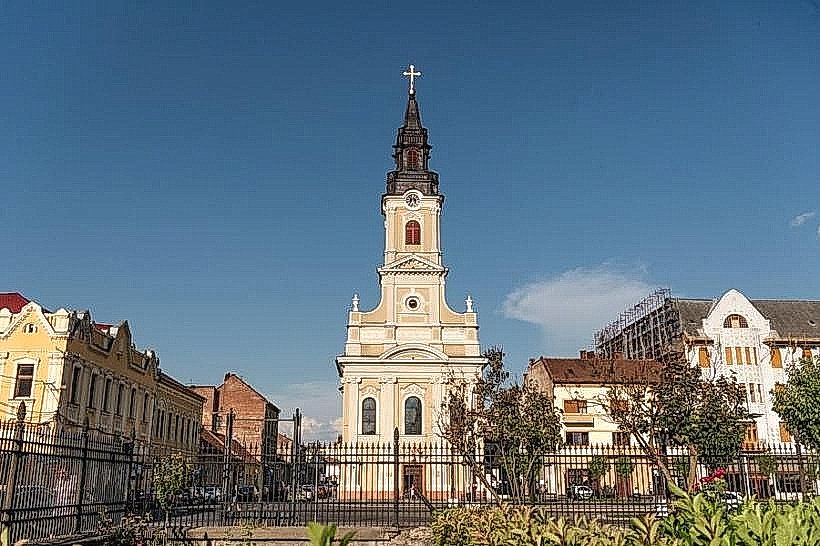
Moon Church: 0.9km West
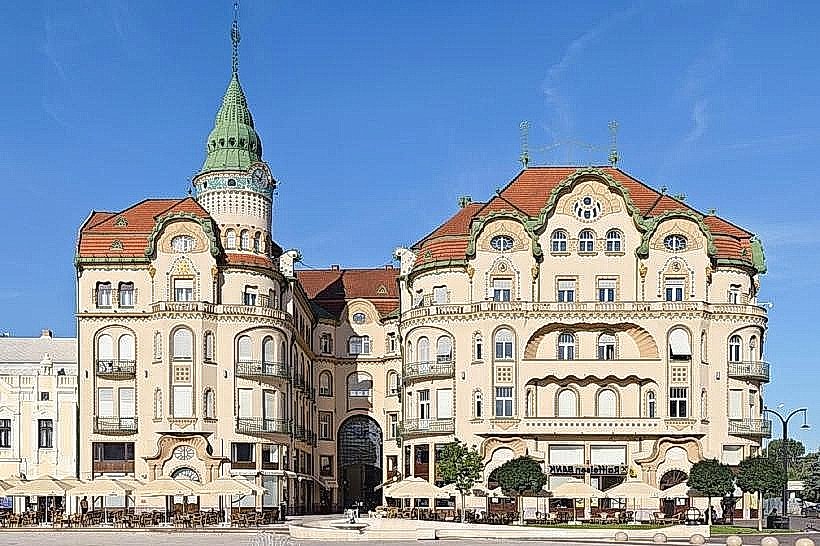
The Black Eagle Palace: 0.9km West