Information
Landmark: Roman Catholic CathedralCity: Oradea
Country: Romania
Continent: Europe
Roman Catholic Cathedral, Oradea, Romania, Europe
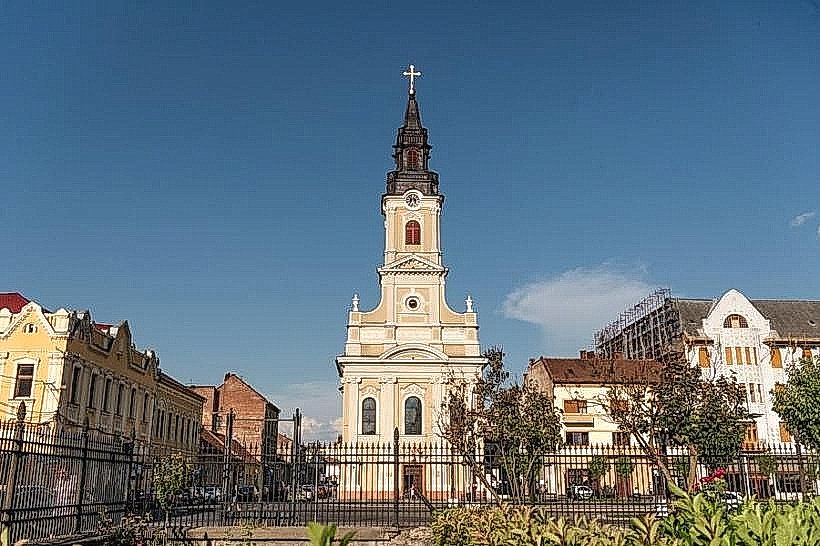
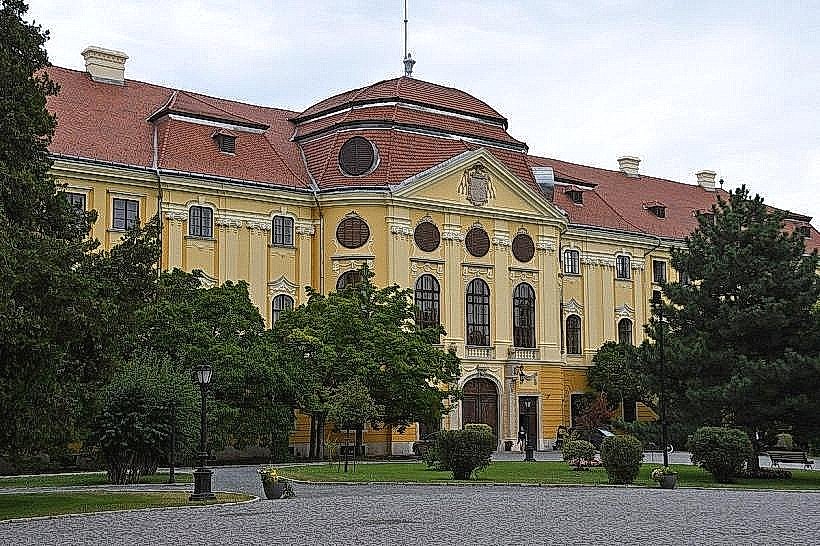
The Roman Catholic Basilica of the Assumption of the Virgin Mary in Oradea is the largest Baroque religious structure in Romania and a major ecclesiastical center for the Roman Catholic Diocese of Oradea.
Visual Characteristics
The basilica is an expansive Baroque edifice featuring a central nave flanked by two 61-meter-high towers. The facade is constructed from Austrian brick and decorated with Ionic and Corinthian columns. The interior contains a massive gilded organ donated by Empress Maria Theresa, a main altar made of Carrara marble, and frescoes by Austrian painter Johann Ignaz Cimbal. The floor is composed of red and gray marble, and the stained-glass windows were manufactured in Budapest.
Location & Access Logistics
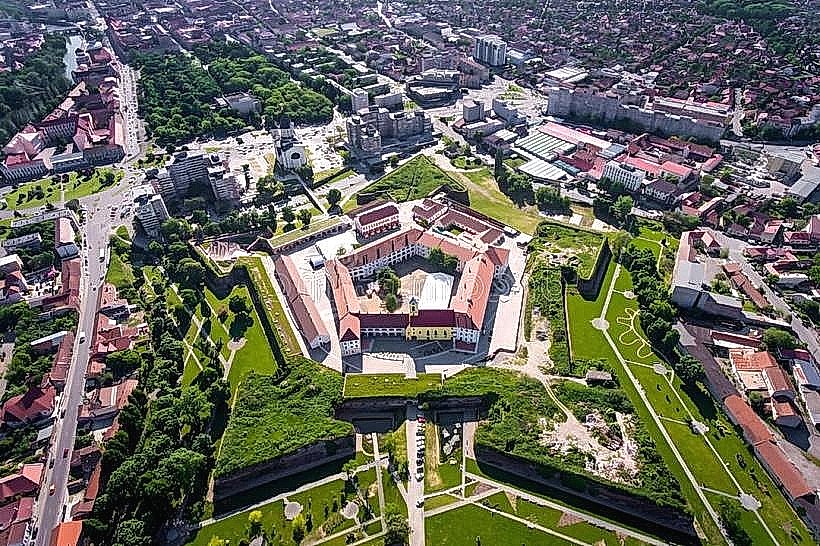
The cathedral is located at Șirul Canonicilor 2, approximately 2 kilometers north of Union Square. It is part of the Baroque Complex, which includes the Bishop’s Palace and the Canon’s Row. Access is via Șirul Canonicilor Street or the adjacent park. Public transport is available through bus lines 11 and 22 or tram line 2 (Gara Centrală stop, followed by a 10-minute walk). Free parking is available in the dedicated lot in front of the Bishop’s Palace.
Historical & Ecological Origin
Construction took place between 1752 and 1780 under the guidance of Italian architect Giovanni Battista Ricca and later the Austrian architect Franz Anton Hillebrandt. The building was commissioned by Bishop Pál Forgách to replace the previous cathedral destroyed during the Ottoman occupation. It serves as the burial site for several Hungarian kings and Transylvanian bishops, including King Ladislaus I, whose relics are kept in a silver reliquary inside the basilica.
Key Highlights & Activities
Visitors can observe the architectural symmetry of the Baroque Complex and the Canon’s Row (a series of 57 stone arches). The cathedral’s organ is frequently used for international sacred music festivals and recitals. The adjacent Bishop’s Palace houses the Museum of the Crișana Region, featuring ecclesiastical art and natural history exhibits. The surrounding landscape garden is a primary site for quiet recreation.
Infrastructure & Amenities
Entrance to the cathedral is free, though a fee is required for the museum in the Bishop’s Palace. Public restrooms are available within the museum complex. 5G cellular signal is consistent. Information materials are provided in Romanian, Hungarian, German, and English. The interior maintains a stable, cool temperature during the summer due to the thick masonry.
Best Time to Visit
The cathedral is open daily for visitors outside of liturgical hours. Optimal lighting for photography of the main altar occurs in the morning. The Baroque gardens are best visited in late spring (May–June) when the vegetation is in full bloom. Mass is held daily, with the main Sunday services conducted in Hungarian and Latin.
Facts & Legends
The organ, featuring over 2,800 pipes, was a direct gift from Empress Maria Theresa in 1780 and remains one of the best-preserved instruments of its kind in Europe. Local accounts detail that the cathedral was built with a specialized foundation to withstand the high water table of the nearby Crișul Repede river.
Nearby Landmarks
The Bishop’s Palace: 0.05km East
Canon’s Row (Șirul Canonicilor): 0.1km North
Oradea Central Railway Station: 0.8km South
Ciuperca Hill: 1.5km Southeast