Information
City: PoznanCountry: Poland
Continent: Europe
Poznan, Poland, Europe
Poznań functions as the administrative, industrial, and academic capital of the Greater Poland (Wielkopolska) Voivodeship. Situated on the Warta River, it serves as a specialized node for international trade fairs, mechanical engineering, and food technology. It is defined by its role as the cradle of the Polish state, its exceptionally strong work ethic (often compared to German pragmatism), and its status as a leading logistics hub between Warsaw and Berlin.
Historical Timeline
Poznań was established in the 10th century and served as the primary residence of the first Polish rulers, Mieszko I and Bolesław the Brave. The primary era of governance was shaped by its position as a key trade city in the Polish-Lithuanian Commonwealth and later as a major fortress and industrial city under Prussian rule. The primary event shaping its modern identity was the 1956 Poznań June protests, the first major revolt against the communist government in Poland. Historically, the city has functioned as the gateway for Western European cultural and economic influences into Poland.
Demographics & Population
The population is approximately 540,000 in the city proper and 1.1 million in the metropolitan area (2026 estimate). The demographic profile is defined by a high concentration of entrepreneurs and students, with over 100,000 students attending 25+ universities. The workforce is specialized in automotive manufacturing (Volkswagen Poznań), pharmaceuticals, and e-commerce.
Urban Layout & Key Districts
The city is organized around the medieval Old Town and the imperial district built during the Prussian era.
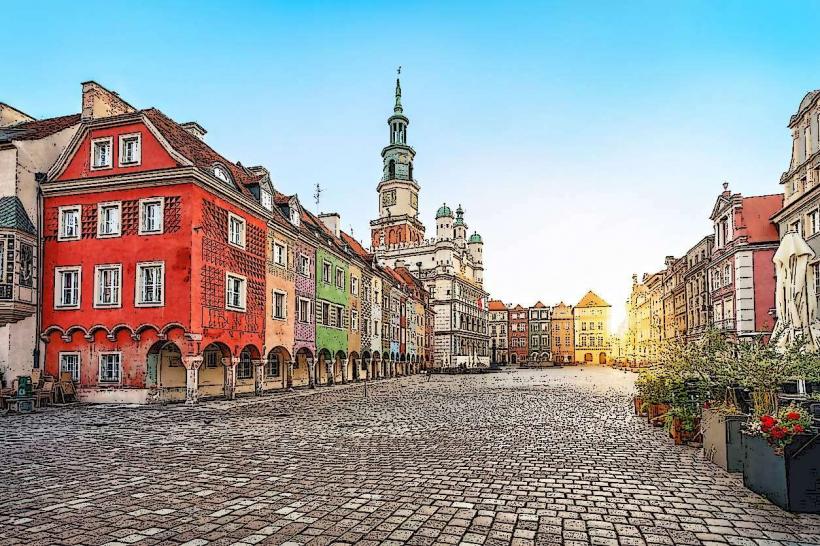
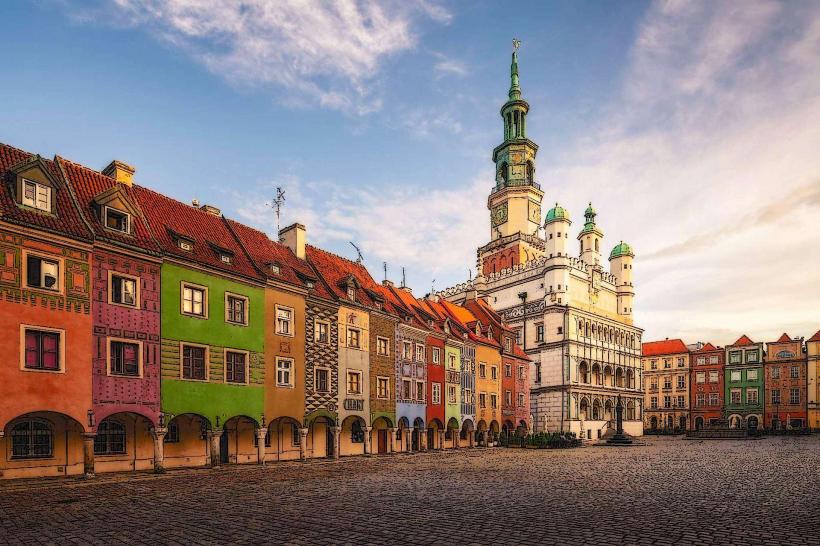
Stare Miasto (Old Town): The specialized historic core centered on the Renaissance Old Town Hall.
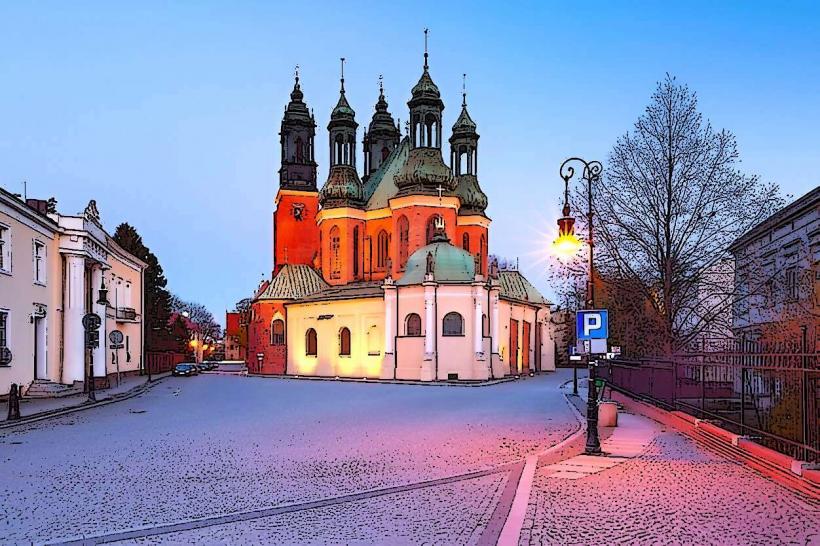
Ostrów Tumski (Cathedral Island): A specialized ecclesiastical island between the branches of the Warta; the site of the first Polish cathedral.
Jeżyce, Wilda, and Łazarz: Specialized 19th-century residential districts known for their distinctive "Secession" (Art Nouveau) architecture and vibrant local markets.
Morasko: A specialized northern district housing the Adam Mickiewicz University campus and a rare meteorite crater nature reserve.
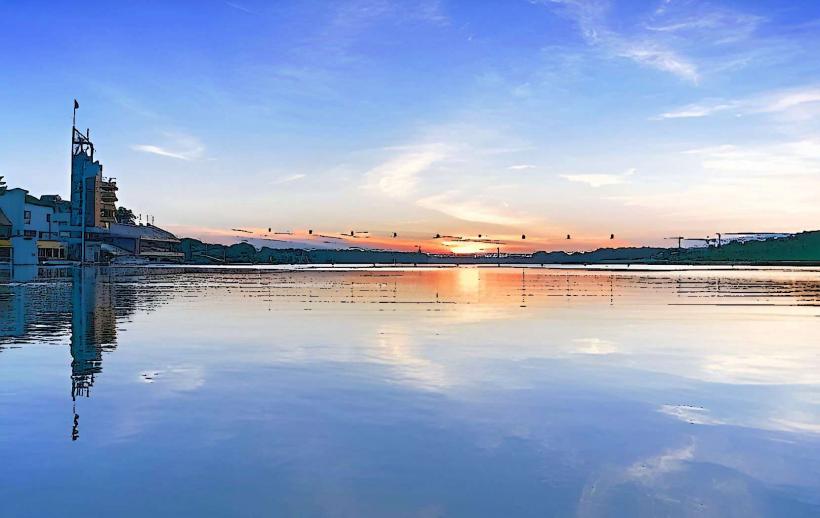
Malta: A specialized recreational zone centered around the artificial Lake Malta.
Top City Landmarks
Old Town Hall: A specialized Renaissance masterpiece designed by Giovanni Battista di Quadro, featuring the iconic mechanical goats that butt heads daily at noon.
Poznań Cathedral: A specialized Basilica containing the "Golden Chapel," the burial site of the first Polish monarchs.
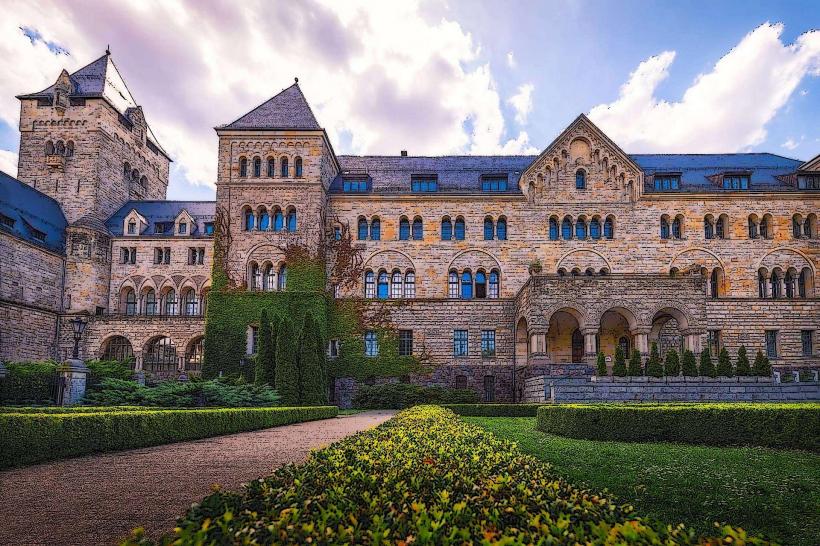
Imperial Castle (Zamek Cesarski): A specialized Neo-Romanesque palace built for Wilhelm II; it is the last royal residence built in Europe and now serves as a cultural center.
Poznań International Fair (MTP): A specialized complex of 15+ pavilions; it is the largest and oldest trade fair center in Poland.
Enigma Cipher Centre: A specialized museum dedicated to the Polish mathematicians from Poznań who first cracked the German Enigma code.
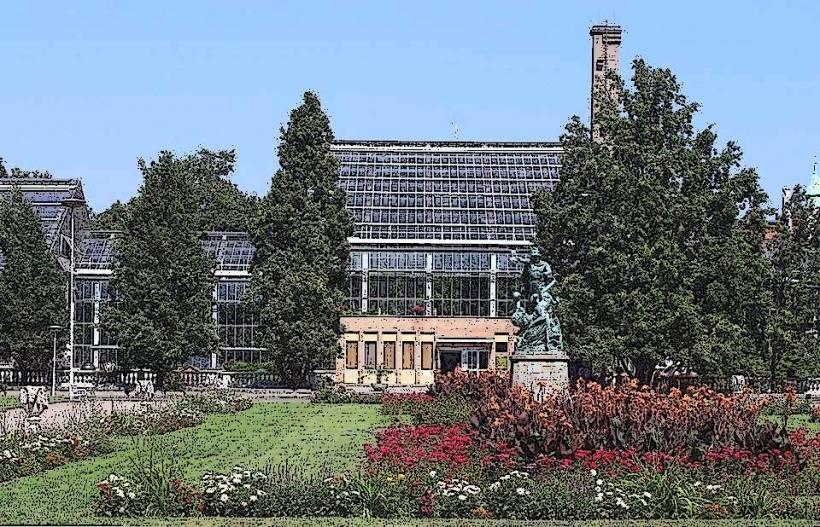
Palmiarnia Poznańska (Palm House): One of the largest specialized botanical facilities in Europe, featuring 12+ climatic pavilions and 17,000+ plant species.
Transportation Network
Poznań is a primary transit junction for the E30 trans-European corridor.
Poznań-Ławica Airport (POZ): A major regional airport located 7km west of the center.
Poznań Główny Railway Station: One of the busiest rail hubs in Poland; as of 2026, it features a fully integrated multimodal terminal connecting regional rail, high-speed rail, and long-distance buses.
Poznań Fast Tram (PST): A specialized 6km "light rail" corridor providing rapid transit from the northern residential districts to the city center.
Bicycle Infrastructure: A specialized network of "Rowerowa Autostrada" (cycle highways) that has reached 250km of total coverage in 2026.
Safety & "Red Zones"
The general safety level is very high. Poznań is statistically secure. There are no "red zones." The city is characterized by "Poznański porządek" (Poznań order), manifesting in high levels of public cleanliness and safety. Standard urban awareness is recommended in the Jeżyce and Wilda districts late at night.
Digital & Financial Infrastructure
The city is a leader in Supercomputing and Cybersecurity Research (hosting the Poznań Supercomputing and Networking Center). Internet speeds average 600–1000 Mbps. 5G is universal. In 2026, the city utilizes a specialized "PEKA" smart-city card system for all public services, including transit and library access.
Climate & Air Quality
Poznań has a temperate continental climate with relatively low precipitation compared to other Polish cities. Average temperatures range from -1°C in January to 25°C in July. Air quality is monitored via a specialized city-wide sensor network; winter smog levels have decreased by 40% since 2020 due to aggressive heating modernization.
Culture & Social Norms
Social norms are characterized by punctuality, thriftiness, and a strong civic duty. Tipping (10-15%) is standard. The primary cultural event is St. Martin’s Day (November 11), celebrated with a massive street parade and the consumption of specialized "St. Martin's Croissants" (Rogale Świętomarcińskie).
Local Cost Index (2026 Estimates)
1 Espresso: 11–15 PLN
1 Pint of Local Beer: 14–22 PLN
1 Standard Lunch: 40–65 PLN
St. Martin’s Croissant: 12–18 PLN
Nearby Day Trips
Rogalin Palace: 30 mins away; a specialized Baroque-Classicist residence famous for its gallery of paintings and 1,000-year-old oak trees.
Kórnik Castle: 25 mins away; a specialized Neo-Gothic castle featuring a world-renowned library and arboretum.
Gniezno: 45 mins away; the specialized first capital of Poland and the site of the historic Gniezno Cathedral.
Facts & Legends
Poznań is the site where the first Polish cathedral was built in 968 AD. Legend states that the mechanical goats on the Town Hall were added after a kitchen boy, having burnt a roast for the mayor, stole two goats to replace it; the goats escaped to the roof and began butting heads, amusing the guests. A verified fact is that Poznań is the only city in the world where St. Martin’s Croissants are a legally protected regional product. Historically, the city was the capital of the southern region of the "Wartheland" during the WWII occupation, undergoing significant forced Germanization.