Information
City: TrogirCountry: Croatia
Continent: Europe
Trogir, Croatia, Europe
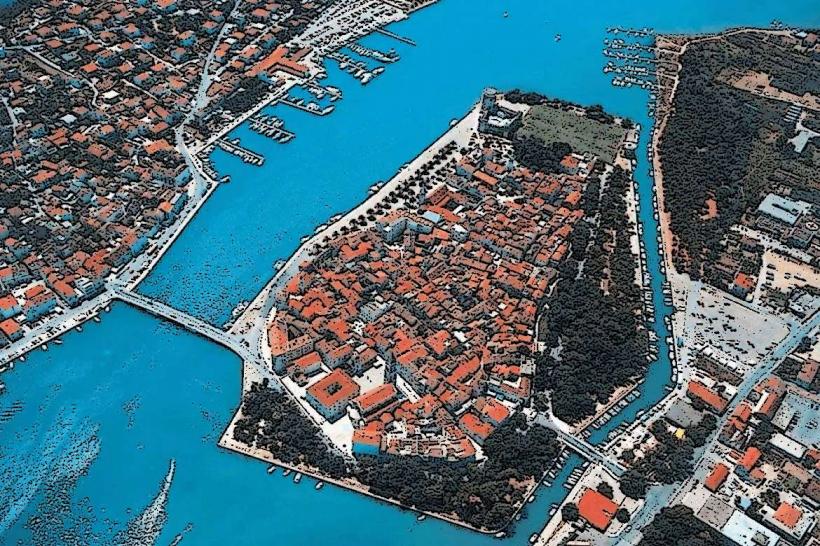
Trogir functions as a specialized cultural-historical node and a primary nautical center within the Split-Dalmatia County. Situated on a small island between the mainland and the island of Čiovo, it serves as a specialized node for yachting logistics, stone masonry, and heritage conservation. It is defined by its status as a UNESCO World Heritage site (since 1997), its continuous urban history spanning 2,300 years, and its reputation as a "City-Museum" due to its high density of Romanesque, Renaissance, and Baroque architecture.
Historical Timeline
Trogir was established by Greek colonists from Vis in the 3rd century BC (as Tragurion). The primary era of governance was defined by the Republic of Venice (1420–1797), which oversaw the city's most significant period of artistic and architectural flourishing. The primary event shaping its modern identity was its recognition as one of the best-preserved Romanesque-Gothic complexes in Central Europe. Historically, it was the site of the first pharmacy in Europe, opened in 1271.
Demographics & Population
The population is approximately 13,000 (2026 estimate). The demographic profile is specialized toward the tourism and maritime sectors, with a workforce highly skilled in heritage restoration and nautical services. The city center is a high-density tourist zone, while residential areas have expanded onto the mainland and Čiovo.
Urban Layout & Key Districts
The city is organized around its medieval island core, connected by bridges to the mainland and Čiovo.
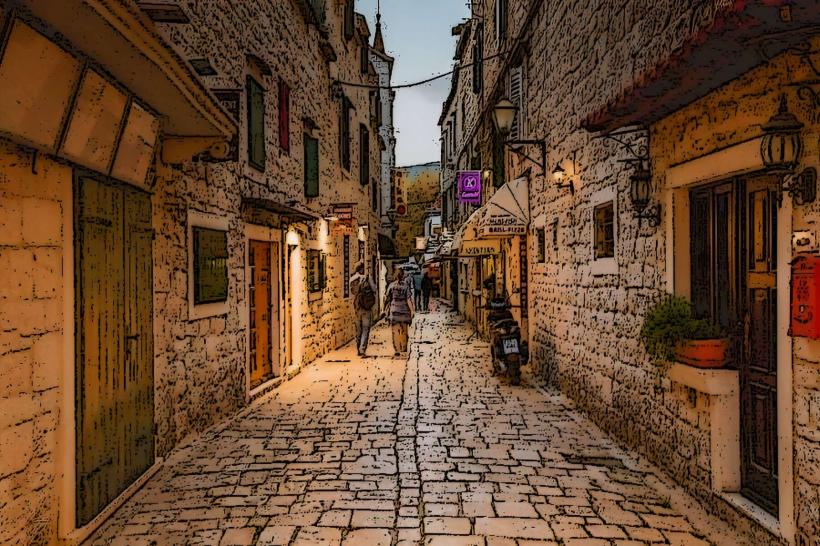
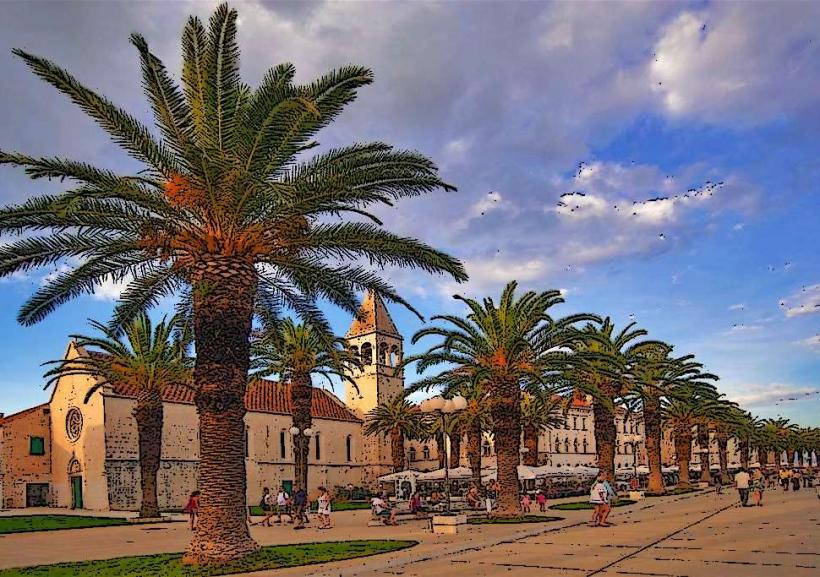
Old Town (Island): A specialized pedestrian-only zone featuring a medieval street grid based on the original Roman cardo and decumanus.
Čiovo: A specialized island district connected by two bridges, serving as the primary residential and beach zone for the city.
Travarica: A specialized mainland district housing the central bus station and modern commercial infrastructure.
SCT Marina: A specialized northern harbor zone focused on luxury yacht repair and maintenance.
Top City Landmarks
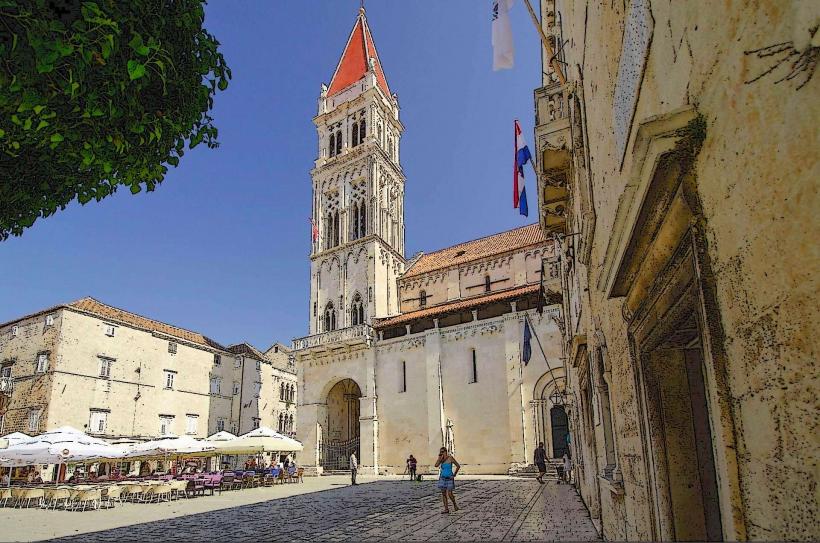
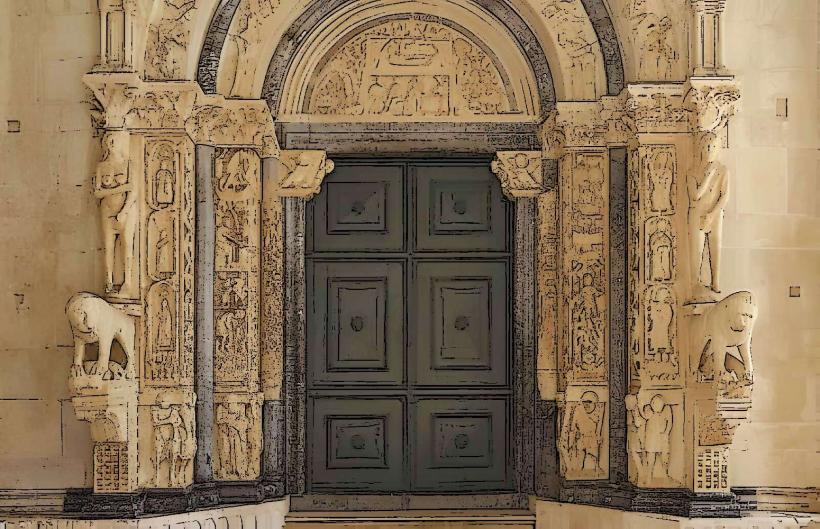
Cathedral of St. Lawrence: A specialized Romanesque-Gothic structure (13th–15th century); it features the Radovan’s Portal, the most significant medieval sculptural work in Croatia.
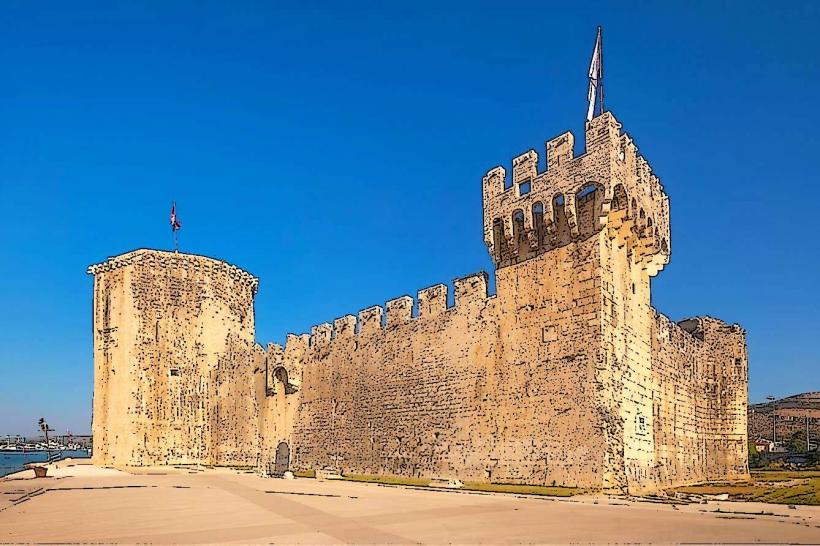
Kamerlengo Fortress: A specialized 15th-century Venetian castle located at the western tip of the island, originally used as a naval base.
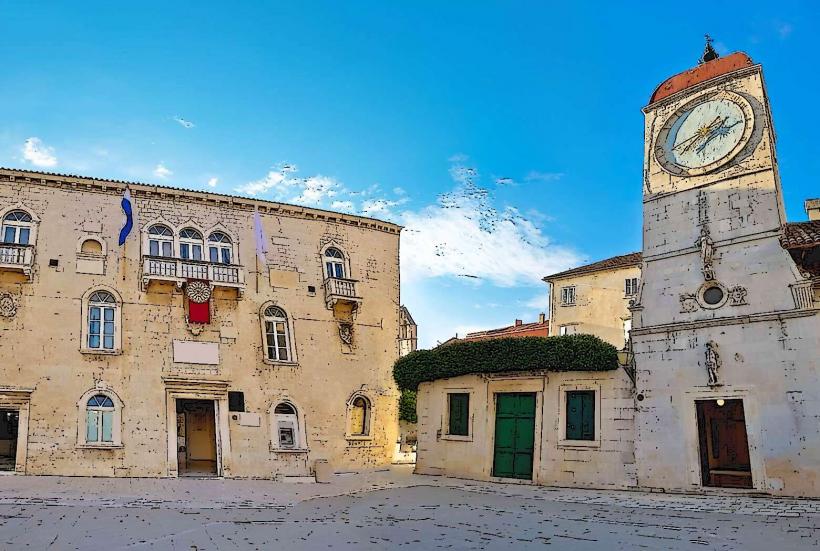
The Town Loggia: A specialized 15th-century open-air court and public space featuring a relief of Justice by Nikola Firentinac.
Duke’s Palace: A specialized 13th-century administrative building, now housing the municipal government and a lapidarium.
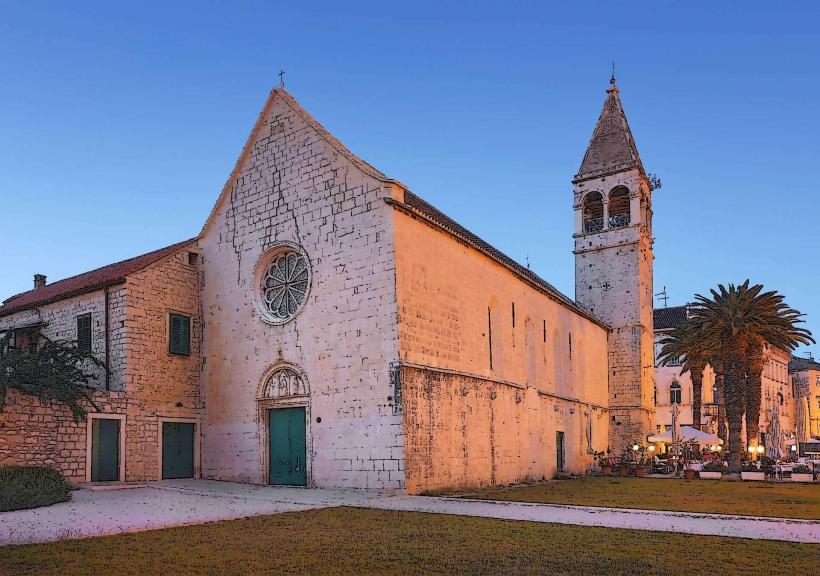
St. Nicholas Convent: A specialized 11th-century Benedictine complex housing the "Kairos" relief, a 4th-century BC Greek depiction of the "God of the Fleeting Moment."
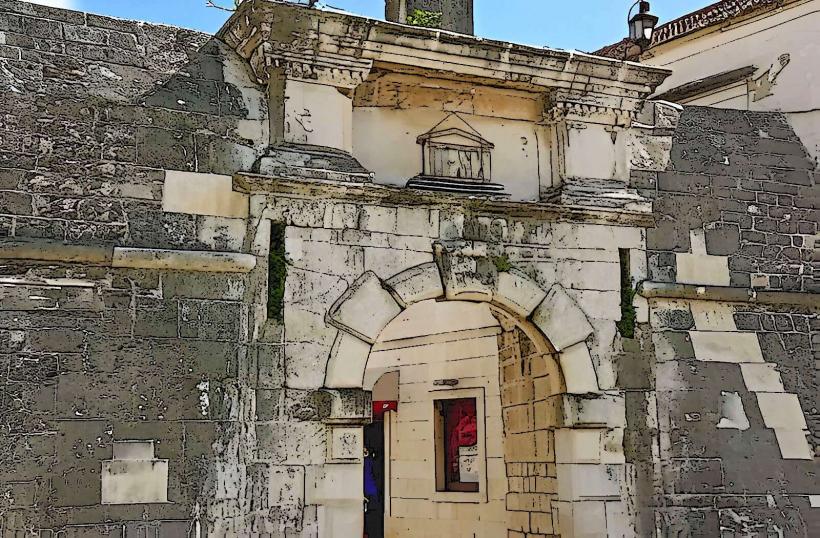
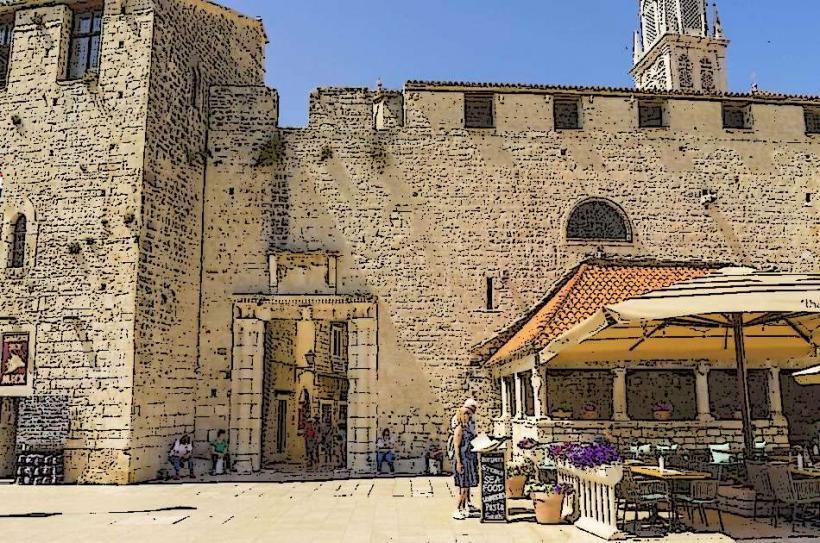
City Walls and Gates: Specialized 15th-century fortifications, with the North Gate (Land Gate) and South Gate (Sea Gate) remaining intact.
Transportation Network
Trogir is a primary node for nautical transit and proximity to international air travel.
Split Airport (SPU): Located only 5 km east in Kaštela; Trogir is the closest major urban center to the region's international air hub.
Bridges: Two specialized bridges connect the island to Čiovo; the Matija Ivanić Bridge (opened 2018) serves as the primary bypass to alleviate historical congestion.
Nautical Hub: A specialized destination for luxury charters; in 2026, the city operates as one of the most high-density yachting ports in the Adriatic.
Public Transit: A specialized network of buses (Promet Split) and "water taxis" providing links to Split and nearby islands.
Safety & "Red Zones"
The general safety level is very high. Trogir is statistically one of the safest destinations in Croatia. There are no "red zones." The pedestrianized island core is under continuous monitoring and is secure at all hours.
Digital & Financial Infrastructure
The city is a leader in Heritage Digitization and Smart Nautical Logistics. Internet speeds average 400–1000 Mbps. 5G is universal. In 2026, the city utilizes a specialized "Smart Heritage" platform to monitor building structural integrity and tourist capacity.
Climate & Air Quality
Trogir has a Mediterranean climate. Average temperatures range from 8°C in January to 30°C in July. Air quality is exceptionally high due to coastal winds and the strict limitation of motor vehicles within the island core.
Culture & Social Norms
Social norms are characterized by the "fjaka" mindset and a strong tradition of choral singing. Tipping (10%) is standard. The primary cultural event is the Trogir Opera Selecta and the Moondance Festival.
Local Cost Index (2026 Estimates)
1 Espresso: €2.20 – €3.50
1 Pint of Local Beer: €4.50 – €7.00
1 Standard Lunch: €18.00 – €35.00
Cathedral Entrance: €10.00
Nearby Day Trips
Blue Lagoon (Krknjaši): 20 mins by boat; a specialized turquoise bay between the islands of Drvenik Veli and Drvenik Mali.
Salona Ruins: 20 mins away; the specialized archaeological remains of the former Roman capital of Dalmatia.
Šibenik: 45 mins away; home to two additional UNESCO sites and specialized defensive fortresses.
Facts & Legends
Trogir is the site of the first pharmacy in Europe (1271), which operated near the town square for centuries. Legend states that the city’s North Gate is guarded by a statue of St. John of Trogir, who walked on water to save sailors during a storm. A verified fact is that the Cathedral’s bell tower features three distinct architectural styles-Romanesque, Gothic, and Renaissance-representing the 400 years it took to complete. Historically, Trogir was the site where the "Codex Trau," containing the famous ancient Roman poem "Trimalchio’s Dinner," was discovered in 1650.