Information
Landmark: Radovan's PortalCity: Trogir
Country: Croatia
Continent: Europe
Radovan's Portal, Trogir, Croatia, Europe
Radovan's Portal is the main western entrance to the Cathedral of St. Lawrence in Trogir. Completed in 1240, it is the most significant monument of Romanesque-Gothic sculpture in Croatia and a primary reason for Trogir’s UNESCO World Heritage status.
Visual Characteristics
The portal is a deeply recessed stone structure featuring a complex hierarchy of columns, arches, and high-relief sculptures. It is constructed from local white limestone. The design is symmetrical, anchored by two large stone lions on the outer consoles. Every surface-from the doorposts to the lunette-is covered in detailed carvings depicting human figures, animals, and botanical motifs.
Location & Access Logistics
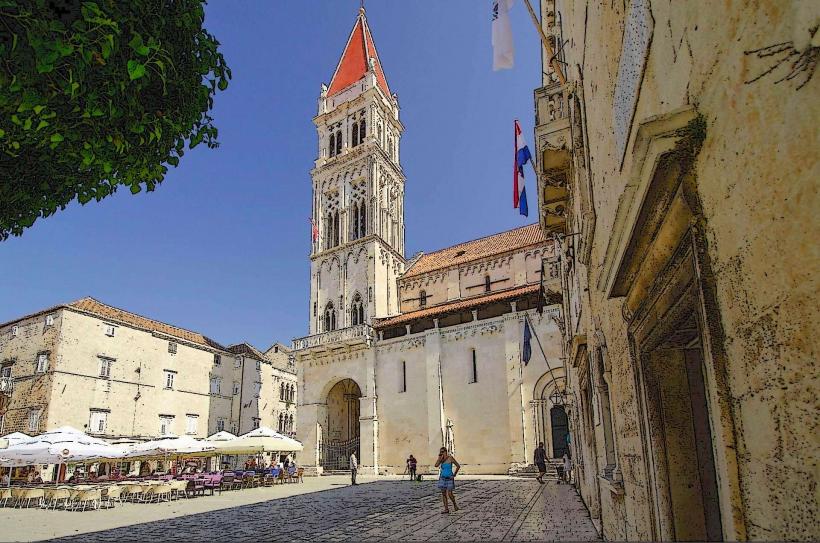
The portal is located at the western facade of the Cathedral on Trg Ivana Pavla II.
Access: Located in the pedestrianized center of the Old Town.
Viewing: Access to the interior of the portal is included in the Cathedral entrance fee. It is protected by a glass and metal porch added in the 17th century to prevent erosion.
Proximity: 0.4km from the mainland bridge and 0.6km from the Trogir bus station.
Historical Origin
The portal is the work of Master Radovan, a local sculptor who signed the lunette in 1240. The inscription describes him as "the most excellent in this art." While Radovan executed the primary reliefs and the lunette, the upper sections were completed by his workshop and other masters into the 14th century, transitioning into a more refined Gothic style.
Key Highlights & Iconography
The Lunette: Depicts the Nativity of Christ, characterized by realistic details and emotional depth unusual for the 13th century.
The Lions: Supporting figures representing strength; the left lion stands over a dragon (evil), while the right lion stands over a lamb (innocence).
Adam and Eve: Positioned above the lions, these are the first large-scale nude figures in Dalmatian medieval sculpture.
The Labors of the Months: Outer columns depict scenes of daily life, such as boar hunting in December and sheep shearing in April, providing a secular record of medieval society.
Saints and Apostles: Inner pillars feature meticulously carved figures of the protectors of Trogir.
Infrastructure & Amenities
The portal is monitored by cameras and museum staff. Information plaques in English provide a map of the iconography. 5G signal is stable in the square. The area immediately in front of the portal is level and wheelchair-accessible.
Best Time to Visit
Photography: Early morning (08:00–10:00) provides direct, low-angle sunlight that emphasizes the depth of the reliefs.
Crowd Mitigation: Avoid mid-morning (10:30–12:30) when large excursion groups from Split often occupy the square.
Facts & Legends
A historical oddity is the realistic depiction of the animals; Radovan’s lions have highly detailed manes and anatomy, suggesting he may have seen live lions or used high-quality Roman models. Local tradition holds that the portal serves as a "stone Bible" for the illiterate, designed to teach the entire history of salvation and the order of the natural world through visual storytelling.
Nearby Landmarks
Cathedral of St. Lawrence – Directly integrated
Ćipiko Palace – 0.01km West
Town Loggia – 0.02km South
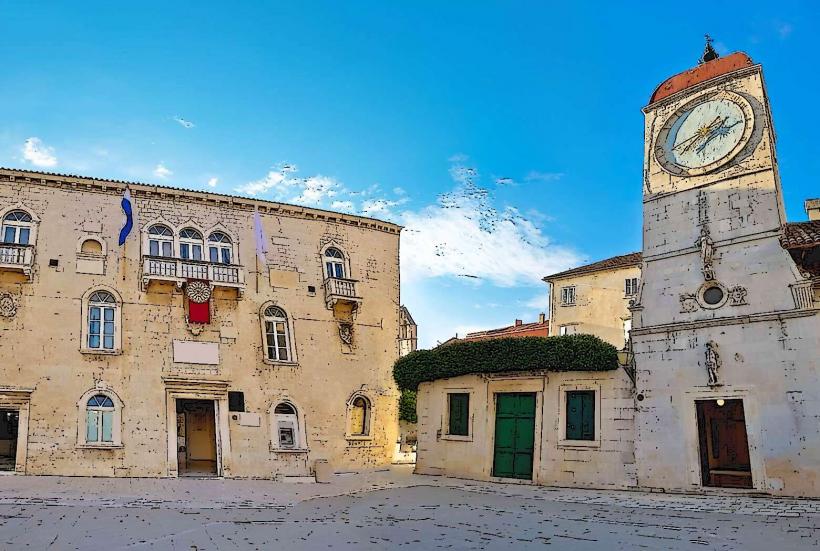
Trogir Town Hall – 0.02km East
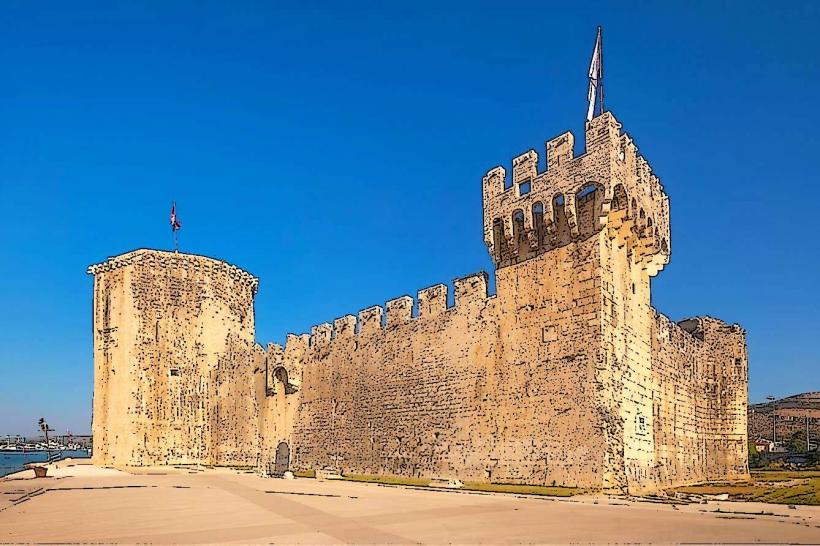
Kamerlengo Fortress – 0.3km Southwest