Information
City: VancouverCountry: Canada
Continent: North America
Vancouver, Canada, North America
Vancouver is the largest city in British Columbia and Canada’s primary Pacific gateway. Located between the North Shore Mountains and the Pacific Ocean, it is a global center for film production ("Hollywood North"), technology, and green urbanism. In 2026, the city is defined by preparations for the FIFA World Cup and the ongoing expansion of the SkyTrain network.
Historical Timeline
Founded in 1867 as "Gastown" around a single saloon, it was incorporated as the City of Vancouver in 1886. The arrival of the Canadian Pacific Railway (CPR) in 1887 established it as a major trade hub. In 2026, Vancouver is celebrating the 40th anniversary of Expo 86, the World's Fair that catalyzed the city's modern waterfront and transit infrastructure.
Demographics & Population
As of early 2026, the metropolitan population is approximately 2.73 million.
Multiculturalism: Over 50% of residents belong to a visible minority group, with the largest communities being Chinese, South Asian, and Filipino.
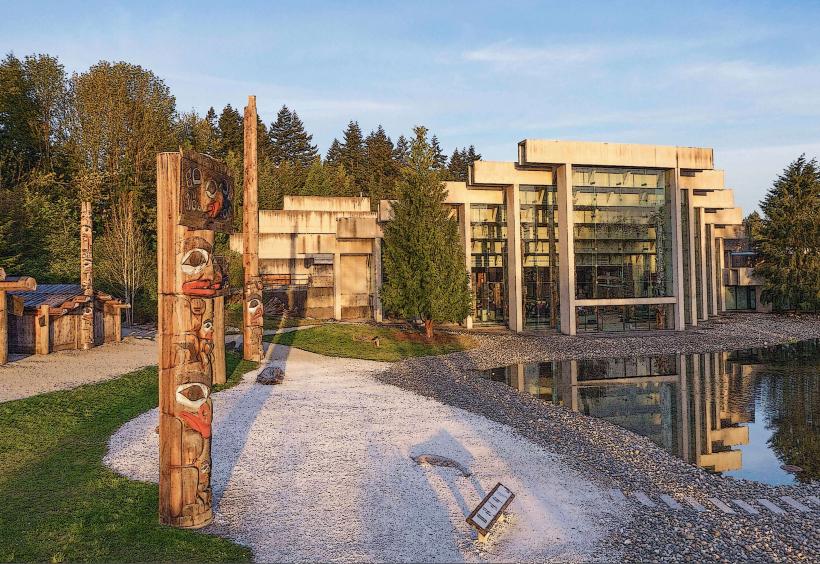
Indigenous Land: The city sits on the unceded traditional territories of the $x^{w}m\partial \theta k^{w}\partial y’\partial m$ (Musqueam), $S\underline{k}w\underline{x}wú7mesh$ (Squamish), and $s\partial lilw\partial t\alpha \ell$ (Tsleil-Waututh) Nations.
Urban Layout & Key Districts
Downtown: The high-density peninsula containing the Financial District, Coal Harbour, and the West End.
Gastown: The historic district featuring cobblestone streets, Victorian architecture, and the Steam Clock.
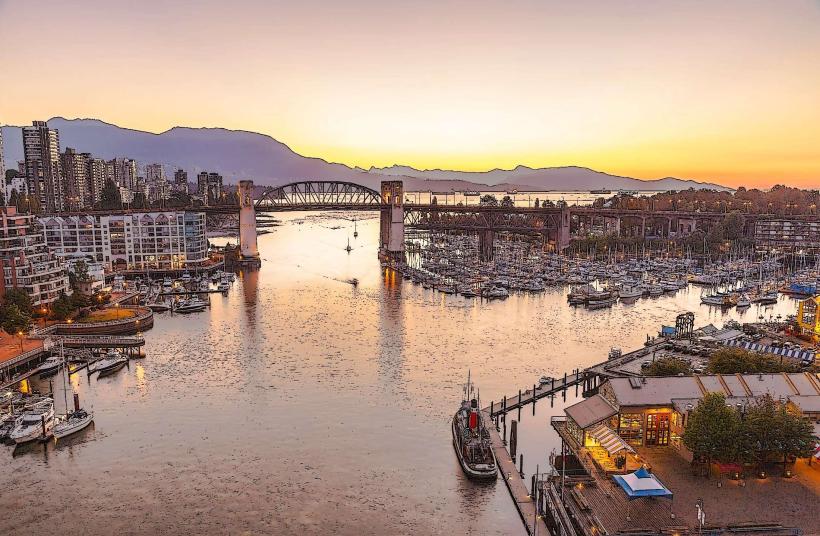
Granville Island: A former industrial peninsula turned cultural hub with a massive Public Market and artisan studios.
Kitsilano: A coastal neighborhood known for its beach, outdoor lifestyle, and high-end yoga/fitness culture.
Yaletown: A chic, former warehouse district filled with upscale lofts, patios, and tech offices.
Mount Pleasant: A creative hub for tech startups, breweries, and the "Main Street" boutique scene.
Top City Landmarks
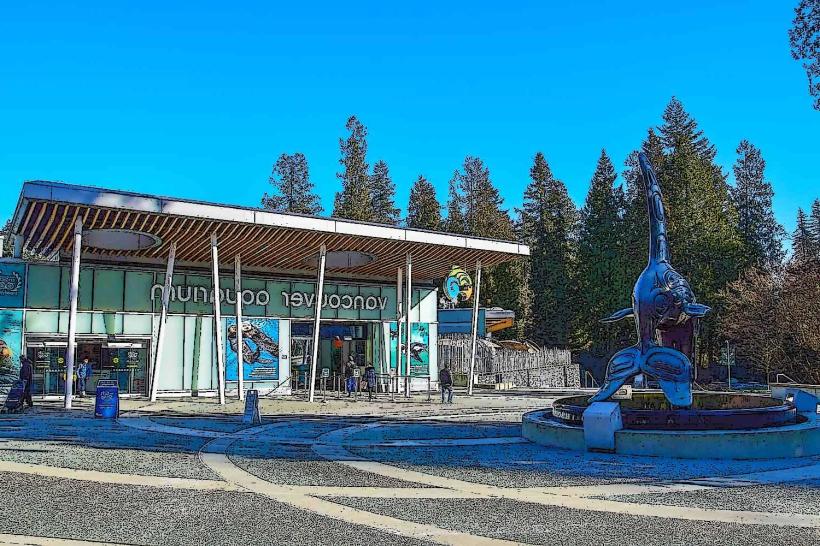
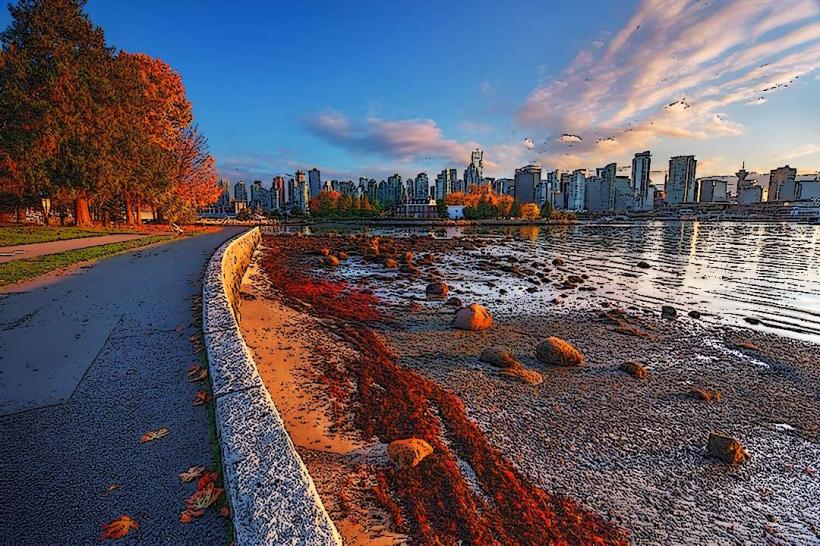
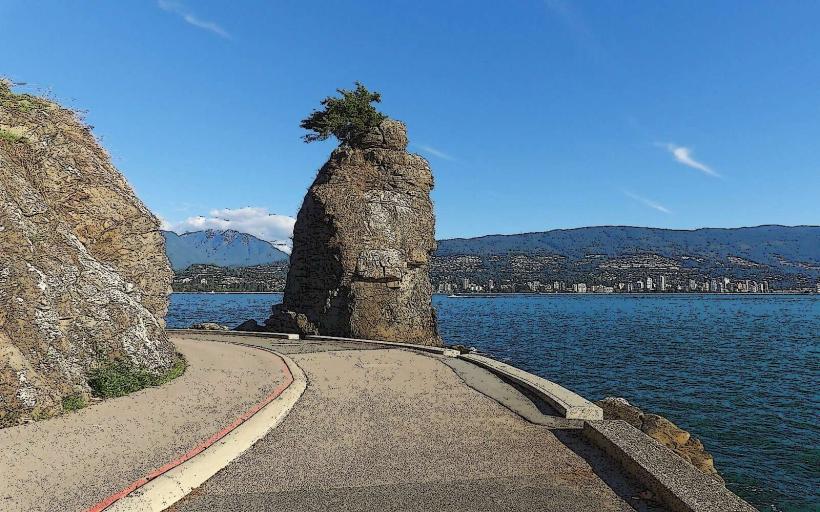
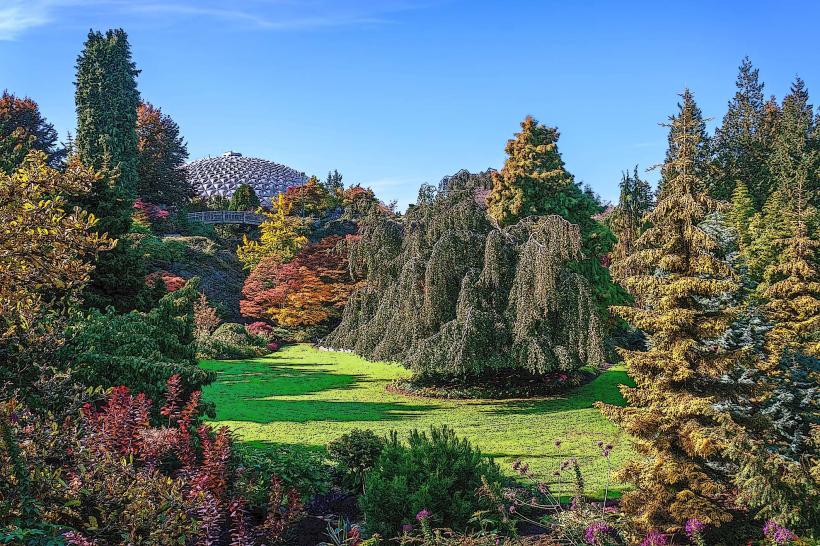
Stanley Park: A $405$-hectare urban rainforest featuring the Seawall, Totem Poles, and the Vancouver Aquarium.
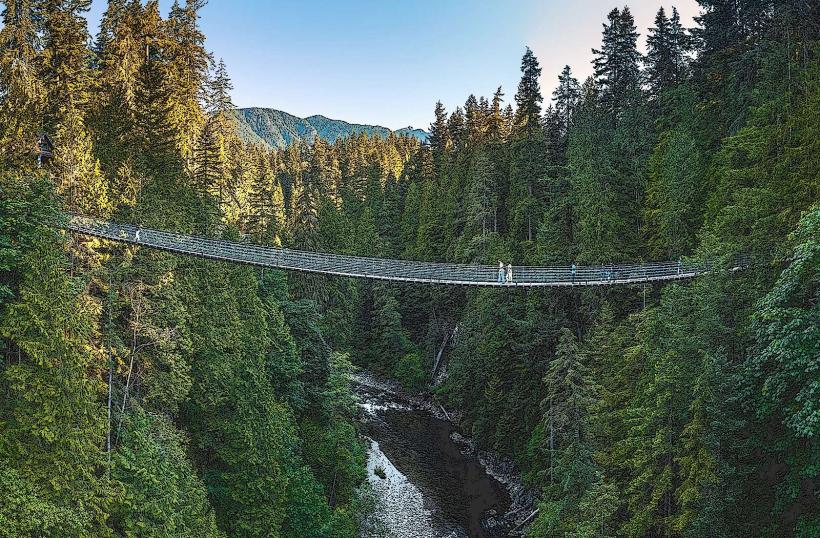
Capilano Suspension Bridge: A $137$-meter-long bridge suspended $70$ meters above the Capilano River.
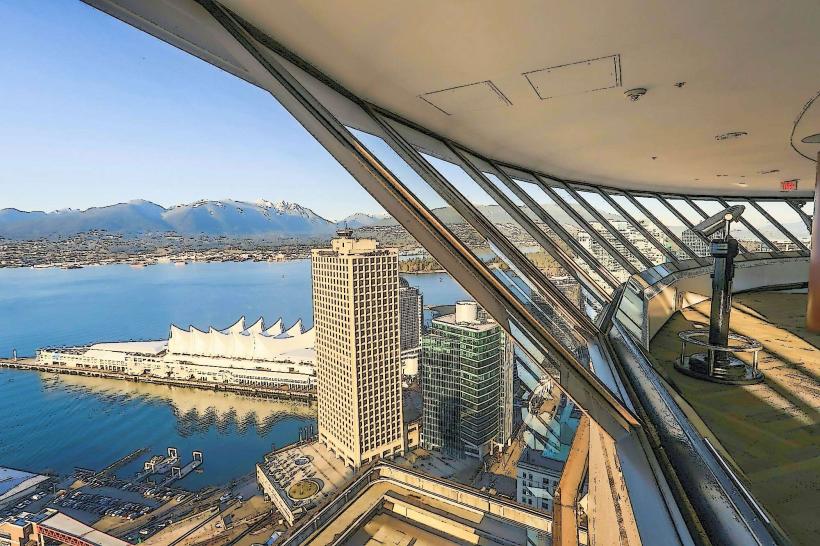
Canada Place: Recognizable by its white fabric sails, serving as the city’s primary cruise ship terminal.
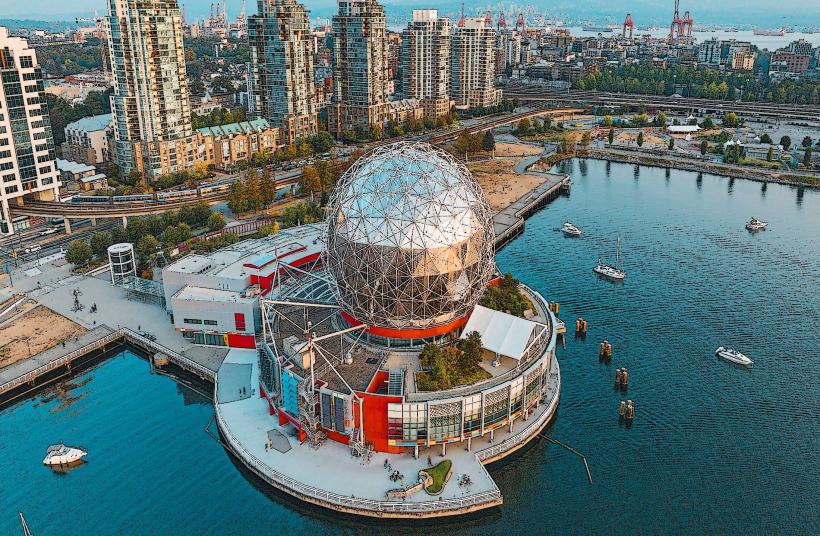
Science World: A geodesic dome at the head of False Creek featuring interactive exhibits.
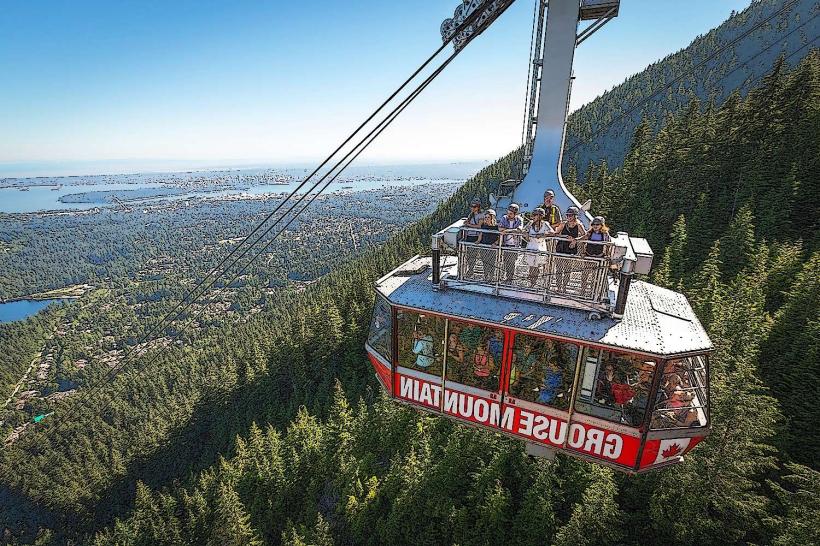
Grouse Mountain: Accessible via the Skyride, offering skiing in winter and the "Grouse Grind" hike in summer.
Transportation & Aviation
TransLink (SkyTrain/Bus): In 2026, 1-zone adult fares are approximately $3.35 CAD. The Broadway Subway Project is nearing completion to extend the Millennium Line.
Vancouver International (YVR): Frequently ranked as the best airport in North America, connected to downtown via the Canada Line ($25$ minutes).
SeaBus: A passenger-only ferry connecting Downtown (Waterfront Station) to the North Shore (Lonsdale Quay).
Biking: One of North America's most extensive protected bike lane networks.
Safety & Health
Vancouver is generally safe but faces significant socio-economic challenges in specific pockets.
Safety Note: Avoid the Main and Hastings area (Downtown Eastside) due to extreme poverty and the ongoing fentanyl crisis. Property crime (car break-ins) is the most common issue for tourists.
Healthcare: Home to Vancouver General Hospital and St. Paul's. In 2026, the New St. Paul’s Hospital campus in False Creek Flats is a major focus of urban development.
Water: Tap water is safe to drink and sourced from mountain reservoirs.
Digital & Financial Infrastructure
Connectivity: 5G is universal. In 2026, TELUS and Rogers have completed significant fiber-to-the-home (PureFibre) expansions.
Payments: Canada is highly cashless. Credit, debit, and mobile payments (Apple/Google Pay) are accepted everywhere, including on all TransLink vehicles.
Economy: A massive hub for AI development, cloud computing (Amazon/Microsoft regional offices), and mineral exploration finance.
Climate & Air Quality
Climate: Oceanic/Mediterranean. Winters are mild and rainy; summers are dry and cool.
Current Status (Jan 22, 2026): Peak rainy season. Temperatures range from $3^{\circ}\text{C}$ to $8^{\circ}\text{C}$.
Air Quality: Generally excellent (AQI 10–30). However, the city now prepares annually for "wildfire smoke season" (July–September).
Local Cost Index (2026 Estimates)
1 Espresso: $5.25–$7.00 CAD
1 Monthly 1-Bedroom Rent (West End): $2,800–$3,400 CAD
1 Mid-range Dinner for Two: $120–$180 CAD
1 Beer (Pint): $9.00–$12.00 CAD
Nearby Day Trips
Whistler: A world-class ski resort $2$ hours north via the scenic Sea-to-Sky Highway.
Victoria: The capital of BC, accessible via a $1.5$-hour ferry ride or a $35$-minute floatplane flight.
Bowen Island: A quiet island escape $20$ minutes from Horseshoe Bay.
Facts & Legends
A verified historical oddity is that the Great Vancouver Fire of 1886 leveled the city just two months after it was incorporated, leaving only a handful of buildings standing. A prominent local legend involves the "Grey Man" of Stanley Park, a spectral figure said to be seen walking the Seawall during heavy fog, believed by some to be the ghost of a lighthouse keeper or a lost fisherman.