Information
City: Wotho AtollCountry: Marshall Islands
Continent: Australia
Wotho Atoll, Marshall Islands, Australia
Wotho Atoll is a coral atoll of 13 islands in the Ralik Chain of the Marshall Islands. It is defined by its pristine environment, low population density, and its name, which translates to "Island far away" or "Island in the passage," reflecting its geographical isolation and untouched character.
Historical Timeline
Inhabited for approximately 2,000 years. A critical historical event occurred in 1565 when Spanish explorer Miguel López de Legazpi sighted the atoll. Historically, Wotho served as a sanctuary for Marshallese voyagers due to its abundant food resources and safe lagoon. During World War II, it was a minor Japanese observation post and was secured by U.S. forces in March 1944. Unlike its neighbors Bikini and Enewetak, Wotho was never used for nuclear testing, though it was briefly evacuated in 1954 as a precaution during the Castle Bravo test. In 2026, it is recognized as a premier site for biodiversity conservation.
Demographics & Population
The 2026 estimated population is approximately 100. The residents are exclusively Marshallese. The economy is entirely subsistence-based, centered on Copra production, Artisanal Fishing, and the gathering of native forest products.
Urban Layout & Key Districts
The atoll surrounds a 95-square-kilometer lagoon and is known for its relatively large land-to-lagoon ratio.
Wotho Islet: The primary population center and only inhabited island, located on the northeastern corner of the atoll.
Medjerom: A large northern islet used for coconut harvesting and bird-egg gathering.
Kabeben: An uninhabited islet on the northwestern rim, characterized by dense native broadleaf forests.
Top Landmarks
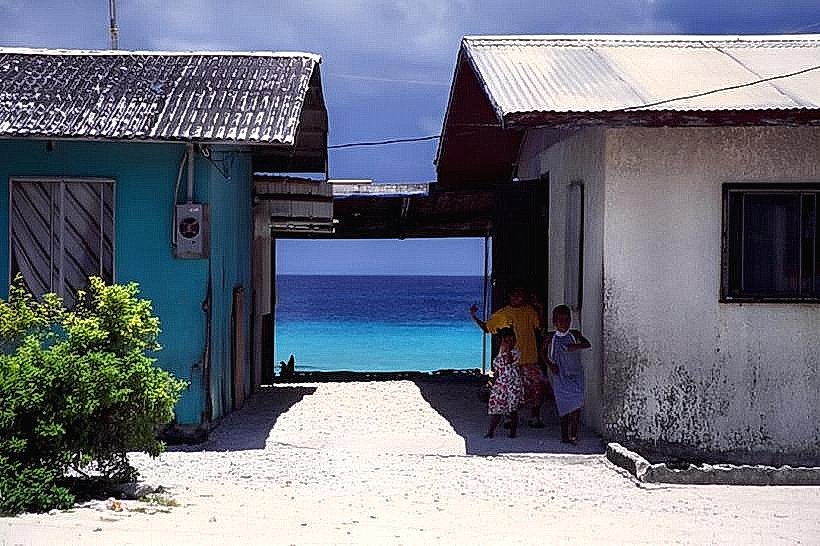
Wotho Village: A secluded settlement featuring traditional architecture and an exceptionally high standard of environmental cleanliness.
The Virgin Forests: Wotho contains some of the best-preserved native Pisonia grandis forests in the Marshall Islands, providing a glimpse of the archipelago's pre-colonial ecology.
The Turtle Nesting Beaches: Several uninhabited islets within the atoll serve as critical nesting grounds for the Green Sea Turtle.
Wotho Lagoon: Famous for its coral "bommies" (pinnacles) that support high-fidelity marine ecosystems and giant clam populations.
Transportation Network
Movement is by foot on Wotho Islet and by small motorboats or traditional canoes for lagoon transit. Wotho Airport (WTO) provides irregular domestic flights via Air Marshall Islands to Majuro and Kwajalein. There are no paved roads or vehicles. Maritime access is facilitated by a single deep-water pass on the western side. In 2026, the atoll is a focal point for "low-impact" sustainable transport initiatives.
Safety & Access
General safety is absolute. The community is small, quiet, and operates on traditional communal values. Standard awareness is advised regarding extreme isolation; there are no commercial stores or emergency medical facilities beyond a basic health assistant. Environmental hazards include stinging coral and strong currents in the western pass.
Digital & Financial Infrastructure
Connectivity is non-existent. No 5G or cellular data is available; communication is limited to VHF radio. U.S. Dollars (USD) are the only currency. The atoll operates on a cash-only or subsistence-sharing basis; there are no ATMs or electronic payment facilities.
Climate & Ecology
Tropical marine climate. Air quality is among the highest in the world. Wotho is considered an ecological jewel due to its lack of invasive species and minimal human impact. In 2026, the primary environmental challenge is coastal erosion on the ocean-facing side of Wotho Islet, threatening the outer perimeter of coconut groves.
Culture & Social Norms
Tipping is not customary. The "Iokwe" greeting is mandatory. Dress codes are Strictly Modest; women must cover their knees. Wotho maintains a very quiet, traditional social pace; visitors must respect the Alap (landowner) and the local council's authority. The culture is defined by Forest Stewardship and Subsistence Excellence.
Local Cost Index
Standard Meal: Not commercially available; food is sourced locally (fish, coconut, breadfruit).
Accommodation: Limited to family homestays or camping by permission ($30.00–$60.00 USD).
Facts & Legends
Wotho is often referred to as the "Garden of the Ralik Chain" because of its lush, undisturbed vegetation. Historically, it was a preferred location for chiefs to harvest timber for building large voyaging canoes. A local legend tells of a spirit navigator who resides in the western pass, guiding the schools of fish into the lagoon to ensure the islanders never go hungry. Another fact: Wotho has one of the highest concentrations of coconut crabs (Birgus latro) in the Marshall Islands, which are protected by local customary law to prevent over-harvesting.