Information
Landmark: Almoravid KoubbaCity: Marrakech
Country: Morocco
Continent: Africa
Almoravid Koubba, Marrakech, Morocco, Africa
Overview
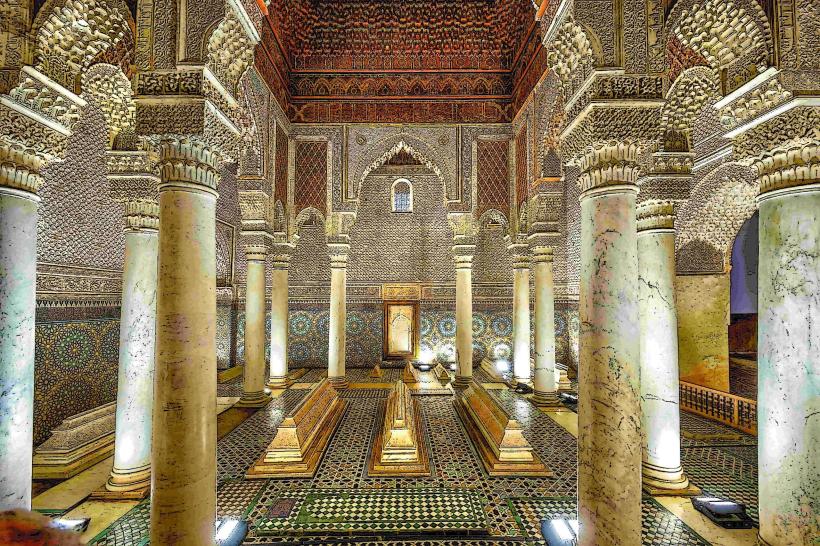
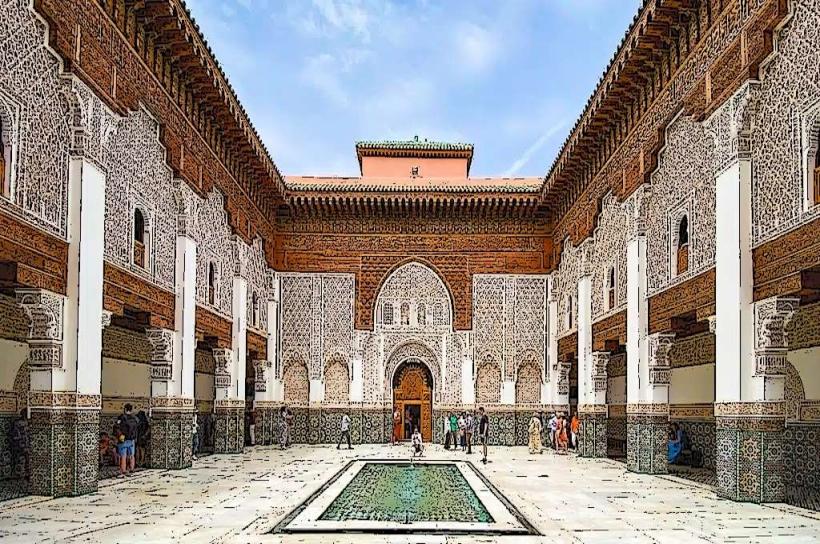
The Almoravid Koubba, or Koubba Almoravide, stands among Marrakech’s most essential historic landmarks, a rare surviving glimpse of the intricate stonework and arches of Almoravid architecture, after that built in the 12th century under the Almoravid dynasty, the petite dome-shaped structure still stands as one of the city’s rare surviving traces of that era, its weathered stone warm in the afternoon sun, fairly The Koubba was built around 1117–1147, during the Almoravid dynasty’s reign-the first great Islamic rulers of Morocco, whose influence stretched into parts of Spain and the dusty trade routes of West Africa, to boot the Koubba was probably first built as a site for ritual washing before prayer, or perhaps as a modest mosque, embodying Islam’s deep respect for purity-water trickling over stone before worship.Rediscovery and restoration: Over the centuries, the Koubba slipped from memory, hidden beneath drifting sand and the weight of newer buildings, moreover rediscovered in the 20th century, it was brought back to life in the 1950s, its worn stone walls once again showing off their historical and architectural importance.Architectural Features Shape and Structure: The Koubba’s dome lifts high above nearby buildings, a hallmark of Almoravid design with its plain, sturdy lines, then built mostly from stone and mortar, the Koubba’s walls carry bold, simple geometric patterns, sharp as chisel marks in fresh plaster.Believe it or not, Stone keeps the structure solid, holding its strength for centuries, like the cool weight of a weathered wall that refuses to crumble, after that the Koubba is adorned with intricate stucco carvings and crisp geometric patterns, some as sharp as a chisel’s edge.Simpler than the grand styles that followed, these designs reflect the Almoravid love of symmetry and exact detail, with a quiet elegance like the smooth curve of a carved arch, besides arches and Doorways: Broad, unadorned arches curve into graceful horseshoe shapes, a hallmark of Almoravid-era design that carries the warm, enduring touch of Andalusian style.Inside, a mosaic floor spreads out in crisp geometric patterns, each shape echoing the balance and order at the heart of Islamic art, as a result inside, the space feels bare, just a modest corner meant for quiet reflection or prayer, where even a single candle seems to hold the room’s attention.The Koubba stands as one of the oldest remnants of the Almoravid dynasty, a rare glimpse of their architecture-plain, practical, and sparing in ornament, like cool stone walls catching the morning light, in conjunction with you’ll find it just steps from the Ben Youssef Madrasa and Marrakech’s bustling main square, Jemaa el-Fnaa, a prime spot for anyone diving into the city’s layered history.The Almoravid Koubba reveals glimpses of both faith and everyday life in the early days of Marrakech, when narrow streets echoed with the call to prayer, subsequently one of the city’s oldest buildings, it still whispers of the Almoravid dynasty-its square stone arch recalling their mark on architecture, city life, and faith.The Koubba sits just a short wander from the Ben Youssef Madrasa, so you can easily stop by while exploring the narrow, sun‑dappled lanes of the historic medina, not only that quiet and reflective, the site feels peaceful-far from the shouts and clattering footsteps that fill other Marrakech monuments.safeThough smaller and less lavish than many Moroccan landmarks, the Koubba’s quiet elegance reveals a slice of the Almoravid era, letting visitors picture the world in which its stone walls first rose.Tucked away in the heart of Marrakech, the Almoravid Koubba reveals a slice of the city’s early Islamic past, with stone arches and intricate carvings showcasing the dynasty’s bold architectural ideas, subsequently compact as it is, the structure carries deep cultural weight, with crisp geometric lines, quiet elegance, and a beauty that works as well as it looks.It still stands as proof of Morocco’s deep history, from its earliest beginnings to the lively streets and shining colors you notice today.
Author: Tourist Landmarks
Date: 2025-09-26