Information
Landmark: Badlands National ParkCity: Wall
Country: USA South Dakota
Continent: North America
Badlands National Park, Wall, USA South Dakota, North America
Location
Badlands National Park is a striking expanse of rugged terrain, located in southwestern South Dakota, covering approximately 244,000 acres of sharply eroded buttes, pinnacles, and sprawling mixed-grass prairie. Established as a national monument in 1939 and redesignated a national park in 1978, the park is celebrated for its geologic formations, fossil beds, and dramatic landscapes. The Badlands are easily accessible via Interstate 90, with the park’s main entrance near the town of Wall, South Dakota.
The park’s name reflects the harsh and seemingly inhospitable environment-early French explorers called the area “les mauvaises terres à traverser,” meaning “bad lands to traverse.” Despite this, the region has supported Native American tribes for centuries, particularly the Oglala Lakota, who hold the land as culturally and spiritually significant.
Geology and Landscape
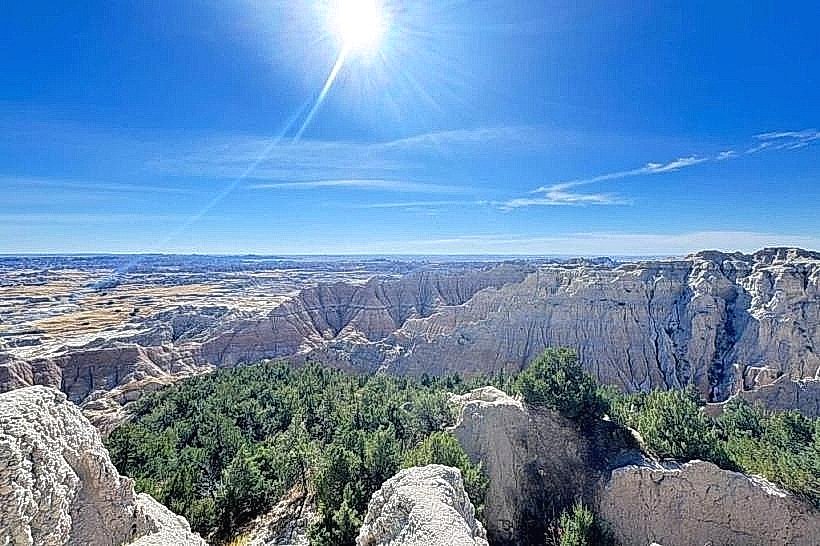
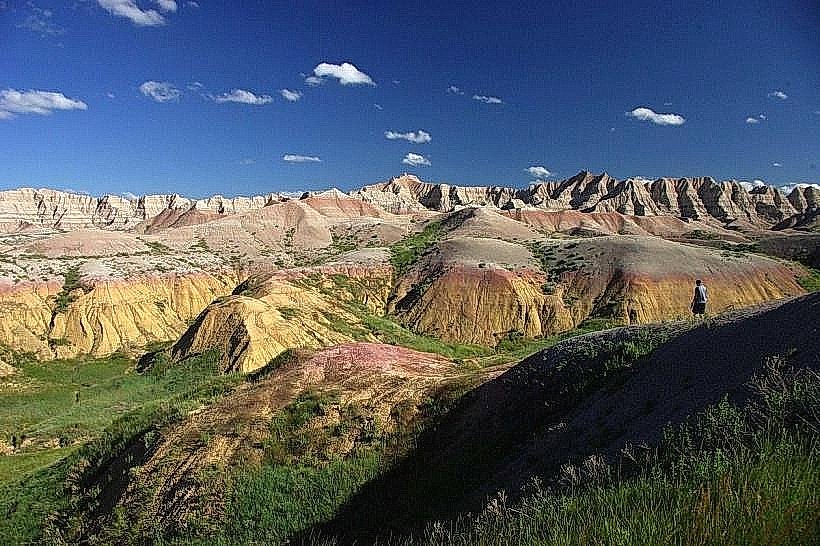
The Badlands’ terrain is otherworldly, with steep canyons, layered rock formations, and jagged spires carved by millennia of erosion from wind and water. Colors range from deep reds and browns to soft tans and gray-white layers, reflecting sedimentary deposits from ancient seas, riverbeds, and volcanic ash.
The park is also part of the fossil-rich White River Badlands, containing extensive remains of extinct mammals such as saber-toothed cats, rhinoceroses, and ancient horses, dating back 23 to 30 million years. The geology offers not only visual spectacle but also scientific significance, providing insight into prehistoric ecosystems.
Scenic Drives and Viewpoints
Badlands National Park features several scenic drives that allow visitors to experience the park’s dramatic landscape:
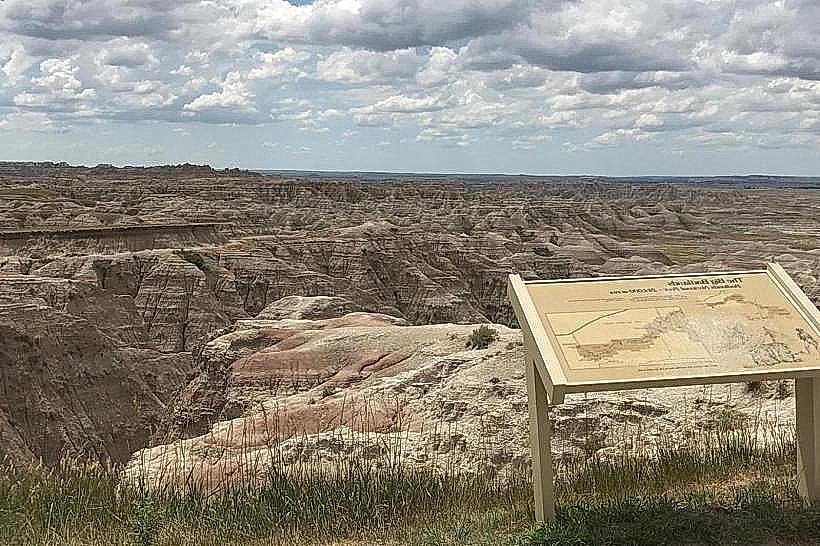
Badlands Loop Road (SD-240): A 31-mile loop that traverses the heart of the park, featuring overlooks such as Big Badlands Overlook, Pinnacles Overlook, and Panorama Point.
Castle Trail Access Points: Pullouts along the loop provide access to hiking trails, picnic areas, and wildlife viewing.
The drives reveal the park’s alternating layers of erosion, from smooth, rolling hills to sharp, spired formations, creating a constantly changing panorama. Sunrise and sunset cast striking shadows and highlight the multicolored sediment layers, enhancing photography and sightseeing.
Hiking and Trails
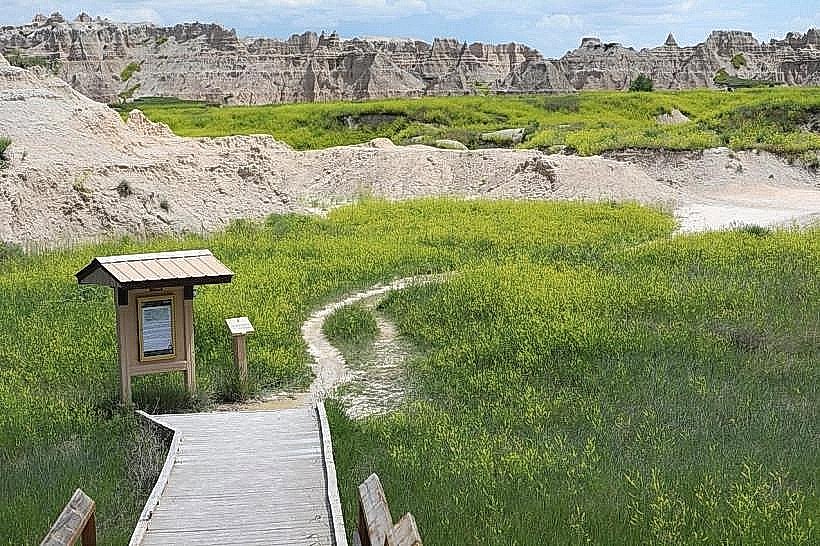
The park offers a variety of trails ranging from easy walks to strenuous hikes:
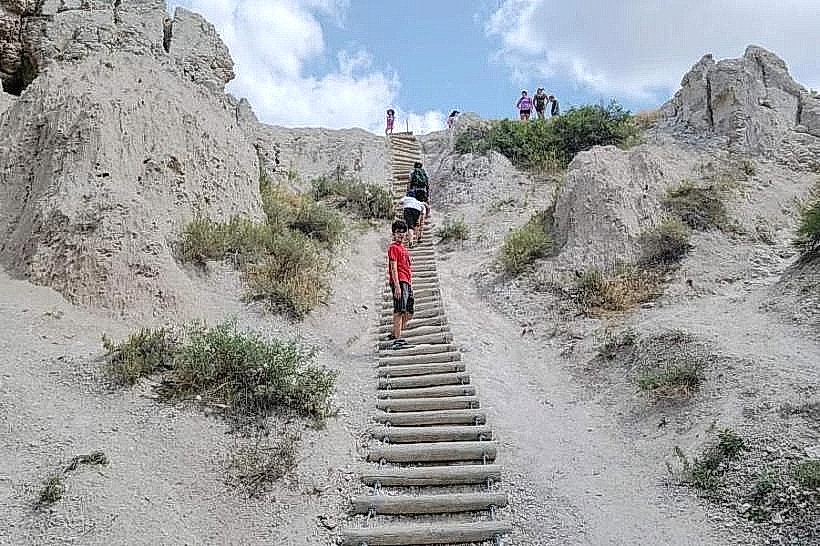
Notch Trail: A 1.5-mile out-and-back hike featuring a wooden ladder, canyon views, and prairie vistas.
Castle Trail: Approximately 10 miles round trip, connecting the park’s door, window, and pinnacles formations, offering expansive views of eroded rock formations and prairie.
Saddle Pass Trail: A shorter hike providing close-up views of spires and sharp ridges.
Hikers encounter mixed-grass prairie ecosystems, unique rock formations, and the occasional bison or bighorn sheep along these routes.
Wildlife and Ecology
The park protects a diverse array of wildlife and plant species adapted to the semi-arid grassland environment:
Large Mammals: Bison, bighorn sheep, pronghorn antelope, and coyotes roam freely.
Birds: Raptors such as hawks and golden eagles are commonly seen, along with prairie songbirds and burrowing owls.
Reptiles and Amphibians: Snakes, lizards, and various frogs inhabit the park’s rugged terrain.
Flora: Native grasses dominate the prairie, with wildflowers including sunflowers, coneflowers, and prairie asters appearing in late spring and summer.
The combination of open grasslands and sharp, rocky features creates a unique habitat mosaic supporting both prairie and cliff-dwelling species.
Cultural and Historical Significance
The Oglala Lakota consider the Badlands sacred. The park contains archeological sites, petroglyphs, and burial grounds, reflecting thousands of years of human habitation. European settlers and explorers, particularly during the 19th-century westward expansion, also left their mark, often struggling to navigate the rugged terrain.
Visitor Facilities and Practical Information
Location: Southwestern South Dakota, near Wall
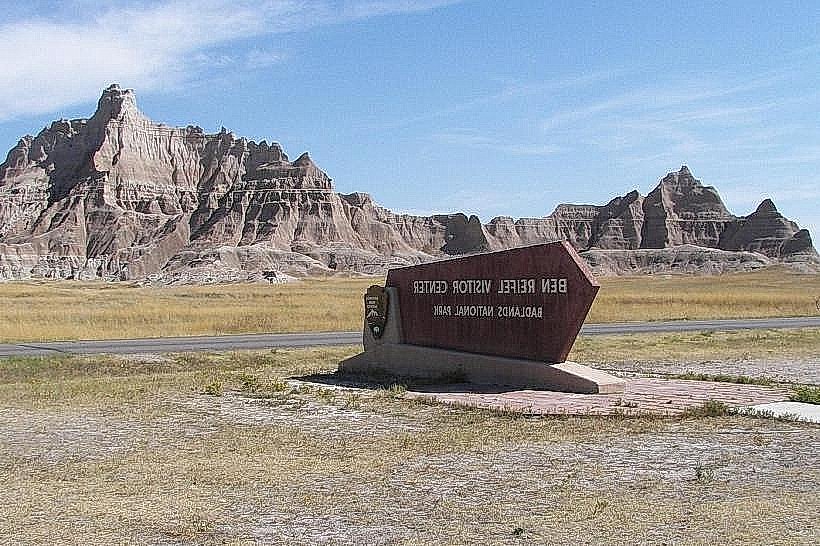
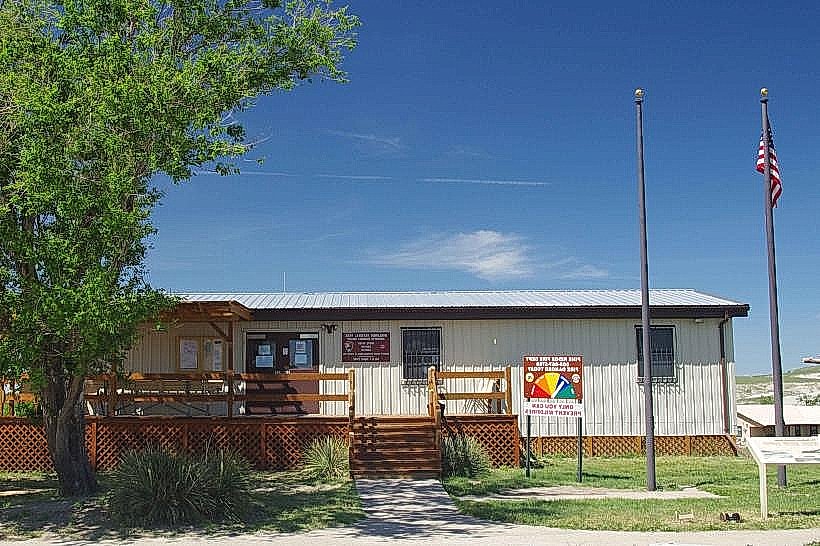
Access: Main entrance along SD-240; several visitor centers including Ben Reifel Visitor Center
Activities: Scenic driving, hiking, photography, wildlife observation, stargazing
Best Time to Visit: Late spring through early fall; mornings and evenings offer the best lighting and wildlife activity
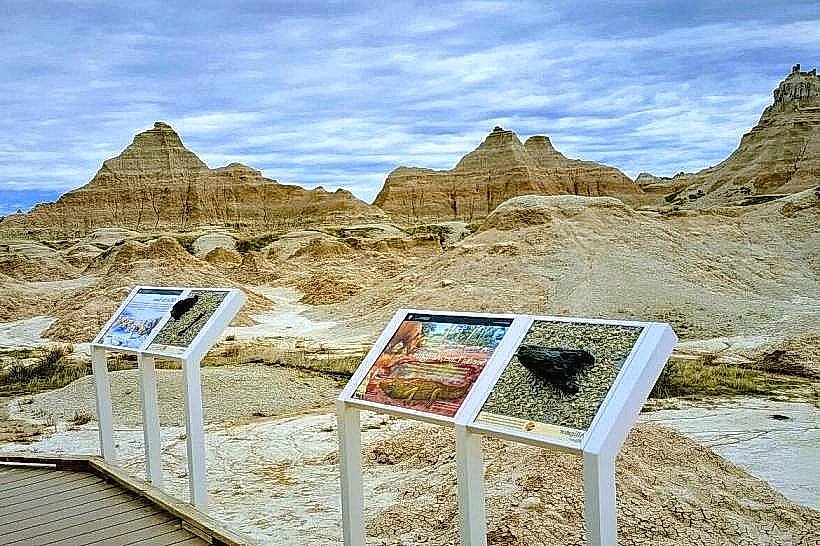
Facilities: Visitor centers with exhibits, restrooms, picnic areas, and educational programs
Atmosphere and Impression
Badlands National Park is a landscape of stark contrasts and breathtaking drama-sharp pinnacles rise from soft grasslands, colors shift with sunlight, and wildlife roams freely across the plains. The combination of geologic wonder, ecological diversity, and cultural history makes it a destination that is both visually stunning and deeply meaningful.
Visitors leave with a sense of having traversed a timeless, rugged frontier, where the land’s raw beauty and history are preserved in sharp relief against the endless sky.