Information
Landmark: Basilica di Santa Maria di CastelloCity: Genoa
Country: Italy
Continent: Europe
Basilica di Santa Maria di Castello, Genoa, Italy, Europe
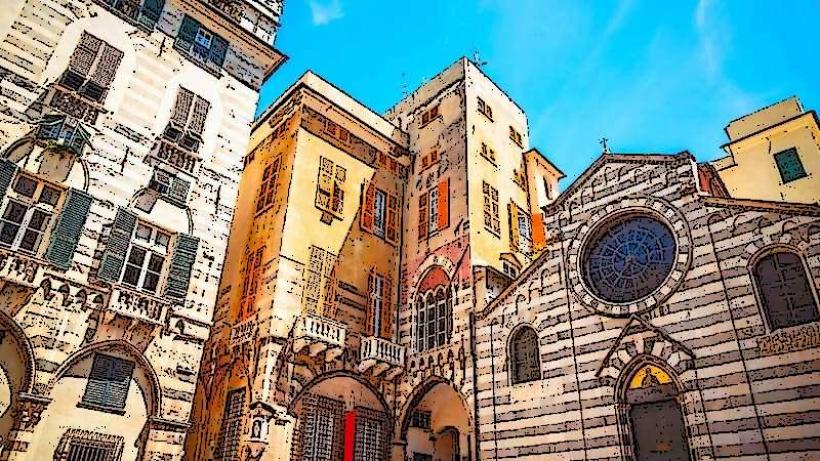
Santa Maria di Castello is one of the oldest and most significant religious complexes in Genoa, situated on the "Castello" hill-the city's original Roman-era settlement. It is a palimpsest of architectural history, featuring Romanesque, Gothic, and Renaissance layers.
Visual Characteristics
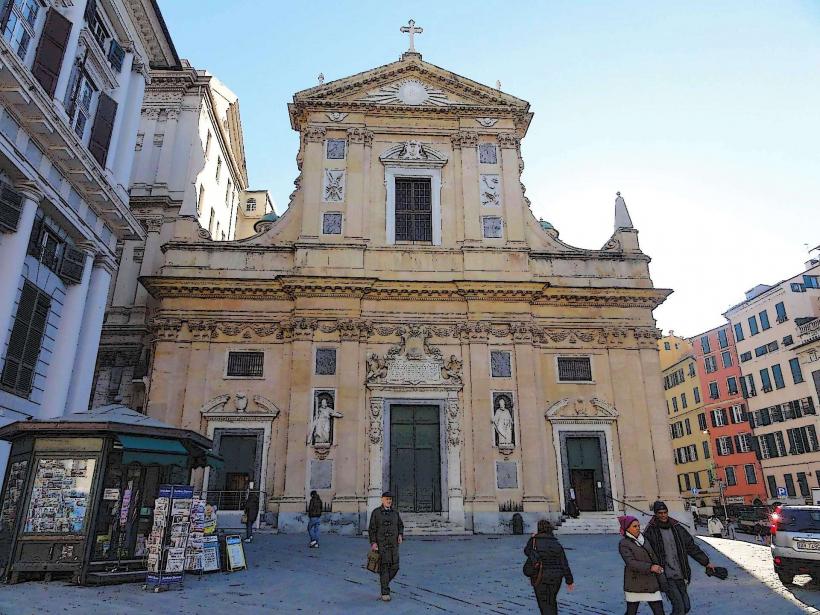
The basilica maintains a rigorous Romanesque exterior with a simple facade and a heavy bell tower. Inside, it is a three-aisled church supported by ancient Roman columns of varying heights and materials (granite and marble), salvaged from even older ruins. The adjacent cloister complex features vibrant frescoes and a quiet, monastic atmosphere that contrasts with the surrounding city.
Location & Access Logistics
Address: Salita di Santa Maria di Castello, 15, 16123 Genova.
Access: Located on a hill in the Molo district. Access is via a series of steep, characteristic pedestrian slopes (salite) from the Porto Antico or Piazza Erbe.
Metro: Closest station is San Giorgio or Sarzano/Sant'Agostino.
Entry: Admission to the church is free. A small donation or ticket is requested to visit the museum and the three cloisters.
Mobility: Due to its hilltop location and the historic "creuze" (sloped alleys) leading to it, access can be difficult for those with significant mobility issues.
Historical & Engineering Origin
The site has been occupied since the 6th century BC. The current church was built in the 12th century (roughly 1100–1150) by the Antelami builders. In the 15th century, it was granted to the Dominican Order, who transformed it into a center for humanistic culture and added the extensive cloister system. The engineering is notable for the reuse of classical Roman spolia, integrating 2,000-year-old structural elements into the medieval fabric.
Key Highlights
The Loggia of the Annunciation: A stunning Renaissance loggia in the second cloister featuring a world-famous fresco of the Annunciation (1451) by Justus d'Allamagna.
Roman Spolia: Ten massive Roman columns of different origins (African granite, cipollino marble) lining the nave.
Museum of Santa Maria di Castello: Houses precious reliquaries, medieval polyptychs, and a collection of "Ex Voto" (votive offerings).
Bernardo Strozzi’s Works: The church contains several significant paintings by this Genoese master, including The Arrival of the Relics of St. John the Baptist.
Infrastructure & Amenities
5G coverage is generally good outside the church, but signal strength drops significantly inside the thick medieval walls and the stone cloisters. The surrounding Molo district is quieter than the main tourist hubs but contains several authentic Genoese trattorias and artisan workshops.
Best Time to Visit
Open daily (usually 09:00–12:00 and 15:30–18:30). The cloisters are best visited in the afternoon when the sunlight filters through the arches, illuminating the frescoes.
Facts & Legends
The church is built on the site of the ancient Roman castrum (fortress). Legend says that the "Black Christ" (Cristo Moro) housed in the church was carved by a monk from a single piece of dark wood and is credited with numerous miracles during the city's plague outbreaks.
Nearby Landmarks
Porto Antico: 0.4 km West (downhill).
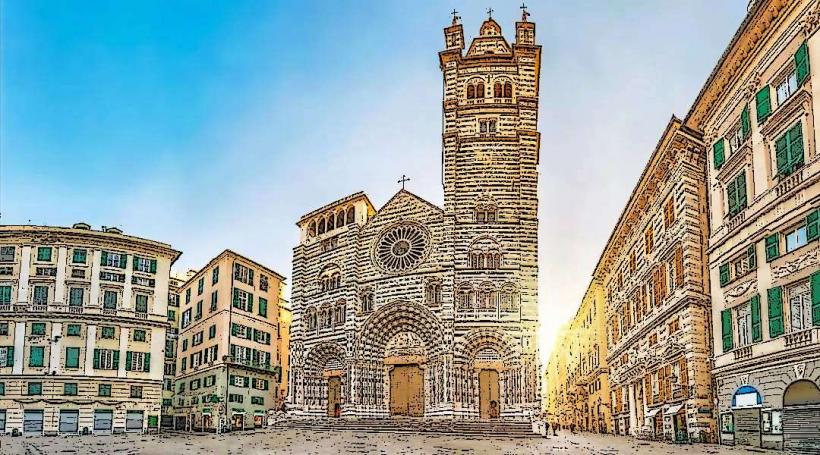
San Lorenzo Cathedral: 0.5 km North.
Piazza delle Erbe: 0.3 km East (a hub of Genoese nightlife).
Sarzano Square: 0.2 km South.
Would you like me to map out a walking route from the Cathedral to this hilltop basilica?