Information
Landmark: Basilica of Assumption of Blessed Virgin MaryCity: Plock
Country: Poland
Continent: Europe
Basilica of Assumption of Blessed Virgin Mary, Plock, Poland, Europe
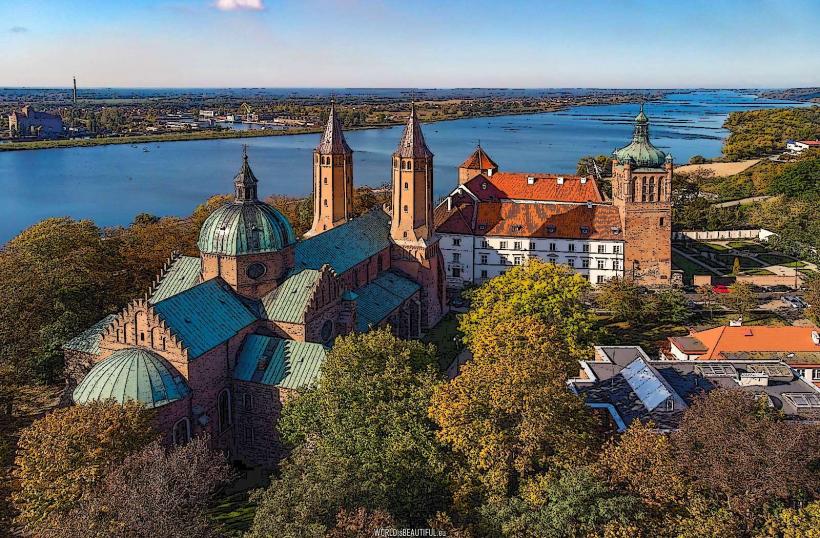
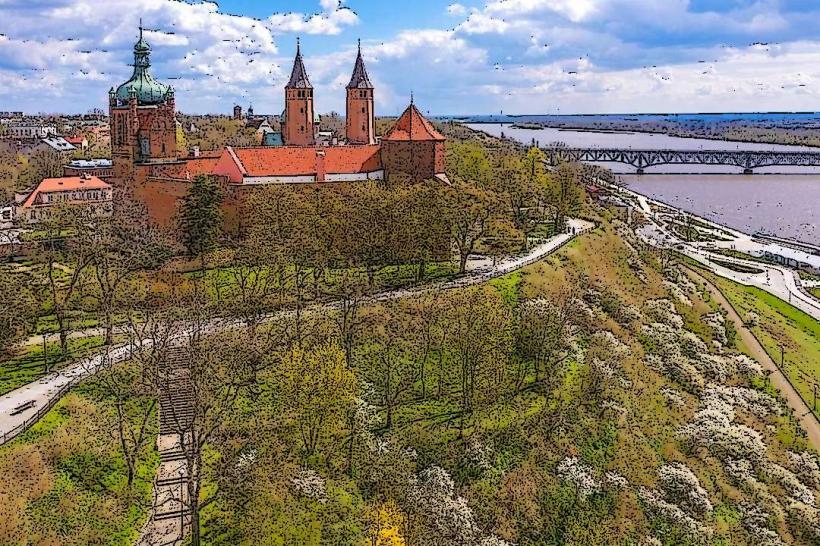
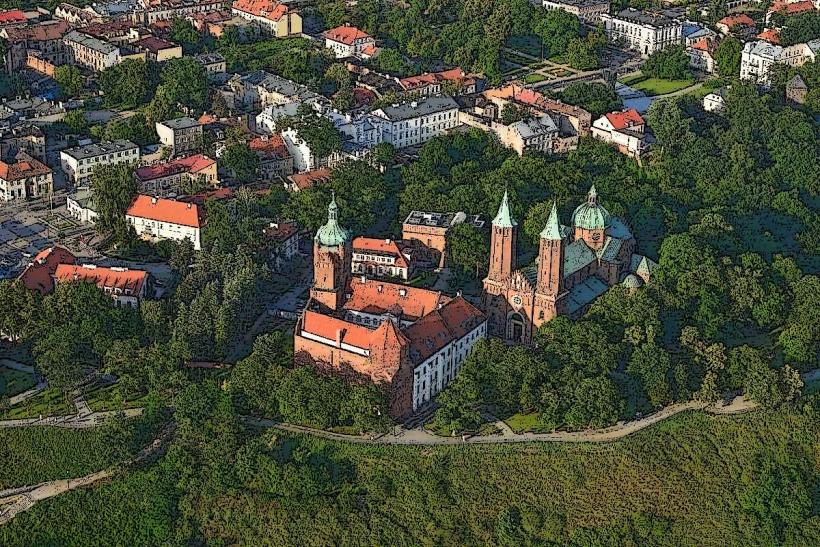
The Cathedral Basilica of the Assumption of the Blessed Virgin Mary (Bazylika katedralna Wniebowzięcia Najświętszej Maryi Panny) is the primary Roman Catholic church of the Płock Diocese and a burial site for Polish monarchs. It is situated on the Tumskie Hill (Wzgórze Tumskie) overlooking the Vistula River.
Visual Characteristics
The basilica is a monumental three-aisle structure featuring two 15th-century towers capped with Baroque spires. The exterior is characterized by Romanesque and Renaissance elements, predominantly built from granite blocks and brick. The interior is noted for its early 20th-century polychrome murals and a high altar of Carrara marble. The northern facade features a bronze replica of the 12th-century Płock Doors, depicting 26 scenes from the lives of Christ and St. Peter.
Location & Access Logistics
The basilica is located at Plac Narutowicza 1, on the western edge of the city's historic core. Public transport via KM Płock buses (lines 2, 4, 7, 22) stops at "Plac Narutowicza." Pedestrian access is via the Old Market Square or the riverside boulevards. Paid parking is available on surrounding streets, including ul. Mostowa and ul. Teatralna.
Historical & Ecological Origin
Consecrated in 1144, the cathedral was founded by Bishop Aleksander of Malonne during the reign of Bolesław III Wrymouth. It was built on a limestone and clay outcrop that served as the capital of Poland during the 11th and 12th centuries. Following a fire in 1530 and subsequent structural failures, it was rebuilt in the Renaissance style and underwent a final major restoration between 1903 and 1915 to secure its foundations on the eroding escarpment.
Key Highlights & Activities
The Royal Chapel: Located in the northern aisle, it contains a marble sarcophagus housing the remains of Polish rulers Władysław I Herman and Bolesław III Wrymouth.
The Płock Doors: A replica of the Romanesque originals (currently in Novgorod); the bronze reliefs are a masterpiece of 12th-century European metallurgy.
Sightseeing: Open to visitors daily outside of mass hours. The interior offers access to the Gothic and Baroque chapels lining the aisles.
Infrastructure & Amenities
Restrooms are located in the Diocesan Museum (0.1km north). The cathedral is partially wheelchair accessible via the main western portal, though the Royal Chapel involves minor elevation changes. 5G cellular signal is strong. Tourist information and dining are available within a 300-meter radius in the Old Town.
Best Time to Visit
The exterior is best photographed during the "Blue Hour" or at sunset, when the light illuminates the western facade and the Vistula panorama. The interior polychrome is best viewed during mid-morning when light enters through the clerestory windows.
Facts & Legends
A verified historical detail is that the cathedral is one of only five Roman Catholic cathedrals in the world that served as the burial place for reigning monarchs of a sovereign state. Local legend suggests that the cathedral’s bells are tuned to a specific frequency that can be heard across the Vistula in the Radziwie district even during heavy storms.
Nearby Landmarks
Masovian Dukes' Castle: 0.05km East
Diocesan Museum: 0.1km North
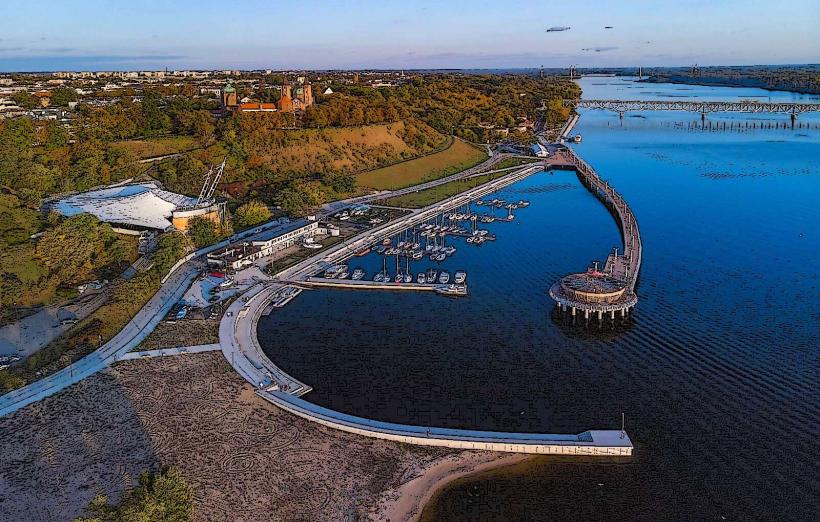
Vistula Pier (Molo): 0.3km Southwest
Masovian Museum (Art Nouveau): 0.5km East
Płock Town Hall: 0.4km East