Information
Landmark: Płock CathedralCity: Plock
Country: Poland
Continent: Europe
Płock Cathedral, Plock, Poland, Europe
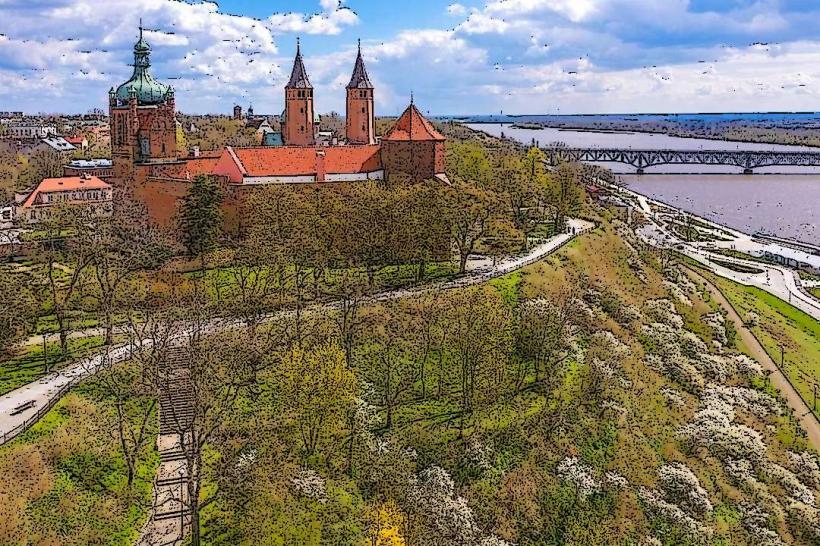
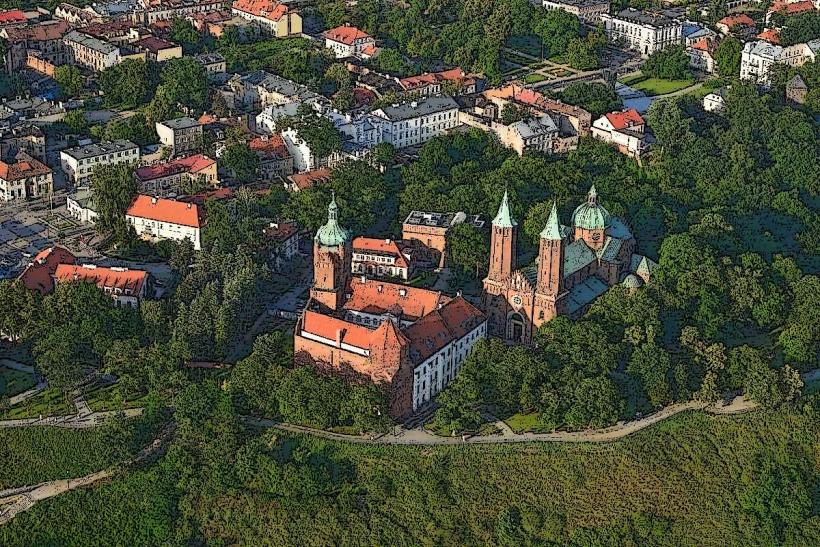
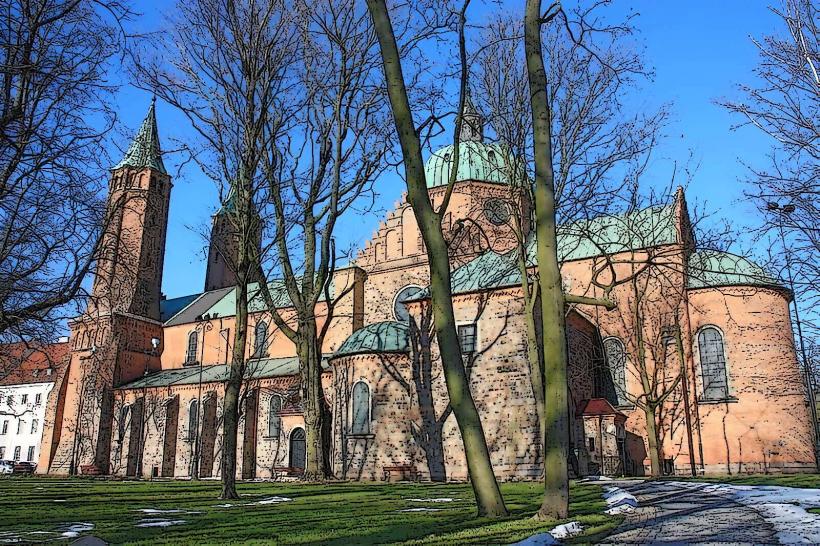
The Cathedral Basilica of the Assumption of the Blessed Virgin Mary is a Roman Catholic cathedral located on Tumskie Hill in Płock, overlooking the Vistula River. It is one of the oldest and most significant ecclesiastical structures in Poland, serving as the burial site for several Polish monarchs.
Visual Characteristics
The cathedral is a massive granite and brick structure exhibiting a blend of Romanesque and Renaissance styles, following extensive early 20th-century reconstruction. Its facade features two prominent 15th-century towers with Baroque spires. The interior is characterized by a three-aisle basilica layout, polychrome wall paintings by Władysław Drapiewski, and a high altar made of Carrara marble. A notable exterior feature is the faithful bronze replica of the 12th-century Romanesque Płock Doors.
Location & Access Logistics
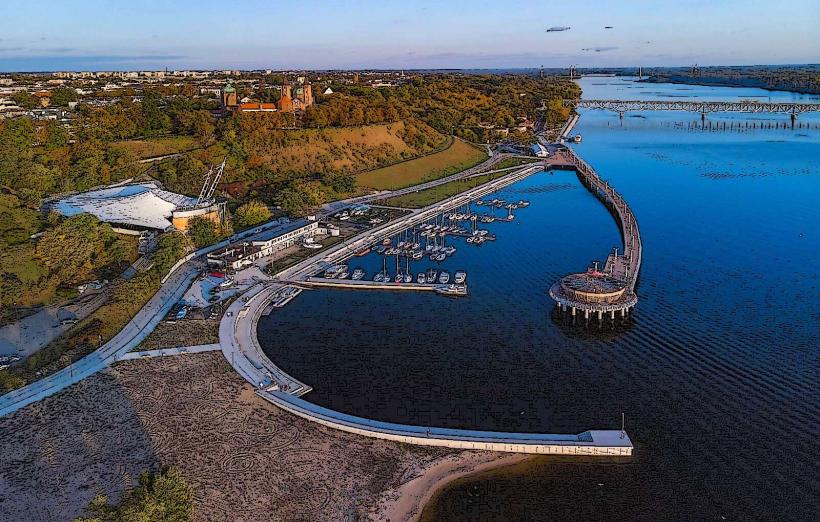
The site is situated at Plac Narutowicza 1 on the Tumskie Hill plateau. It is approximately 1.5km west of the Płock city center. Public transport access is provided by KM Płock bus lines 2, 4, 7, and 22, stopping at "Plac Narutowicza." Pedestrian access is available via the riverside boulevards or through the Old Town. Public parking is located on the streets surrounding the square, specifically on Mostowa and Teatralna streets.
Historical & Ecological Origin
The cathedral was originally consecrated in 1144 under Bishop Aleksander of Malonne. It was built on the site of an earlier 11th-century church. The limestone and granite hill upon which it stands is a natural elevation formed by glacial activity and subsequent erosion by the Vistula River. Significant reconstruction occurred in the 16th century following a fire and again between 1903 and 1915 to restore its monumental character.
Key Highlights & Activities
The Royal Chapel houses the sarcophagus of Polish rulers Władysław I Herman and Bolesław III Wrymouth. Visitors can examine the detailed biblical reliefs on the Płock Doors (replica; the originals are in Novgorod). The cathedral museum, located in the adjacent former abbey, displays the Płock Diadem and various liturgical gold artifacts. Sightseeing is permitted outside of liturgical services.
Infrastructure & Amenities
Restrooms are available in the Diocesan Museum located 0.1km from the cathedral entrance. The interior remains cool due to thick masonry, and benches are available for seating. 5G cellular signal is strong throughout the Tumskie Hill area. Food vendors, cafes, and a tourist information center are located within 200 meters in the Old Town area.
Best Time to Visit
Late afternoon is the optimal time for photography of the western facade and the Vistula River panorama from the adjacent walls. The interior is best viewed in the morning when sunlight illuminates the polychrome murals. The cathedral is open daily, but access to the Royal Chapel may be restricted during Sunday masses.
Facts & Legends
The original Płock Doors, crafted in Magdeburg around 1150, mysteriously ended up in the Cathedral of St. Sophia in Novgorod, Russia, in the 15th century; the current bronze doors were installed in 1981 as a gift from the people of Płock. Local legend states that the cathedral is connected to the Vistula riverbanks via a secret network of underground tunnels used by medieval defenders.
Nearby Landmarks
Diocesan Museum in Płock: 0.1km North
Masovian Museum (Art Nouveau): 0.4km East
Płock Town Hall: 0.5km East
Tumskie Hill Viewpoint: 0.05km West
The Granary (Muzeum Wisły): 0.6km South