Information
Landmark: Tum HillCity: Plock
Country: Poland
Continent: Europe
Tum Hill, Plock, Poland, Europe
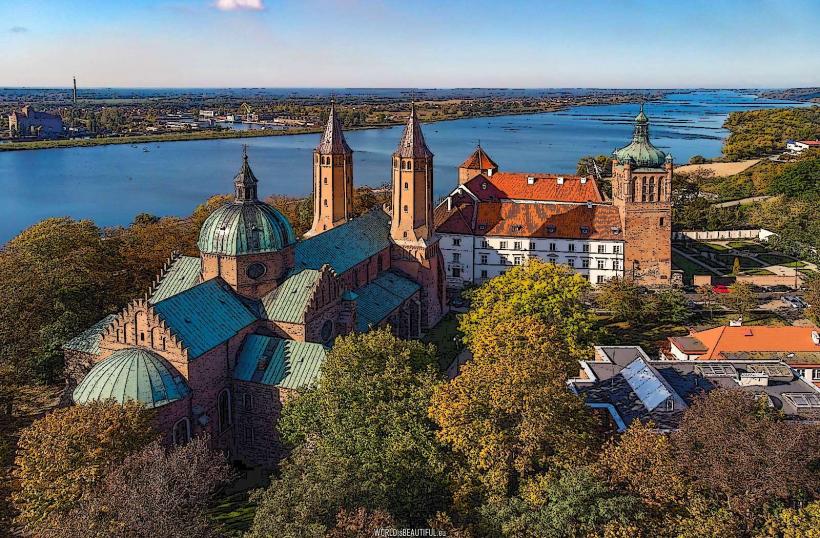
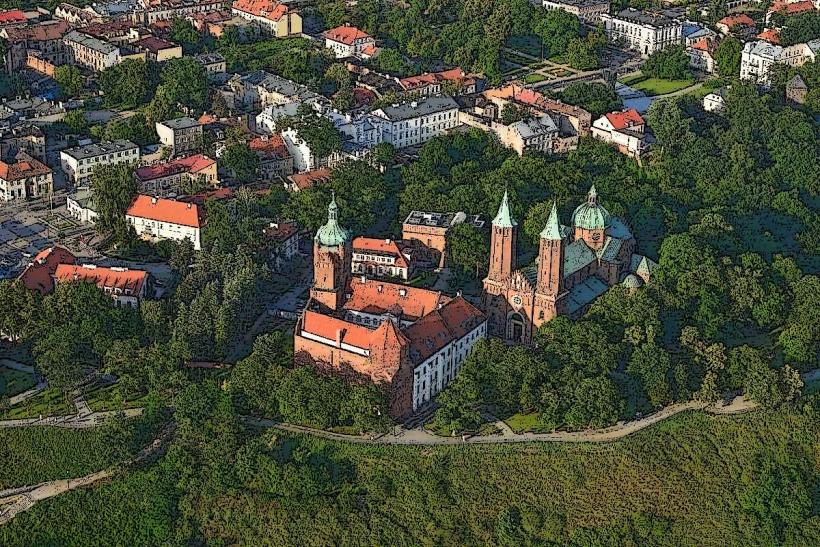
Tumskie Hill (Wzgórze Tumskie) is the historical and geographical center of Płock, situated on a 50-meter-high limestone and clay escarpment overlooking the Vistula River. It serves as the city’s primary cultural and religious landmark.
Visual Characteristics
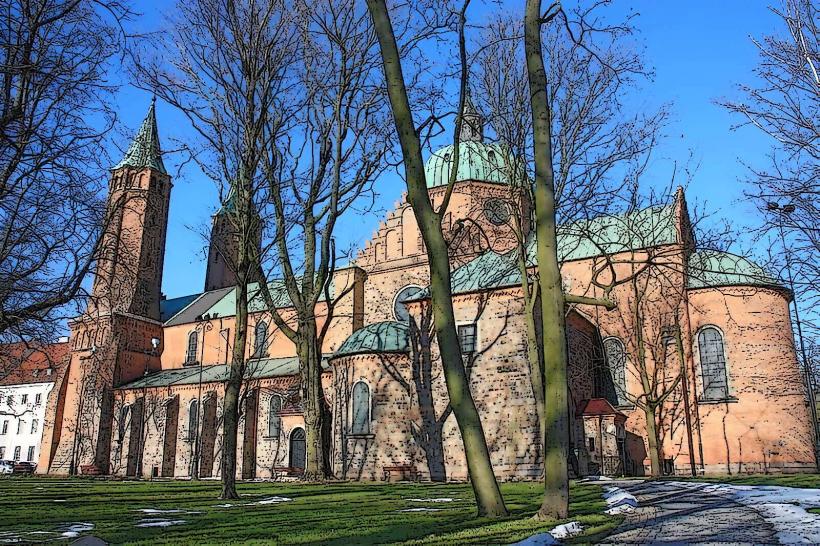
The hill is defined by a steep, green-sloped embankment rising abruptly from the riverbank. The plateau is dominated by the twin towers of the Romanesque Cathedral and the remnants of the Gothic Masovian Dukes' Castle. Architectural materials include massive granite blocks, red brick, and early 20th-century stucco. A wide promenade runs along the cliff edge, protected by historic stone railings.
Location & Access Logistics
The site is located in the western sector of the Old Town. Access is primarily pedestrian via the Old Market Square or through the cathedral plaza. Vehicle access is restricted on the plateau, with parking available on Mostowa and Teatralna streets (0.2km). Public transport via KM Płock buses stops at "Plac Narutowicza." Steep staircases and paved paths connect the hill directly to the Vistula Boulevards below.
Historical & Ecological Origin
The hill was the site of a 10th-century pagan cult center and a later Slavic fortified settlement (gród). It became the residence of Polish monarchs Władysław I Herman and Bolesław III Wrymouth, effectively serving as the capital of Poland between 1079 and 1138. Geologically, it is a stable Pleistocene formation composed of glacial till and sand, reinforced over centuries to prevent erosion into the Vistula.
Key Highlights & Activities
Cathedral Basilica: Burial site of Polish royalty and home to the replica Płock Doors.
Masovian Dukes' Castle: Houses the Diocesan Museum with a collection of medieval gold and the Płock Diadem.
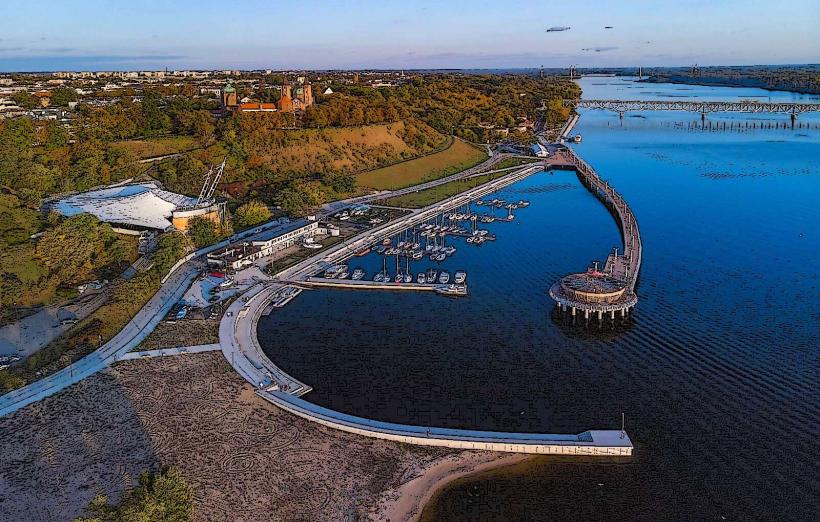
Viewpoint: Provides the most extensive panorama of the Vistula's widest point and the 350-meter-long pier.
Historical Monuments: Includes the monument to Pope John Paul II and the 11th-century "Benedictine Abbey" remnants.
Infrastructure & Amenities
The plateau is equipped with park benches and directional signage. Public restrooms are located in the Diocesan Museum and the nearby Town Hall (0.4km). The area is fully illuminated for evening visits. 5G cellular signal is strong and consistent. High-end dining is available at the Hotel Tumski, situated directly on the escarpment edge.
Best Time to Visit
The "Golden Hour" before sunset is the optimal time for photography, as the western light strikes the cathedral facade and the river below. The hill is a year-round destination, though spring and autumn offer the best visibility of the Vistula valley. The promenade is a popular site for local events and walking tours during summer weekends.
Facts & Legends
A verified historical oddity is that the hill contains a complex system of medieval cellars and tunnels, some of which were used for defensive purposes during various sieges. Local legend claims the hill is protected by the "Spirit of the Duke," and that a hidden golden carriage belonging to Bolesław Wrymouth remains buried somewhere within the castle foundations.
Nearby Landmarks
Plock-cathedral_plock" class="underline">Płock Cathedral: 0.05km East
Diocesan Museum: 0.1km East
Vistula Boulevards: 0.1km South (vertical distance)
Masovian Museum (Art Nouveau): 0.5km East
Płock Pier (Molo): 0.3km Southwest