Information
Landmark: Battistero di San GiovanniCity: Pisa
Country: Italy
Continent: Europe
Battistero di San Giovanni, Pisa, Italy, Europe
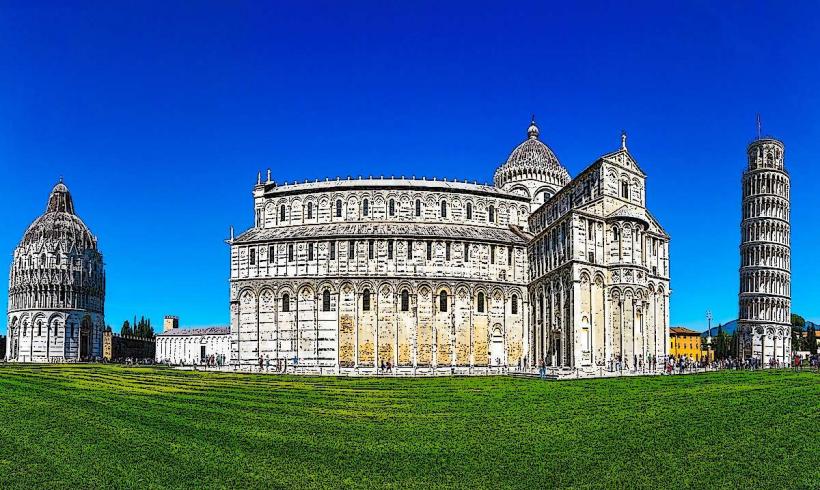
The Baptistery of St. John (Battistero di San Giovanni) is the largest baptistery in Italy and a key component of the Piazza dei Miracoli. Standing at 54.86 meters, it is slightly taller than the Leaning Tower and is renowned for its transition between Romanesque and Gothic architectural styles and its world-class acoustics.
Visual Characteristics
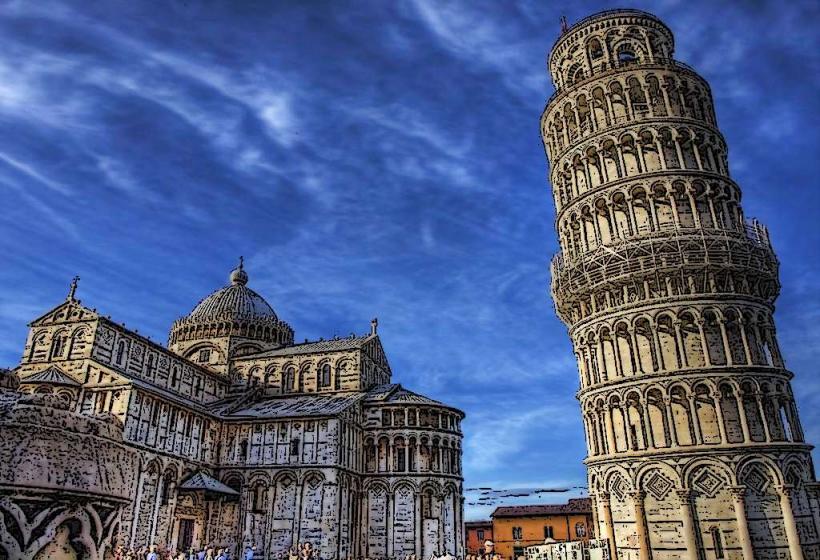
The structure is a massive circular building of white marble. The lower level features rounded Romanesque arches, while the upper sections transition into pointed Gothic gables and pinnacles, added later by Nicola and Giovanni Pisano. It is topped by a unique double dome: an inner truncated conical dome and an outer hemispherical dome. The roof is tiled with red clay on the seaward side (West) and lead plates on the East, likely due to historical budget constraints or weather protection.
Location & Access Logistics
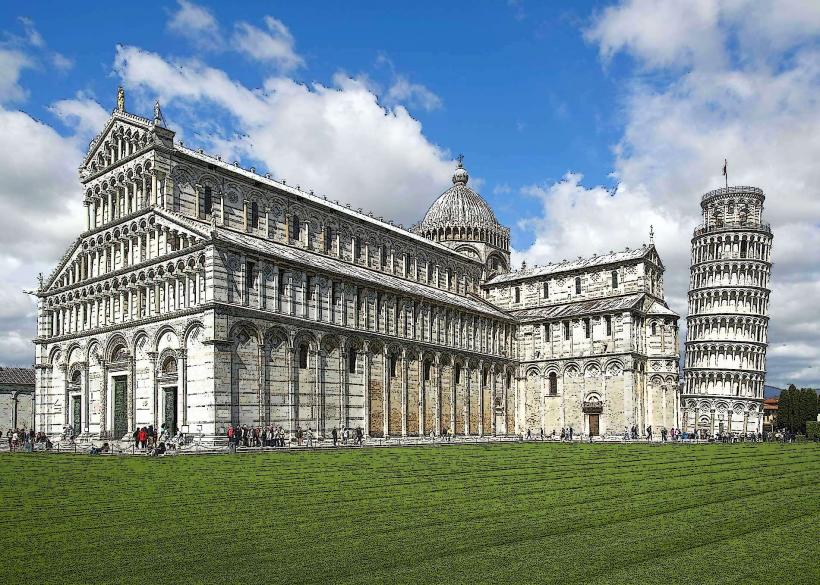
Located directly West of the Pisa Cathedral. Access is via timed-entry tickets purchased at the central ticket office or online. It is 1.5 kilometers from Pisa Centrale station. The interior is largely empty of furniture, emphasizing its monumental scale and height. As with the Cathedral, the building is situated on the same shifting subsoil and has a slight lean of approximately 0.6 degrees toward the North.
Historical & Ecological Origin
Construction began in 1152 by the architect Diotisalvi to replace an older baptistery. It took over 200 years to complete, involving multiple architects including Nicola Pisano. The building was designed to be perfectly aligned with the Cathedral's facade. Like other structures in the square, the marble was sourced from the nearby San Giuliano hills and the Carrara quarries.
Key Highlights & Activities
Nicola Pisano’s Pulpit: Completed in 1260, this is a seminal work of Italian sculpture, bridging the gap between Classical and Renaissance styles.
The Baptismal Font: An octagonal vessel at the center of the building, created by Guido Bigarelli da Como in 1246, featuring intricate marble inlays.
Acoustics Demonstration: Every 30 minutes, a guard performs a brief vocal demonstration to showcase the extraordinary resonance (reverberation time lasts several seconds), which effectively turns the building into a giant musical instrument.
The Upper Gallery: Provides a unique perspective of the floor's geometric patterns and a direct view of the Cathedral's facade through the East windows.
Infrastructure & Amenities
The ground floor is fully wheelchair accessible. 5G cellular coverage is excellent in the square but intermittent inside the marble structure. No restrooms are inside the building; public facilities are located at the edges of the Piazza dei Miracoli.
Best Time to Visit
Open daily from 09:00 to 18:00 (extended in summer). Visit during the acoustics demonstration to fully experience the architecture. The morning light provides the best illumination for the sculptures and the pulpit.
Facts & Legends
The Baptistery is missing its original apex; instead of a spire, it is topped with a bronze statue of St. John the Baptist. Due to its construction as a double-shell dome, the interior remains remarkably cool even in peak summer. The building was once the site of official civic ceremonies, as the act of baptism was intrinsically linked to Pisan citizenship during the Middle Ages.
Nearby Landmarks
Pisa Cathedral: 0.05km East
Leaning Tower: 0.15km East
Camposanto Monumentale: 0.05km North
Ancient City Walls: 0.2km North
Sinopie Museum: 0.1km South