Information
Landmark: Piazza dei CavalieriCity: Pisa
Country: Italy
Continent: Europe
Piazza dei Cavalieri, Pisa, Italy, Europe
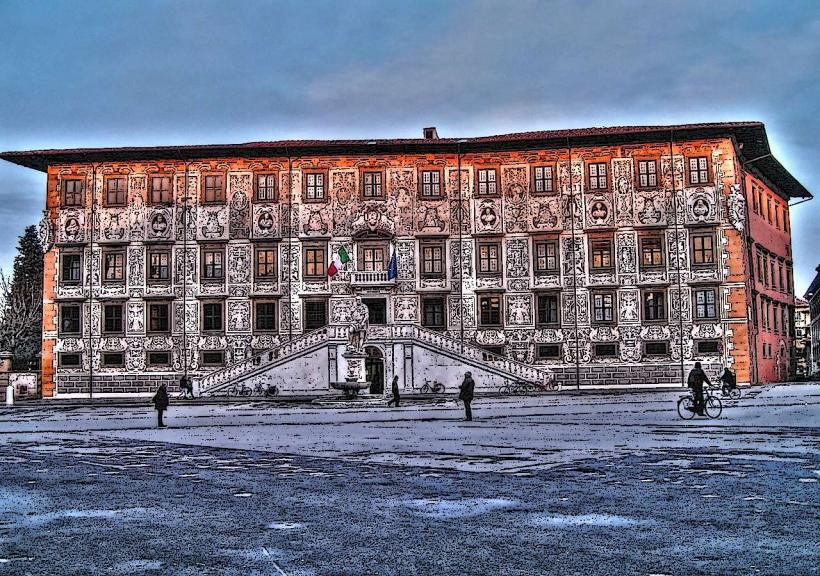
Piazza dei Cavalieri (Knights' Square) is the second most significant square in Pisa and served as the city's political center during the Middle Ages and the Renaissance. Originally the site of the Roman Forum and the medieval seat of government, it was completely transformed in the 16th century by Giorgio Vasari into the headquarters of the Order of the Knights of Saint Stephen.
Visual Characteristics
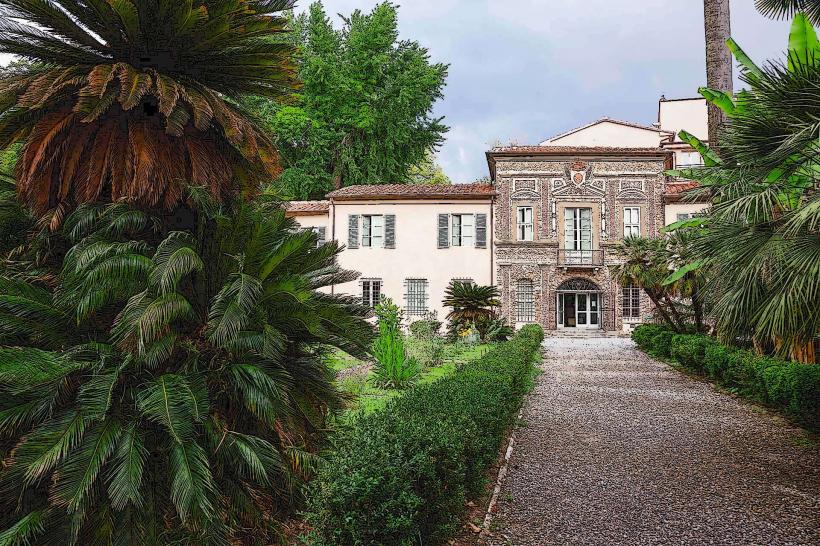
The square is defined by its irregular, curved layout and the dominance of the Palazzo della Carovana. This palace features an elaborate sgraffito facade-intricate monochrome wall decorations-and a grand double-flight staircase. The architecture is a prime example of the late Renaissance (Mannerist) style, characterized by marble busts of the Medici Dukes and a stark, formal aesthetic that contrasts with the Romanesque style of the nearby Piazza dei Miracoli.
Location & Access Logistics
Located approximately 600 meters southeast of the Piazza dei Miracoli (a 5-7 minute walk via Via Santa Maria or Via Corsica). It is situated in the heart of the university district. The square is pedestrianized and accessible 24/7. While the exterior of the buildings is always viewable, many interiors belong to the Scuola Normale Superiore and are generally closed to the public except during specific cultural events or exhibitions.
Historical & Ecological Origin
Formerly known as the Piazza delle Sette Vie (Square of Seven Streets), it was the heart of the independent Republic of Pisa. In 1558, Cosimo I de' Medici commissioned Giorgio Vasari to redesign the square to symbolize Medici control over the city and to house the Order of the Knights of Saint Stephen, a military order established to fight piracy in the Mediterranean.
Key Highlights & Activities
Palazzo della Carovana: The main building of the Scuola Normale Superiore, one of Italy's most prestigious universities, founded by Napoleon Bonaparte.
Church of Santo Stefano dei Cavalieri: Designed by Vasari, the interior houses an extensive collection of captured Turkish and Saracen naval banners and ship figureheads from the Battle of Lepanto (1571).
Palazzo dell'Orologio (Clock Palace): A building formed by joining two medieval towers. It is famous for incorporating the "Hunger Tower" (Torre della Fame).
Statue of Cosimo I: A monumental sculpture by Pietro Francavilla located in front of the Palazzo della Carovana, depicting the Grand Duke as the Master of the Order.
Infrastructure & Amenities
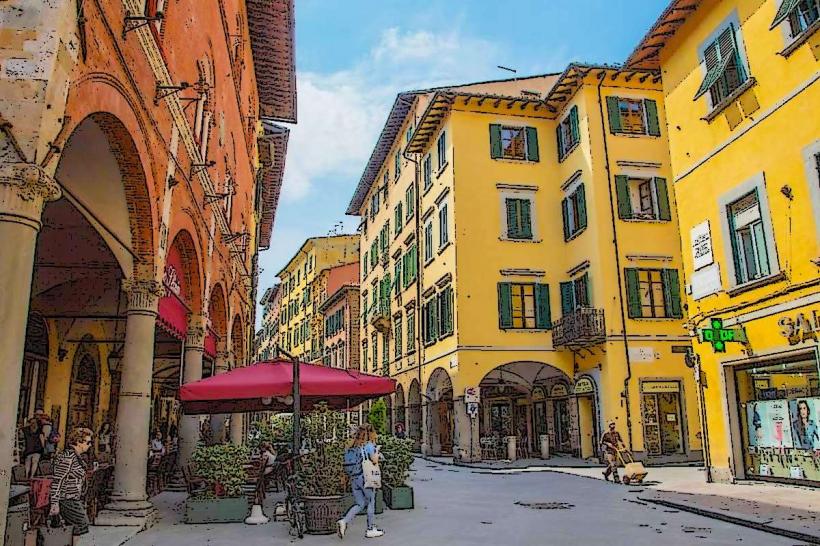
The square is a functional part of the city, frequently populated by students. 5G signal is excellent. There are no public restrooms directly in the square, but numerous cafes and bars are located in the immediate surrounding streets. The open space is often used for outdoor concerts and academic ceremonies.
Best Time to Visit
The square is best visited during the day to appreciate the detail of the sgraffito on the Palazzo della Carovana. However, it is particularly atmospheric at night when the student population gathers and the facades are illuminated. Early morning is ideal for unobstructed photography.
Facts & Legends
The Palazzo dell'Orologio is the site of the infamous death of Count Ugolino della Gherardesca, who was imprisoned there with his sons and grandsons in 1288 and left to starve. This event was immortalized by Dante Alighieri in the Inferno (Canto XXXIII). Modern excavations during the restoration of the palace confirmed the location of the original tower foundations.
Nearby Landmarks
Piazza dei Miracoli: 0.6km Northwest
Borgo Stretto (Shopping): 0.3km East
Arno River: 0.4km South
Church of San Sisto: 0.1km West
University of Pisa (Main Building): 0.2km South